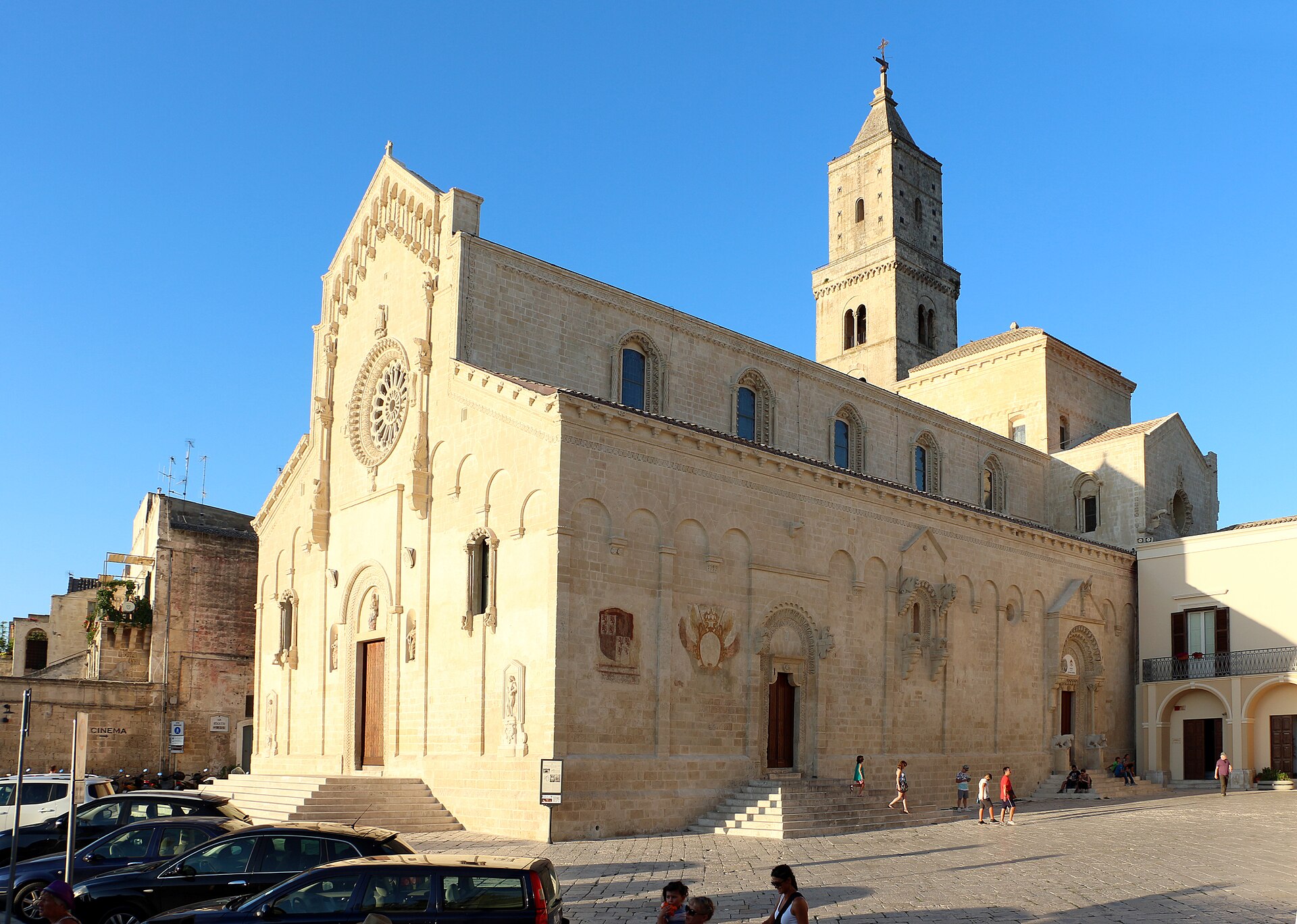
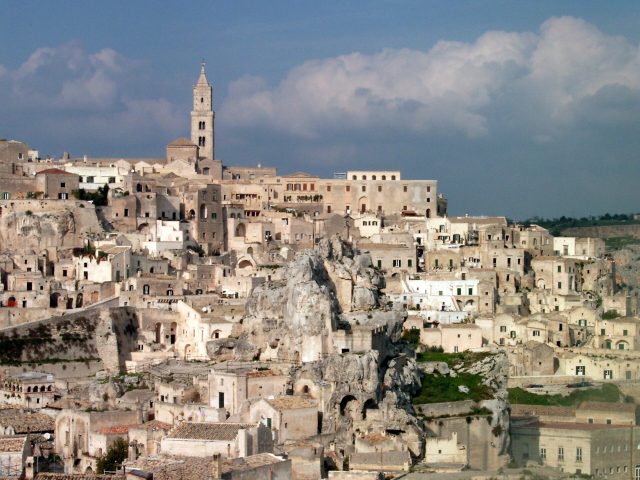
Matera’s cathedral stands on the highest hill in the city, as if it has been watching over the town for nearly a thousand years. Built in the 13th century, it isn’t just a religious center but a symbol of the city itself—a place where history isn’t just preserved in stone but continues to breathe beside you. Matera is famous for its ancient cave dwellings carved into the rock, but the cathedral represents another side of its past: monumental, solemn, and reaching toward the sky.
The architecture blends Romanesque and Apulian styles, a natural fusion for southern Italy, where cultural and historical boundaries have always been fluid. The facade is simple, almost austere, with three portals topped by a rose window, a common feature in medieval churches. Inside, the space feels larger than expected, with high vaulted ceilings, columns adorned with leafy capitals, and frescoes that still hold traces of their original vibrancy despite the passage of time. The most striking is the 13th-century fresco of the Madonna della Bruna, the city’s patron saint, which remains one of Matera’s most revered treasures.
The cathedral was constructed during a time when Matera was part of the Norman Kingdom, later coming under Angevin rule. Its construction coincided with a period of prosperity for the city, when it served as an important trade and religious hub on the route from Naples to Taranto. Back then, the cathedral wasn’t just a place of worship but also a fortress, offering refuge to townspeople during raids and wars. The thick walls and narrow windows, more like arrow slits than decorative elements, still hint at this dual purpose.
Inside, the atmosphere is quiet and slightly mysterious. Light filters through the tall windows, softly illuminating the ancient frescoes and wooden pews darkened by age. Unlike the lavish cathedrals of Rome or Florence, Matera’s lacks ornate decoration, and that simplicity is what makes it special. It feels as though every stone holds the memory of those who prayed here centuries ago—farmers, artisans, merchants—people whose lives were deeply connected to these rocks and caves.
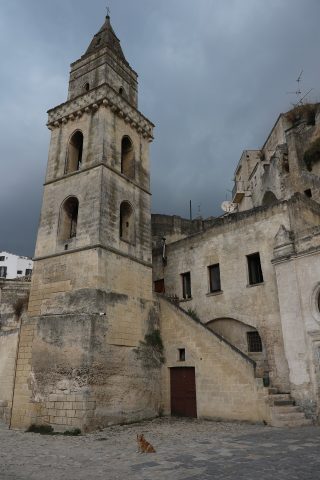
The cathedral’s bell tower is another distinctive feature. Though not as tall as many Italian church towers, its square, sturdy shape gives it a unique presence. In the Middle Ages, it served not only to call the faithful to prayer but also as a lookout point. From the top, the view stretches over the entire city and the surrounding hills, where people have lived in cave dwellings for millennia. Today, this panorama is one of the main reasons to climb up—the city from above looks like a vast stone labyrinth, where modern homes stand alongside ancient caves.
Matera’s cathedral isn’t just an architectural monument; it’s a living testament to how the city has endured through centuries of change. In the 20th century, Matera was one of Italy’s poorest and most overlooked places, but today it has become a symbol of cultural revival. The cathedral remains its heart, a place where past and present intertwine. Services are still held here, along with concerts of sacred music and exhibitions, but most people come simply to stand in silence, to touch history and feel time moving differently.
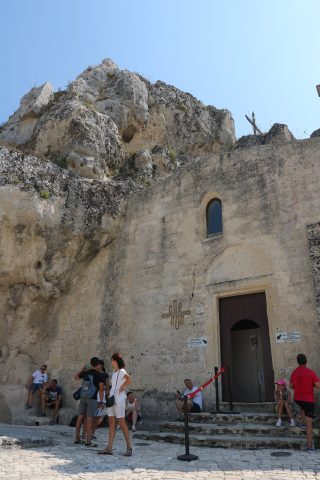
In recent decades, the cathedral has become part of the tourist route through the Sassi, Matera’s ancient cave district and a UNESCO World Heritage site. Yet even among the steady flow of visitors, it hasn’t lost its authenticity. Perhaps because Matera itself is a city where the past hasn’t been turned into a museum exhibit but continues to exist alongside the present. The cathedral isn’t just a landmark—it’s part of that life, a quiet but enduring witness to it all.