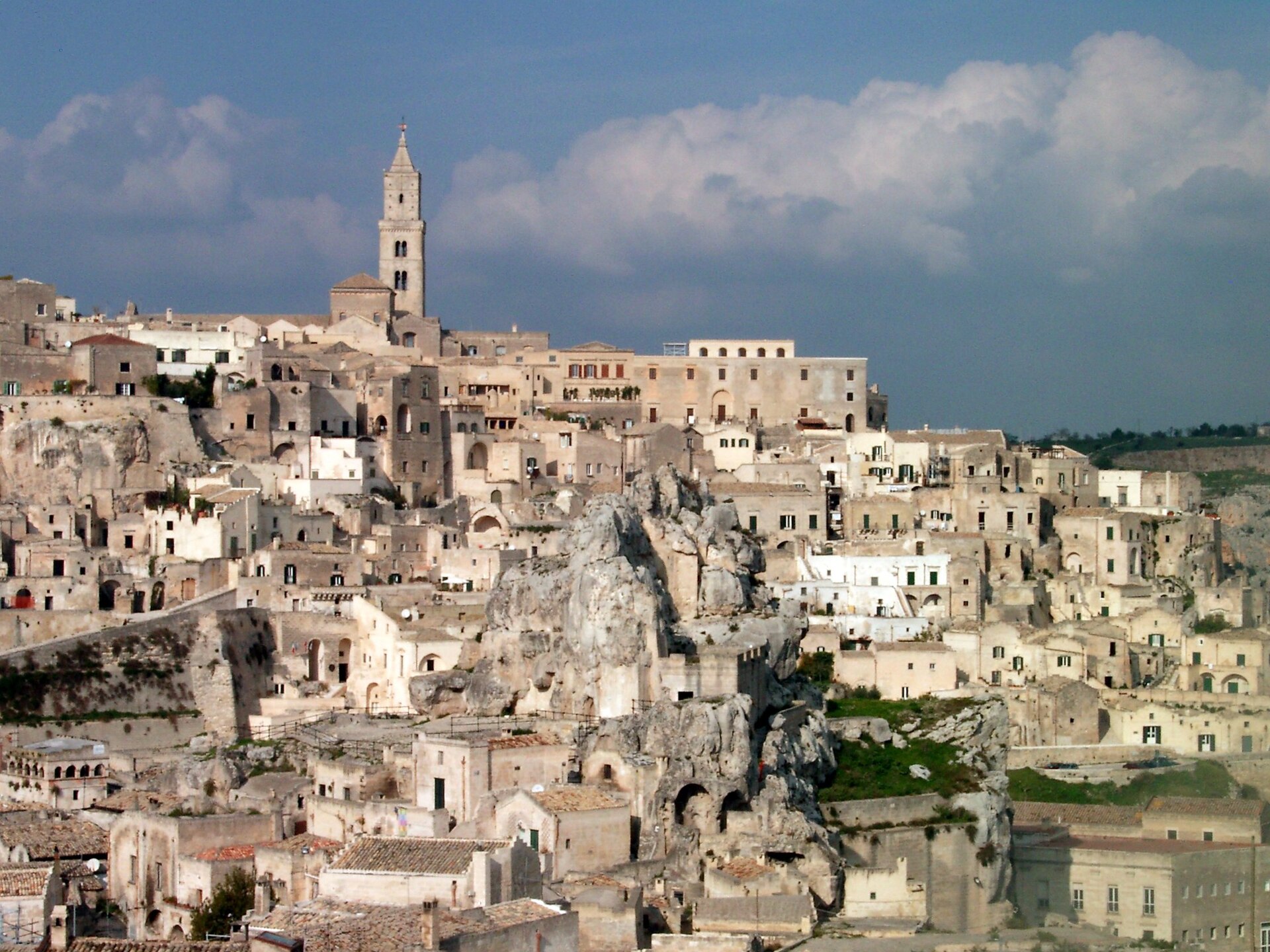
Matera’s Sassi district is one of those rare places where time feels suspended, not in the way of a preserved relic, but as something still breathing, still alive. Carved into the soft tuff rock of a deep ravine, these ancient cave dwellings have stood for millennia, their origins stretching back to the Paleolithic era. What began as simple shelters in the stone evolved over centuries into a complex settlement, one that flourished in the Middle Ages as a religious and commercial hub of southern Italy. Today, the Sassi remain a maze of homes, churches, and winding streets, each layer of rock holding the weight of countless lives lived in its shadows.
The architecture here is unlike anything else. Houses flow seamlessly into one another, their facades blending with the natural contours of the ravine. Some are little more than hollowed-out chambers, while others rise in tiers, connected by narrow staircases and arched passageways. For much of the 20th century, the Sassi were seen as a symbol of poverty, their cramped, dim interiors deemed unfit for modern living. The Italian government relocated most residents to new housing in the 1950s, leaving the caves to decay. But over time, attitudes shifted. Restoration efforts brought electricity and running water to the ancient dwellings, and slowly, people began to return—not just as visitors, but as residents, drawn back by the quiet charm of a place that refuses to be forgotten.
Walking through the Sassi is like stepping into a living organism. The golden-hued rock glows warmly in the sunlight, especially at dusk, when the fading light softens the edges of the stone. In some corners, you can still see the remnants of the old water systems, a testament to the ingenuity of past inhabitants. Rainwater was channeled into cisterns carved deep into the rock, then distributed through a network of stone troughs. These systems were so efficient that they sustained the community for generations, long before modern plumbing existed.
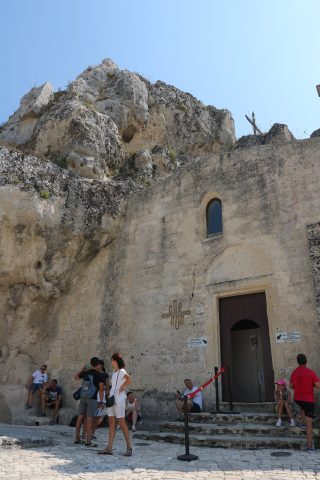
Among the most striking features of the Sassi are its cave churches. Over 150 of them dot the landscape, many adorned with Byzantine frescoes that have survived centuries of wear. The most famous is the Church of Madonna de Idris, its interior cool and hushed even on the hottest days. The walls are covered in faded but still-vibrant images of saints, their expressions serene against the rough stone. Some of these churches are still active, their doors open for services, adding a layer of continuity to the place. It’s not uncommon to stumble upon a small gathering inside, the murmur of prayers blending with the quiet rustle of the wind outside.
The Sassi are far from a static museum. They remain a working part of Matera, where life unfolds in its own unhurried rhythm. Local artisans still shape clay into pottery using techniques passed down through generations, their workshops tucked into the rock. Small trattorias serve dishes that have been cooked the same way for centuries—spicy lucanica sausages, sharp pecorino cheese, and handmade pasta with sun-ripened tomatoes. In the evenings, the streets come alive with the sound of conversation and the occasional strum of a guitar, the glow of lanterns casting long shadows on the stone.
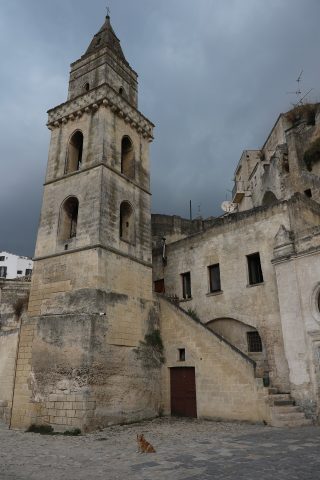
In 1993, UNESCO recognized the Sassi as a World Heritage site, acknowledging their cultural and historical significance. The designation helped bring attention to the need for preservation, but it also risked turning the district into a mere tourist attraction. Fortunately, that hasn’t happened. While visitors do come, the Sassi have retained their authenticity. There are no crowded souvenir stalls or loud tour groups here. Instead, you’ll find old men playing cards in sunlit courtyards, children darting up and down the steps, and the occasional stray cat napping in a doorway. The real magic lies in getting lost—turning a corner to discover a hidden church, an ancient well, or a sudden, breathtaking view of the ravine below.
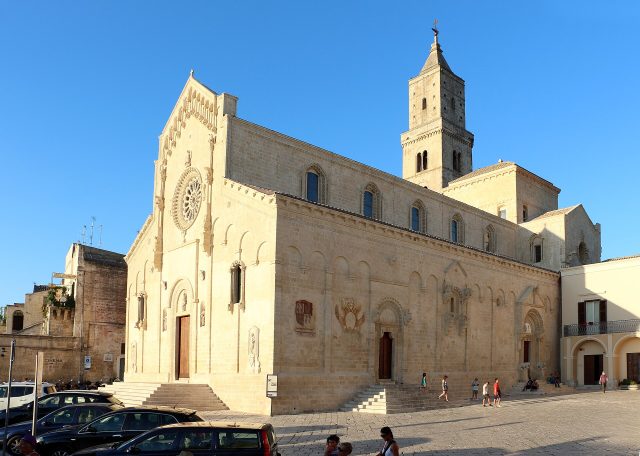
What makes the Sassi truly remarkable is their simplicity. There are no grand palaces or towering cathedrals here, no monuments to power or wealth. Instead, there is the quiet dignity of a place shaped by necessity, where every stone tells a story of adaptation and resilience. The Sassi remind us that history isn’t just made by kings and conquerors, but by ordinary people finding ways to live, to create, to endure. It’s a place that invites reflection, not just on the past, but on how we choose to live in the present.
For all its ancient roots, the Sassi are not frozen in time. They continue to evolve, shaped by the people who call them home. Some of the caves have been transformed into boutique hotels, their interiors modernized but still retaining the raw beauty of the rock. Others remain humble dwellings, their doors open to the same streets that have been walked for thousands of years. The contrast between old and new is seamless here, as if the past and present have found a way to coexist without one overshadowing the other. That, perhaps, is the greatest lesson the Sassi have to offer—not just a glimpse into history, but a reminder that the most enduring places are those that grow with the people who love them.