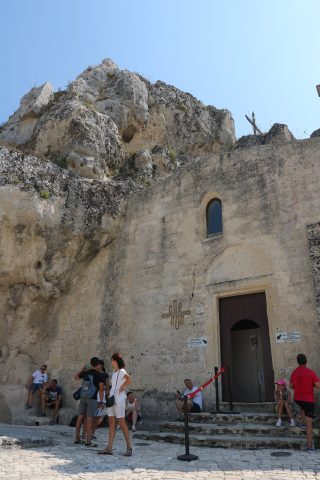
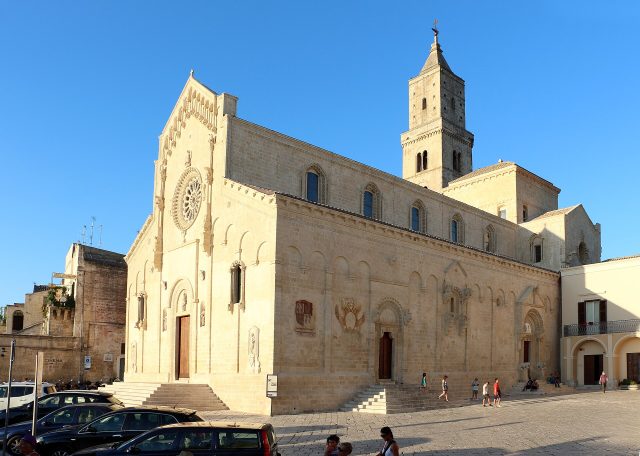
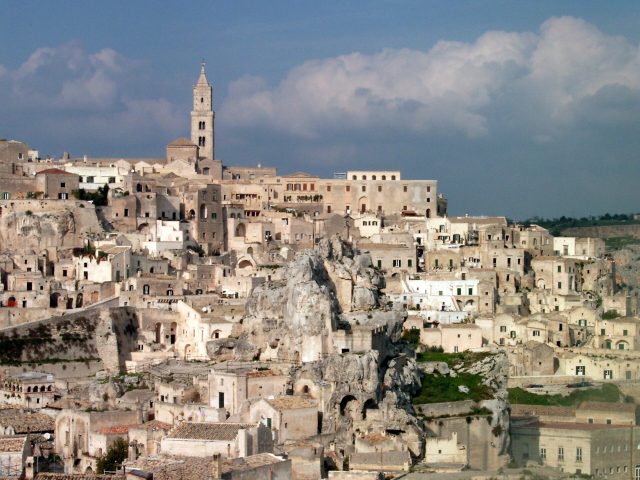
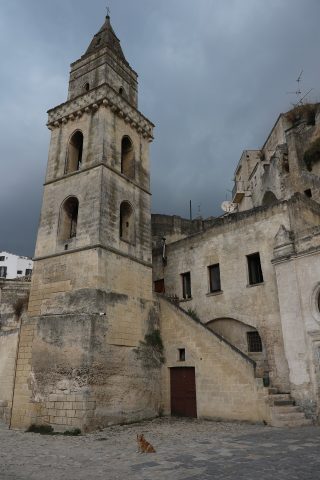
Matera is a city carved from the very fabric of time, its ancient districts hollowed into rock like pages from a forgotten book. Among its labyrinthine streets and cave dwellings, the Archaeological Park of La Murgia stands apart—not as a museum frozen in glass, but as a living record of human existence stretching back millennia. Unlike the silent ruins of other historical sites, where stones merely hint at the past, La Murgia tells its story through the land itself: the curve of a canyon, the shadow of a cave, the faint marks left by hands that once shaped this place into a home.
The park unfolds along the slopes of the Gravina, a deep ravine that has cradled life since the Paleolithic era. The soft limestone here was easily worked, allowing generations to carve out dwellings, churches, storerooms, and even entire streets directly into the rock. While Matera’s famous Sassi districts preserve the medieval layers of this history, La Murgia reveals something older—a cross-section of time where Bronze Age settlements, ancient fortifications, and early Christian frescoes coexist in the same space. The ravine was never abandoned; it simply evolved, adapting to the needs of each new era.
What makes La Murgia extraordinary is its continuity. Here, history isn’t confined to isolated monuments but woven into the landscape itself. Caves open onto terraces, terraces lead to underground cisterns, and cisterns connect to paths that wind toward ancient burial sites. Walking through the park feels less like touring a site and more like navigating a living archive, where every turn uncovers another layer of the past. In summer, the heat presses down, and the shade of the cliffs offers relief; in winter, the ravine fills with moisture, turning the stone a deep, almost mystical gray. The land remembers.
Among the most compelling discoveries are the remnants of prehistoric dwellings—hearths, storage pits, and the tools of daily life left behind by the people who once called this place home. Archaeologists have unearthed pottery, animal bones, and simple implements, all of which help piece together how these early inhabitants lived. What’s striking is how these artifacts are displayed: not locked away in a museum, but preserved in glass cases right where they were found. Standing before them, you’re not just looking at relics—you’re seeing objects that were used, touched, and discarded in this very spot thousands of years ago.
La Murgia is also a place where human history and natural history intertwine. The Gravina ravine wasn’t just a shelter; it was a lifeline, providing water, fertile soil, and protection. Today, the park remains a haven for rare plants and animals that have adapted to life on the cliffs. In spring, wildflowers blanket the slopes, and in autumn, the air is thick with the scent of thyme and rosemary. The balance between the man-made and the natural here is delicate, a reminder that this landscape was never just a backdrop for human activity but an active participant in it.
Visiting La Murgia isn’t like following a traditional tourist route. There are no rigid paths or exhaustive informational plaques, and that’s part of its appeal. You wander down a trail, step into a cave, climb onto a terrace, and with each movement, the past feels a little closer. Sometimes, the wind carries sounds that might be voices—echoes of the people who once lived here, or just the natural hum of the ravine. The park doesn’t offer grand spectacles or easy answers; it invites you to slow down, to look closely, and to listen.
In recent decades, La Murgia has drawn the attention of archaeologists and conservators, who work carefully to preserve its fragile structures. Many areas are still being studied, their secrets waiting to be uncovered. This isn’t a place for those seeking instant gratification or flashy attractions. It rewards patience, curiosity, and a willingness to engage with the quiet persistence of time. The real value of La Murgia lies not in its size or grandeur, but in its authenticity—a rare glimpse into the unbroken thread of human life, etched into the earth itself.