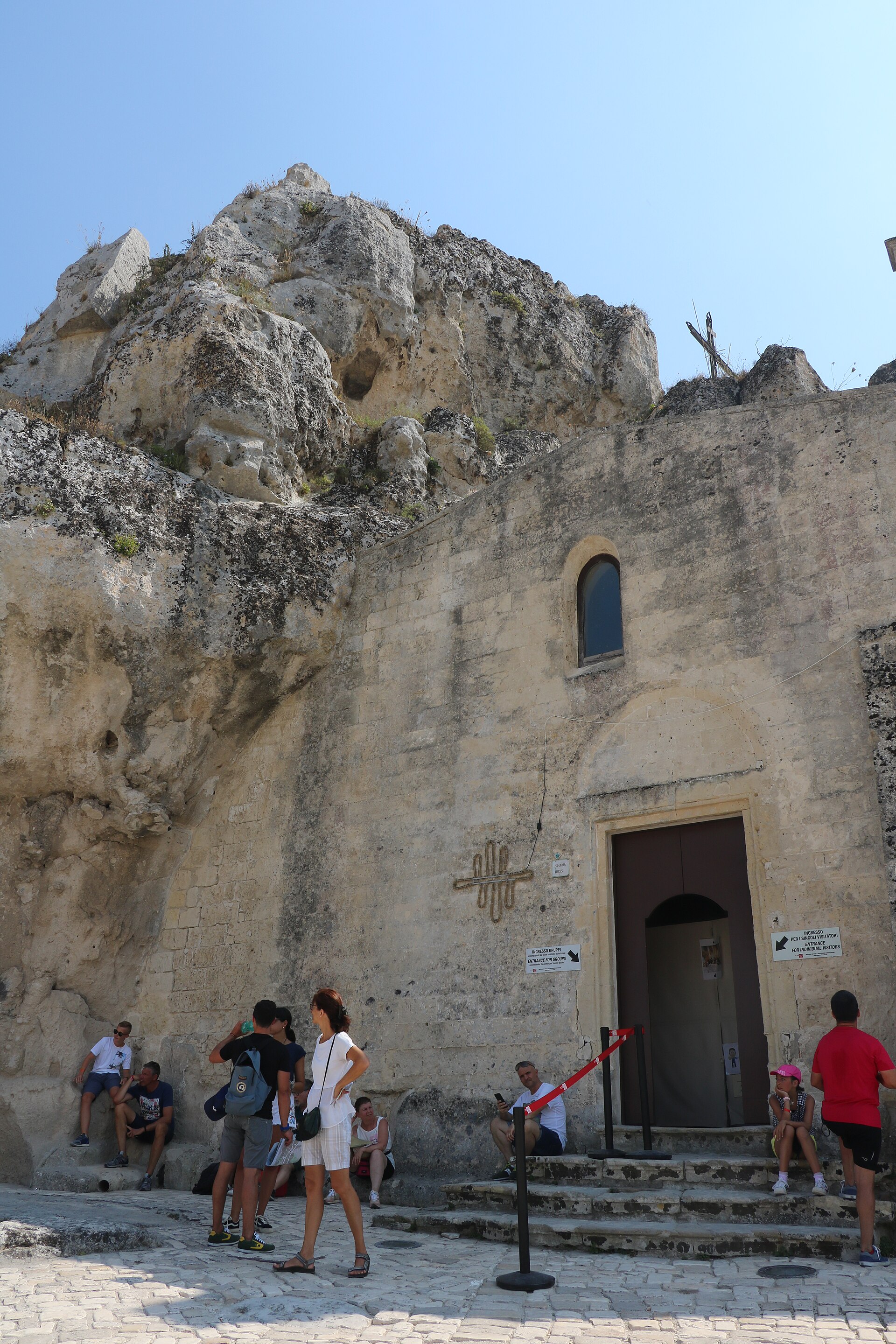
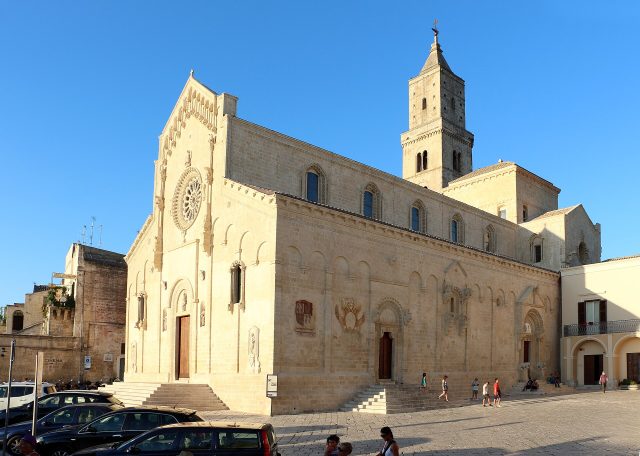
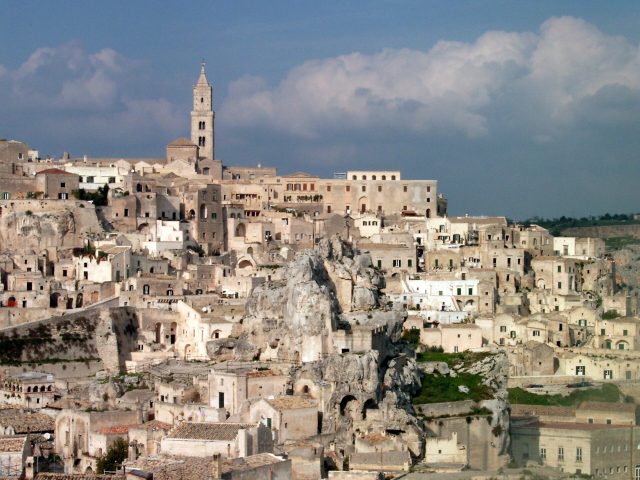
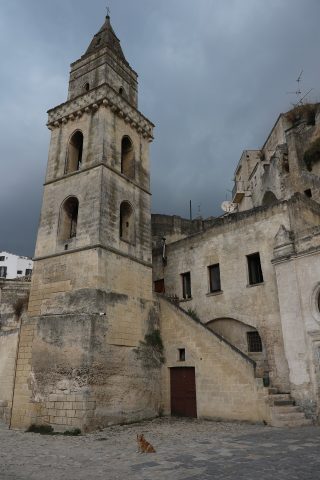
Santa Maria de Idris isn’t just a church—it’s a piece of Matera’s living history, carved into the same rock that shaped the city itself. Perched atop one of the Sassi’s most famous districts, it blends seamlessly into the rugged landscape, where cave dwellings and ancient sanctuaries coexist in a timeless tangle of stone. The church’s facade is so understated it almost disappears into the cliffside, as if the rock itself had decided to form a place of worship. There are no grand arches or marble columns here, just the quiet presence of something that has endured for centuries, untouched by the need for ornamentation.
The origins of Santa Maria de Idris are as layered as the rock it’s carved from. Historians debate its exact age, with some tracing it back to the Byzantine era, when Matera was a key religious hub in southern Italy. Others suggest it emerged later, during the Norman period, when Christianity had already taken deep root in the region. Whatever its beginnings, the church became woven into the daily lives of Matera’s people—not just as a place of prayer, but as a gathering spot, a refuge during wars, and even a storage space for grain. Its walls hold the echoes of generations who relied on it in ways that went far beyond faith.
Inside, the church is small and intimate, with low vaulted ceilings that seem to wrap around you. The space feels almost organic, as if it grew from the rock rather than being built into it. The walls are covered in faded frescoes, their details softened by time but still visible—faces of saints, biblical scenes, and patterns that hint at Byzantine influence. One of the most striking images is that of the Madonna Odigitria, the protector of travelers, a fitting presence in a city that has long been a crossroads for pilgrims and merchants. The floor is uneven, worn smooth in some places and jagged in others, a reminder that this was never meant to be a polished space, just a functional one.
Santa Maria de Idris is closely tied to another church, San Giovanni in Monte, which lies directly beneath it. The two are connected by a narrow passage, forming a unique religious complex that’s rare even in a city full of cave churches. Local legend says that hermits once lived in these rocks, seeking solitude to devote themselves to prayer. Whether that’s true or not, the place carries a sense of quiet reverence, broken only by the whisper of wind or the distant murmur of visitors exploring the Sassi’s labyrinthine streets.
Today, the church is open to those who seek it out, though it remains one of Matera’s lesser-known treasures. There are no crowds here, no jostling for the best photo spot—just the chance to step into a space that has changed little over the centuries. The air inside is always cool, even in the height of summer, and the light filtering through small windows casts shifting shadows across the frescoes, making them seem almost alive. Sometimes, a guide’s voice drifts through the space, recounting stories of how people once lived in these caves, how they prayed here, and how they survived in a landscape that was as harsh as it was beautiful.
Matera is a city of contrasts, where ancient and modern coexist, and where poverty and cultural richness exist side by side. Santa Maria de Idris embodies that duality—it’s not a grand cathedral, but a humble space that has witnessed centuries of human life. There’s no opulence here, just rock, paint, and the enduring presence of faith. Standing inside, it’s impossible not to wonder how many people have passed through these walls, how many prayers have been whispered under these ceilings, and how many secrets this small church still holds.
If you visit Matera, don’t rush past Santa Maria de Idris on your way to more famous sights. Take a moment to step inside, to run your fingers over the rough stone, to study the faded faces on the walls. This is the kind of place that lingers in your memory—not because it’s spectacular, but because it’s real. Matera is full of such spaces, each one a thread in the city’s long history, but this church has a way of making you pause. It doesn’t demand attention; it simply offers a quiet connection to the past, one that makes the present feel richer.