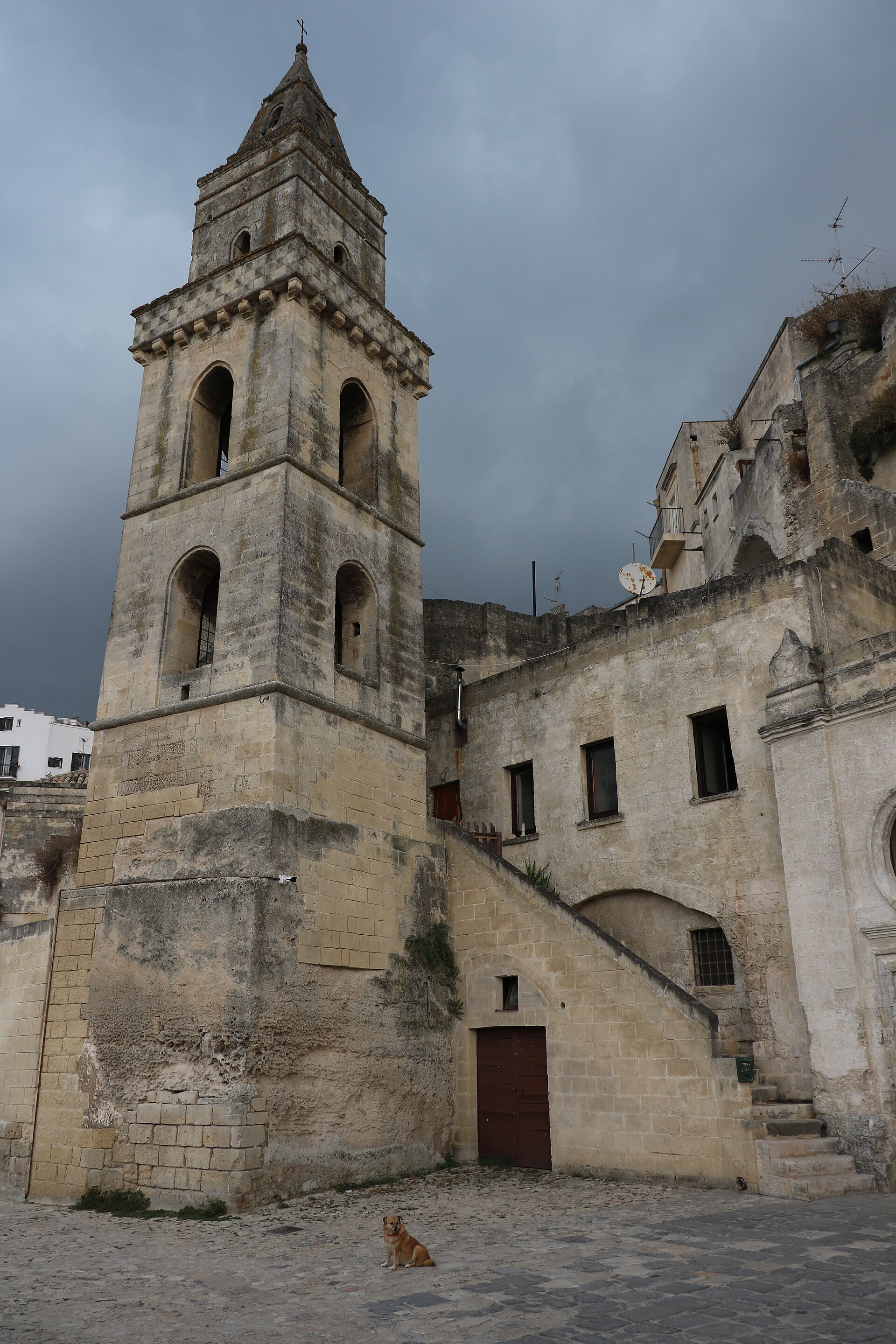
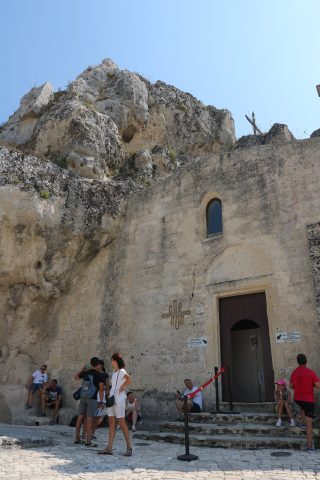
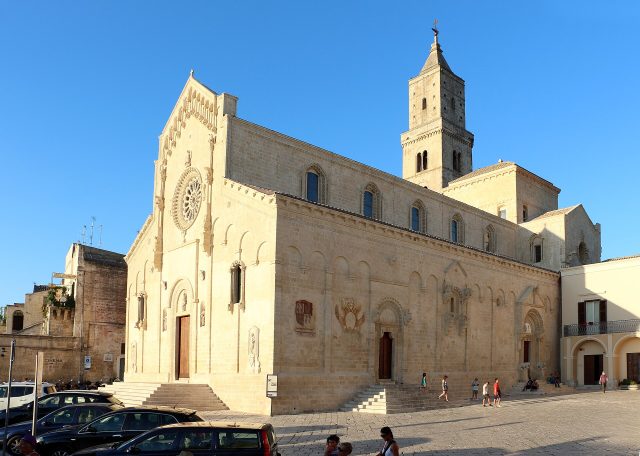
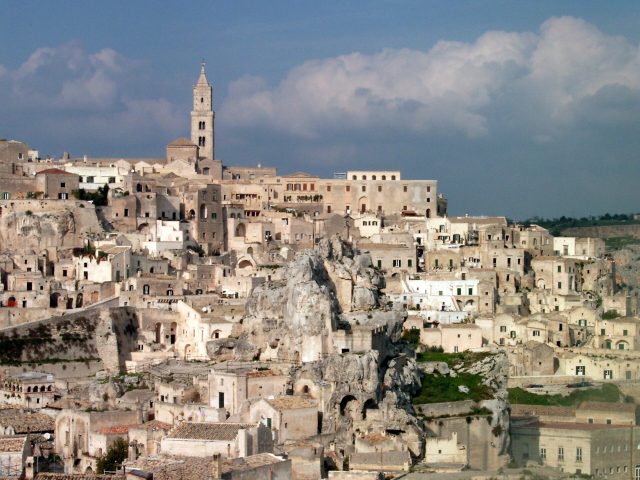
Matera’s Church of San Pietro Barisano is one of those rare places where time feels suspended, where the weight of centuries lingers in the very stones beneath your feet. Tucked into the heart of the Sassi—the ancient cave districts that define the city—it doesn’t stand apart from the landscape so much as emerge from it, as if carved by the same hands that shaped the cliffs around it. The facade is unassuming, almost modest, inviting rather than commanding attention. Step inside, and the boundary between sacred space and everyday life blurs; this is a church that has always been part of the city’s rhythm, not above it.
The origins of San Pietro Barisano are shrouded in the kind of quiet mystery that clings to Matera itself. The earliest records place it in the 11th century, though historians debate whether it was built then or simply rebuilt atop an even older structure, perhaps from the Byzantine era. The name *Barisano* hints at a possible connection to a family or clan—*barisanum* in Latin—who may have founded or funded the church. During the Middle Ages, it served as a spiritual anchor in a landscape where most dwellings were hewn directly from the soft tuff rock. While the rest of the Sassi was a labyrinth of cave homes, San Pietro stood as one of the few freestanding stone buildings, a rare marker of permanence in a world shaped by necessity.
What makes the church remarkable is how seamlessly it blends with its surroundings. The facade, crafted from local limestone, has weathered into a warm, golden hue that mirrors the cliffs around it. The portal is adorned with a simple relief of Saints Peter and Paul, their figures worn smooth by time, while above them a small rose window frames a cross. Inside, the space is striking in its austerity. The vaulted ceilings rest on thick columns, and the walls are bare of the elaborate frescoes found in other Italian churches of the era. There is no gilded opulence here, only the quiet dignity of stone that has witnessed centuries of prayer, labor, and silence.
Beneath the main floor lies the crypt, a cavernous space carved directly into the rock. Here, fragments of 12th- and 13th-century frescoes survive, their colors faded but their presence still potent. These paintings are a rare glimpse into the Romanesque art of southern Italy, where Byzantine influences mingled with local traditions. Scenes from the life of Christ and the saints unfold in muted tones, their details softened by damp and time. Some figures are barely discernible now, but even in their faded state, they carry an air of solemnity, as if the very act of preservation is a form of devotion.
For much of the 20th century, San Pietro Barisano shared the fate of the Sassi—abandoned as the cave districts fell into disrepair and their inhabitants moved to modern housing. It wasn’t until Matera was designated a UNESCO World Heritage site in the 1990s that restoration efforts began in earnest. Today, the church has been returned to its community, though its role has shifted. Mass is still celebrated here, but more often, it welcomes visitors drawn by its history and the stark beauty of its architecture. It’s a place that doesn’t demand reverence so much as invite reflection.
Matera is a city of contrasts, where ancient and modern coexist in ways that feel both jarring and natural. The Sassi, with their cave churches and troglodyte homes, are a testament to human ingenuity in the face of a harsh landscape. San Pietro Barisano stands apart from the grand cathedrals of Rome or Florence, where marble and gold dominate. Here, the materials are humble—stone, mortar, the occasional touch of pigment—but the effect is no less profound. The church feels like a living archive, its walls whispering stories of the farmers, artisans, and monks who once gathered within them.
The church’s location is as much a part of its story as its architecture. Perched on the edge of two Sassi districts, Barisano and Caveoso, it offers a sweeping view of the Gravina gorge below. On clear days, the opposite bank comes into focus, where an ancient road once wound its way toward Puglia. In the late afternoon, as the sun dips behind the cliffs, the church is bathed in a golden light that seems to blur the line between past and present. It’s a moment when the weight of history feels almost tangible, as if the centuries between then and now have momentarily dissolved.
San Pietro Barisano isn’t a place that seeks to impress. There are no soaring domes or intricate mosaics, no grand narratives of power or wealth. Instead, it offers something quieter, something more enduring—the sense that beauty can be found in simplicity, that history isn’t always about grandeur but about the small, human moments that accumulate over time. It doesn’t tell you what to think; it simply asks you to pause, to look, and to listen. And in that silence, the echoes of the past feel closer than ever.