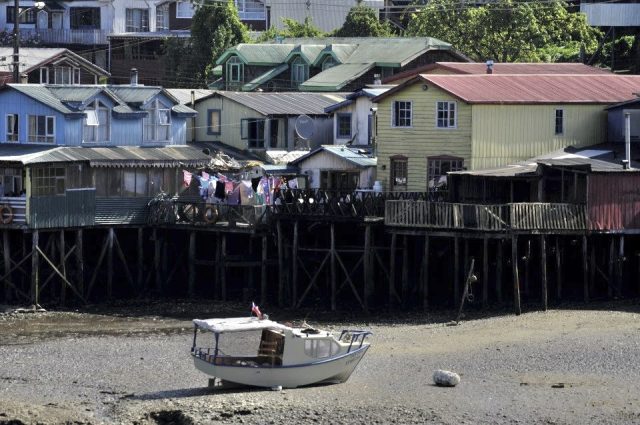
Perched on a hill above Castro, the Mirador Teniente Merino isn’t the kind of place you visit for a quick photo opportunity. It’s where the city unfolds slowly, revealing itself in layers—first the jumble of stilt houses spilling down the slope in a riot of colors, then the narrow strait separating Chiloé from the mainland, and beyond that, the endless forested mountains that seem to stretch into another world entirely. On clear days, the view feels almost too vast, as if the horizon itself is breathing. The wind carries the sharp tang of salt and seaweed, and the distant murmur of the city below fades into something indistinct, like background noise in a dream.
The viewpoint is named after Lieutenant Merino, a figure tied to Chiloé’s colonial past, when the island was a strategic outpost rather than the remote corner of Chile it’s often perceived as today. In the 19th century, this was the launching point for expeditions into Patagonia, a place where decisions were made that would shape the southern reaches of the continent. There’s no grand monument here, no plaque detailing his exploits—just an open space with low railings, where the past feels more like a quiet presence than a story to be told. It’s easy to imagine the island as it once was: a crossroads where sailors, soldiers, and settlers passed through, each leaving their mark on the land.
There’s nothing architecturally striking about the mirador itself—just concrete slabs, metal railings, and a few benches. But that doesn’t matter. What draws people here is the way the view shifts with the light. In the early morning, the city is wrapped in mist, the stilt houses appearing almost translucent, as if they’ve been painted onto the damp air. By midday, the sun burns away the haze, and the colors sharpen—reds, blues, and yellows reflecting off the water like a shattered kaleidoscope. As evening falls, the lights of Castro flicker to life, turning the city into a scattering of fireflies, their glow rippling across the strait.
For locals, the mirador is less a tourist attraction and more a part of daily life. Families bring their children here to show them the city from above, couples wander up for quiet conversations, and older residents sit on the benches with thermoses of tea, watching the clouds drift over the mountains. On weekends, you might stumble upon a musician strumming a guitar or an artist sketching the landscape. Despite the wind that sweeps across the hill, the atmosphere feels oddly intimate, as if the place has been quietly claimed by the people who live here.
Winter transforms the mirador into something entirely different. When storms roll in, the wind howls across the hill, strong enough to make you grip the railings for balance. The waves in the strait rise like walls, and the city below takes on a rugged, almost defiant appearance, as if it’s hunkering down against the elements. It’s in these moments that Chiloé’s true character reveals itself—not as a postcard-perfect destination, but as a place that has always existed in dialogue with the sea, shaped by its moods and rhythms.
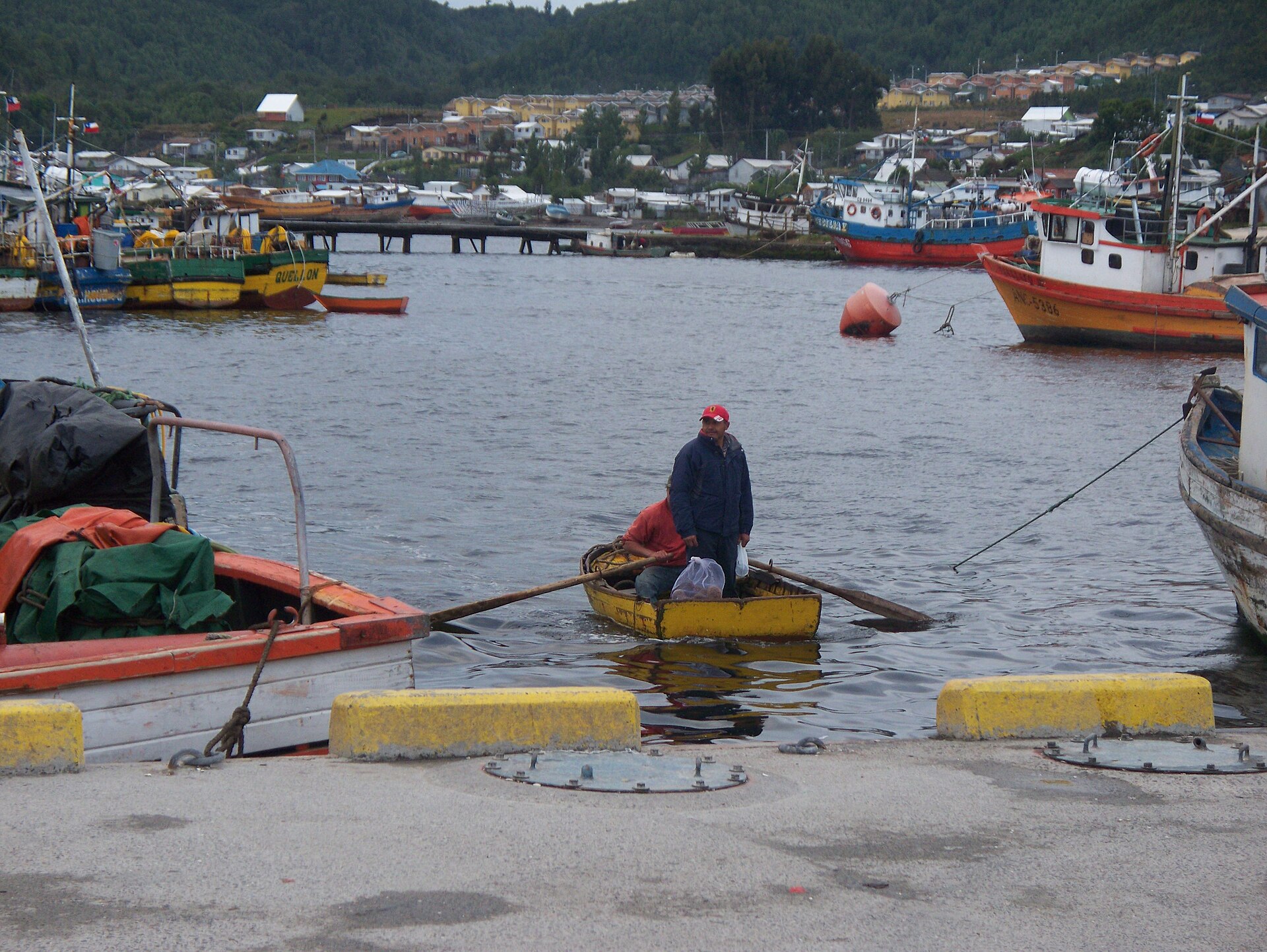
The walk up to the mirador from Castro’s center is short, winding through narrow streets lined with wooden houses. Along the way, small shops sell local cheeses and smoked meats, while workshops hum with the sound of artisans crafting *dalcas*, the traditional Chiloé boats that have been used for centuries. If you’re lucky, you might see someone returning from a fishing trip, their catch—perhaps a hake or salmon—still glistening in their hands. The city feels alive in these moments, not like a museum exhibit but like a place where people still go about their lives, where every street and building has its own quiet history.
This viewpoint isn’t just a place to see Castro; it’s where you begin to understand Chiloé. From here, the island’s geography comes into focus—the narrow inlets, the rolling hills covered in dense forest, the endless pastures where sheep graze. It’s a landscape that has shaped the culture here, making it distinct from the rest of Chile. The sea isn’t just a backdrop; it’s woven into everything, from the architecture of the stilt houses to the stories people tell, from the food they eat to the way they move through the world. Even the air carries the weight of it—damp, salty, with the faintest hint of seaweed clinging to every breath.
If you leave Chiloé without visiting the mirador, you might miss something essential—not a grand monument or a famous landmark, but the quiet pulse of the island itself. There are no crowds here, no rush, no pressure to do or see anything in particular. You can stand at the railing, watching the city and the sea, and feel time slow down, as if the island has its own rhythm, one that doesn’t quite match the rest of the world. It’s the kind of place where you don’t just look at the view; you settle into it, letting it settle into you.