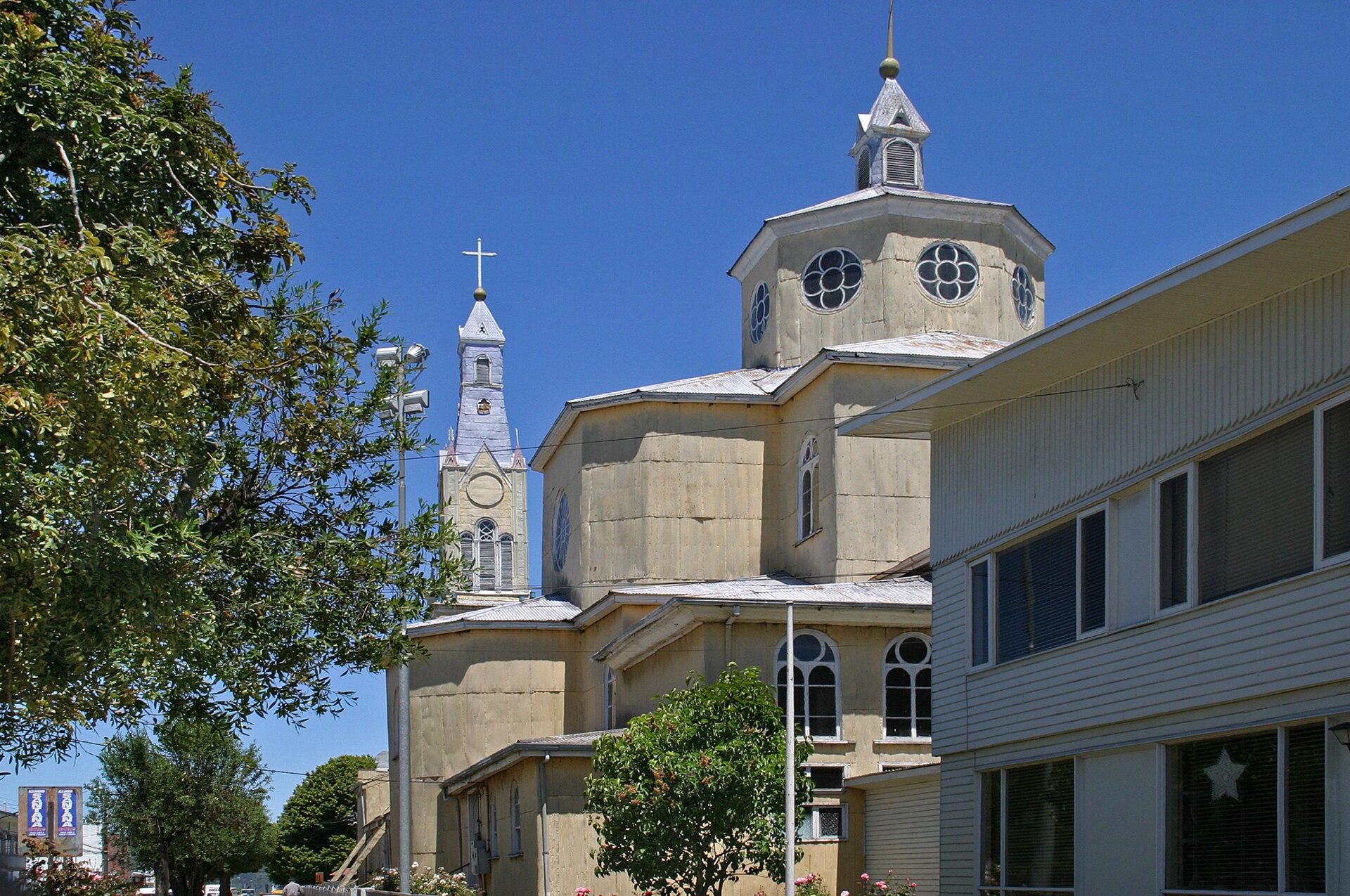
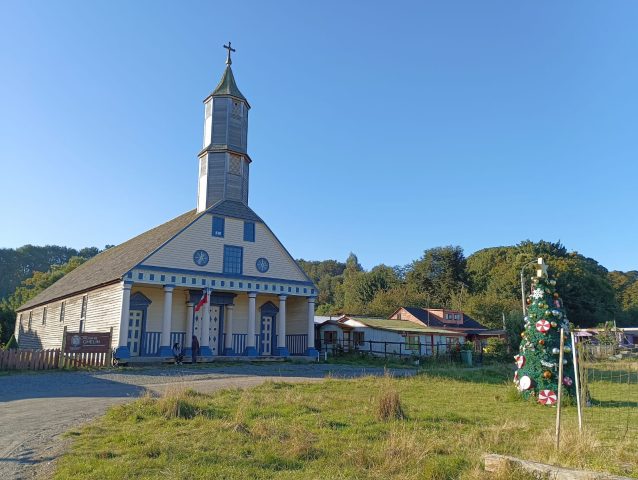
Perched on a hill overlooking the town of Castro, the Church of San Francisco is one of those rare places that feels untouched by the rush of modern life. Its vivid colors—white walls, a red roof, and accents of blue and yellow—stand out against the often misty skies of Chiloé, an archipelago where the past lingers in the air like the scent of salt and damp wood. This isn’t just a church; it’s a living piece of history, where Spanish colonial traditions merged with the rhythms of island life, creating something entirely its own.
Built in the late 19th century, the church is part of a remarkable tradition: the wooden churches of Chiloé. These structures, crafted from native timber, adapted European architectural styles to the harsh climate of the islands, where rain and wind are constant companions. The Church of San Francisco is one of the largest and best-preserved examples, its design deceptively simple yet ingeniously practical. Inside, the high vaulted ceilings and sturdy wooden columns create a sense of grandeur, while the open space invites quiet reflection. There’s no excess here—just the raw beauty of wood and light, a testament to the skill of the builders who shaped it.
What makes these churches unique is their role beyond worship. They were the heart of the community, places where people gathered not just for prayer but for markets, meetings, and even legal proceedings. The Church of San Francisco was no exception. For generations, it echoed with the voices of townspeople sharing news, seeking solace, or celebrating festivals that stretched over days. Even now, as Castro has grown into a bustling town, the church remains a focal point, drawing not only the faithful but anyone curious about the island’s past.
The architecture blends Gothic influences with local craftsmanship. The facade, with its pointed windows and modest tower, hints at European cathedrals, but step inside, and the difference is striking. The wooden beams, rough-hewn walls, and lack of ornate decoration create an atmosphere of warmth and simplicity. There’s no gilded opulence here, no marble altars—just the quiet dignity of a place built to endure. It’s a reminder that faith, at its core, doesn’t need extravagance; it thrives in the spaces where people come together, as they have for centuries.
The church has weathered its share of challenges—earthquakes, fires, the relentless damp of Chiloé’s winters. Yet each time, it was restored, its original character preserved. In 2000, it was recognized as part of the UNESCO World Heritage Site encompassing the wooden churches of Chiloé, a nod to their architectural and cultural significance. These buildings are more than relics; they’re bridges between eras, offering a glimpse into how people once lived on this remote island, where the sea and forest shaped every aspect of life.
Today, the church is still active, its doors open to both worshippers and visitors. Inside, the scent of wood and candle wax lingers, and the only sounds are the creak of floorboards underfoot and the occasional whisper of wind outside. It’s a place where time seems to slow, where the weight of history is palpable. Tourists come for the photographs, but many stay for the quiet, drawn in by the sense of continuity—the feeling that this space has always been here, holding stories that stretch back generations.
For the people of Chiloé, the Church of San Francisco is more than a landmark; it’s a part of who they are. It has witnessed baptisms, weddings, and farewells, standing as a silent witness to the joys and sorrows of the community. Even those who don’t consider themselves religious often feel a connection here, as if the walls themselves carry the memories of everyone who has ever walked through them. It’s not a museum, frozen in time, but a living place, still shaping the lives of those who pass through its doors.
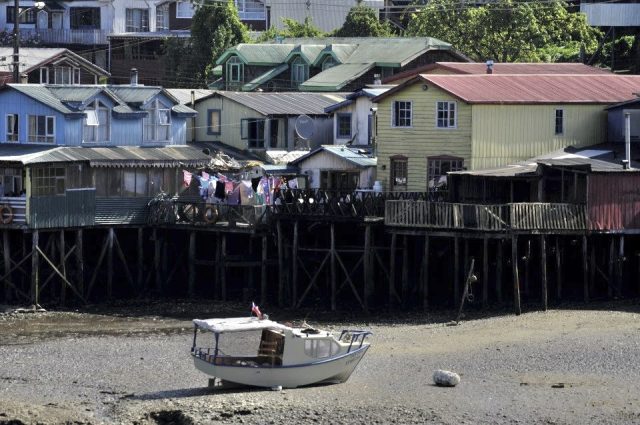
Castro is a town of contrasts, where modern buildings stand alongside traditional *palafitos*—colorful stilt houses that line the waterfront—and where the hum of daily life is punctuated by the sudden quiet of a backstreet. The Church of San Francisco sits at the center of it all, a reminder that progress doesn’t have to erase the past. It doesn’t try to be flashy or trendy; it simply endures, as it always has. And perhaps that’s why it draws people in—not just for its beauty, but for the way it makes you pause, look around, and remember what truly matters.