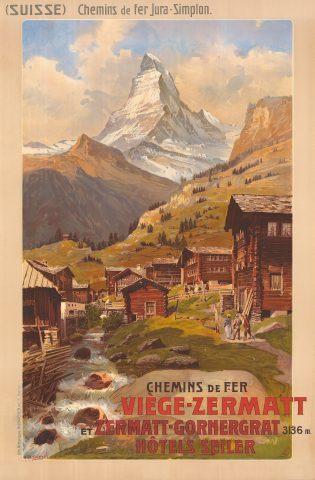
Sunnegga is one of those rare places in Zermatt where the mountains don’t just loom in the distance—they feel almost within reach. Perched at around 2,300 meters above sea level, it’s accessible by a funicular or, for those who prefer a slower pace, a winding hiking trail through alpine meadows. On clear days, the view of the Matterhorn is nothing short of breathtaking, its jagged peak rising like a perfect sculpture of snow and rock across the valley. But even when the weather turns, Sunnegga has its own quiet magic—clouds drifting lazily over the slopes, or a sudden burst of sunlight painting the cliffs in soft pinks and golds.
The story of Sunnegga is tied to Zermatt’s transformation from a remote mountain village into a world-famous resort. In the late 19th century, as tourism began to take hold, locals sought ways to share the beauty of the Alps without requiring visitors to scale glaciers or tackle dangerous climbs. The idea of a viewpoint where people could simply stand and take in the panorama was revolutionary. The funicular, built in the 1940s, made Sunnegga accessible to a wider audience, turning it into one of the region’s most beloved spots—though it never feels as crowded as places like Gornergrat.
The architecture here is understated but purposeful. The funicular station is a classic example of alpine design: wooden beams, stone walls, and large windows that frame the shifting light on the mountainside. Nearby, a small café offers warmth in the form of hot chocolate or local cheeses, made the traditional way. In summer, the area becomes a living postcard—edelweiss blooming in the meadows, cows grazing with bells around their necks, the air thick with the scent of pine and wild herbs.
Sunnegga isn’t just a place to take photos; it’s a starting point for countless adventures. Trails lead from here to Leisee and Grünsee, two lakes so clear they seem to float in the air. In summer, hikers set out along these paths, while in winter, skiers use Sunnegga as a gateway to one of Zermatt’s most popular ski areas. The routes vary from gentle slopes for beginners to challenging descents for experts, but even at peak times, it never feels as packed as the main resorts.
What makes Sunnegga special is the way it lets you slip into the rhythm of mountain life. Early risers come to watch the sunrise over the peaks, while others linger in the evening to see the Matterhorn glow in shades of red and violet as the light fades. In the off-season, when the crowds thin, the silence is almost tangible—broken only by the wind rustling through the grass or the distant chime of cowbells. It’s a place that reminds you the mountains aren’t just scenery; they’re alive, changing with the seasons and the weather.
For many, Sunnegga isn’t just a stop on the itinerary but a moment of stillness. There’s no hustle like in Zermatt’s busy streets, no crowds jostling for the perfect selfie, no flashy signs. Just the mountains, the sky, and a quiet that feels almost physical. Maybe that’s why people keep coming back—not for new thrills, but for the rare sense of peace that’s so hard to find elsewhere.
If it’s your first time here, don’t rush straight to the viewpoint. Take a moment at the station, listen to the sounds around you, breathe in the crisp alpine air. You might begin to understand why Zermatt draws people in—not just for the Matterhorn or the skiing, but for something deeper, something that makes you forget about time and just exist in the moment.