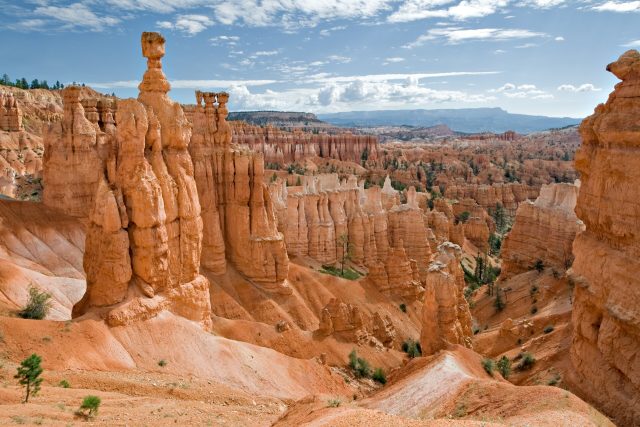
Sunset Point isn’t just a place to look at—it’s a place that makes you pause. Perched on the edge of Bryce Canyon, this overlook offers a view so vast and strange it feels like stepping into another world. The rock formations, called hoodoos, rise from the earth in jagged spires, their orange and red hues shifting with the light. At sunset, the last rays of the sun set them ablaze, turning the canyon into a sea of fire. The air cools, shadows stretch, and for a moment, everything else fades away. It’s easy to see why people come here and forget to check their watches.
The story of this landscape began millions of years ago, when the land was the bottom of a vast lake. Over time, wind, water, and ice carved away the softer rock, leaving behind the towering hoodoos we see today. The Paiute people, who lived here long before settlers arrived, saw these formations as ancient warriors frozen in stone. Later, Mormon pioneers named the canyon after Ebenezer Bryce, a settler who famously remarked that it was a fine place to lose a cow. The name stuck, though today, the only things getting lost here are visitors, caught between awe and the sheer scale of the scenery.
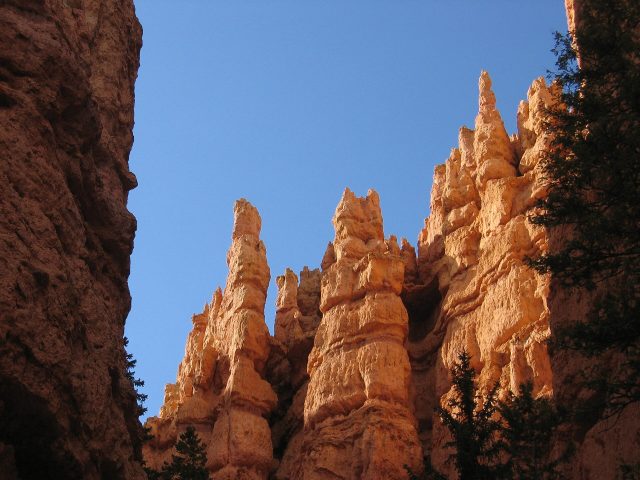
There’s no human architecture at Sunset Point—just the slow, patient work of nature. The hoodoos aren’t random; they’re the result of layers of rock eroding at different rates. Harder stone caps protect the softer layers beneath, creating the mushroom-like shapes that make Bryce Canyon so distinctive. Some hoodoos stand as tall as a twenty-story building, while others resemble castles or figures from a dream. From this overlook, the entire amphitheater of rock spreads out below, a labyrinth of color and form that changes with every passing hour.
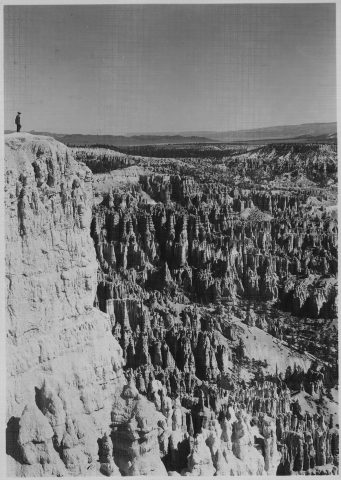
This place means more than just a pretty view. For the Paiute, it was sacred ground. For geologists, it’s a textbook of Earth’s history, with layers of rock telling stories older than humanity. For visitors today, it’s a reminder of how small we are in the grand scheme of things—and how fragile the natural world can be. Bryce Canyon became a national park in 1928, and since then, millions have come to stand where the land drops away and the sky takes over. There’s something about that edge, that moment of looking out, that makes you feel both insignificant and deeply connected.
The mood at Sunset Point shifts with the light. In the early morning, the canyon is quiet, wrapped in a soft haze that blurs the edges of the rocks. By midday, the colors sharpen, but the magic dims a little—everything is too bright, too clear. It’s at dusk when the place truly comes alive. The hoodoos glow as if lit from within, their shadows deepening into pools of violet and blue. Even the noisiest crowds fall silent, listening to the wind in the pines or the distant cry of a raven. That’s when you understand why this spot is called Sunset Point—not just because of the view, but because of the way the light transforms everything.
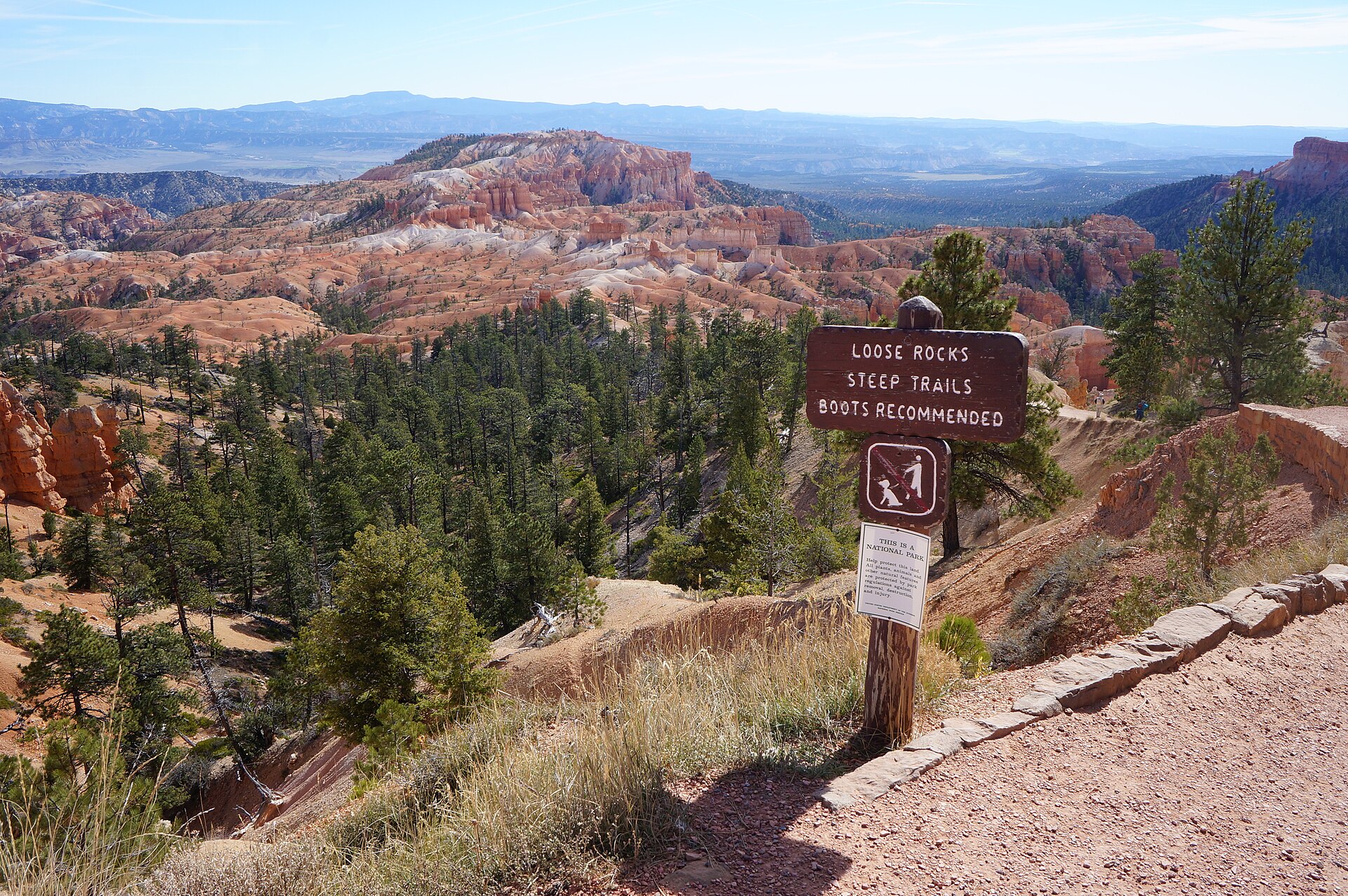
Getting here is simple. A paved road leads from the park entrance to a small parking lot, and from there, it’s a short walk to the overlook. The path is easy, lined with signs explaining the geology and history of the canyon. The viewpoint itself has railings and a few benches, though most people end up standing at the edge, staring out. On clear days, the view stretches for miles, the distant mountains fading into blue. If you’re lucky, you might spot a deer grazing near the trees or a rabbit darting between the rocks. Coyotes sometimes wander the edges of the canyon at dawn or dusk, though they’re shy and quick to disappear.
For those who want to explore further, there are trails that descend into the canyon itself. The Navajo Loop is one of the most popular, winding down between the hoodoos and offering a completely different perspective. From below, the rocks loom even larger, their shapes more dramatic. The hike takes about an hour, but the climb back up can be tough—worth it, though, for the chance to stand among the formations rather than just look down at them. Along the way, signs point out the plants and animals that call the park home, as well as the forces that shaped this landscape over millions of years.
Sunset Point isn’t the kind of place you visit for luxury or entertainment. There are no fancy hotels, no rides, no distractions—just the land, the sky, and the quiet. Some people come for an hour, others stay all day, wandering the trails or sitting on the edge with a thermos of coffee. Either way, leaving feels like an interruption. Maybe that’s why so many return, drawn back by the way the light plays on the rocks, or the way the silence settles in when the sun finally dips below the horizon. It’s a place that doesn’t just show you something beautiful—it makes you feel it.