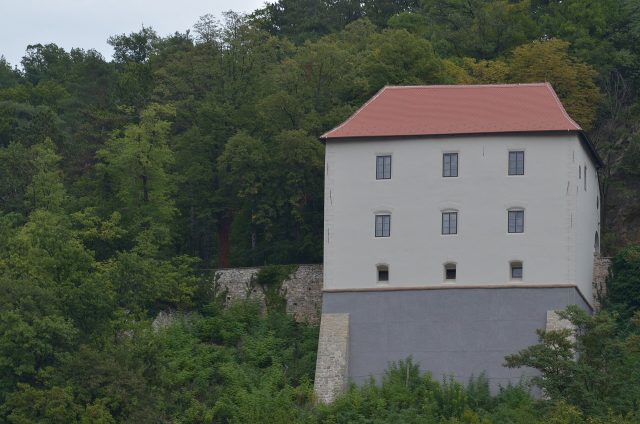
Perched above the quiet town of Krapina in northern Croatia, the hill of St. Ivan offers more than just a scenic overlook—it’s a place where the past lingers in the breeze and the landscape unfolds like a living postcard. The climb to the top is part of the experience, winding through narrow cobblestone streets lined with old houses whose wooden shutters and faded facades hint at a time when this town was a bustling stop on trade routes between Hungary and the Adriatic. The path itself is unhurried, marked by weathered stone crosses and small chapels that once guided travelers, their presence now softened by time and overgrown with wild herbs.
At the summit, the view stretches across red-tiled rooftops, patchwork fields, and vineyards rolling toward the horizon. On clear days, the distant outlines of Medvednica and Ivanščica mountains emerge like silent guardians of the valley. The observation deck, a simple wooden platform, invites visitors to pause—not just to take in the scenery, but to feel the rhythm of the place. There’s no rush here, no crowds jostling for the best photo. Instead, the hill has a way of slowing time, whether you’re watching shadows creep across the fields or listening to the wind rustle through the trees.
The hill takes its name from the small Church of St. Ivan, a modest structure that has stood here since the 16th century. Its whitewashed walls and single bell tower give it an unassuming charm, the kind that feels more personal than grand. Inside, the air is cool and still, with faded frescoes clinging to the walls and a wooden altar carved with simple, time-worn patterns. The church has survived fires and wars, rebuilt each time by hands that understood its quiet significance. For locals, it remains a symbol of resilience, a place where faith and history intertwine without fanfare.
Long before it became a viewpoint, the hill played a different role. Archaeological finds suggest it was once a fortified settlement, a strategic lookout in an era when control of high ground could mean the difference between safety and invasion. Later, during the Middle Ages, it served as a watchpoint, its slopes likely echoing with the shouts of sentries and the crackle of signal fires. Even the ruins of old stone walls near the church, now half-hidden under moss and wildflowers, carry whispers of those turbulent times. They’re easy to miss if you’re not looking, but they add a layer of depth to the place, a reminder that this peaceful hilltop once bristled with tension.
The hill’s history isn’t confined to the distant past. In the 19th century, when Krapina was part of the Austro-Hungarian Empire, a large cross was erected here in memory of those lost in wars. It became a site of pilgrimage, and every June, on the feast day of St. Ivan, hundreds of people still make the climb to honor tradition. The celebration is low-key—no parades or fireworks, just families gathering with food and stories, the way they have for generations. It’s one of those moments when the hill feels most alive, not as a tourist spot, but as a living part of the community.
The changing seasons bring their own magic to the hill. In spring, wildflowers blanket the slopes in bursts of color, while autumn turns the vineyards below into a sea of gold and crimson. Summer offers a cool respite from the heat, and winter, when snow dusts the paths, transforms the hill into something out of a storybook. Even on gray days, when clouds cling to the summit, there’s a quiet beauty in the way the mist softens the edges of the landscape, as if the world beyond has momentarily faded away.
Krapina itself is a town that doesn’t give up its secrets easily, and the hill of St. Ivan is one of them. It’s not the kind of place you’d find in glossy travel brochures, nor does it offer the instant gratification of more famous landmarks. What it does offer is something rarer: a sense of stillness, a connection to the land and its history that feels genuine. There are no souvenir stands or guided tours here, just the wind, the view, and the occasional sound of a church bell drifting up from the town below.
For those who make the climb, the reward isn’t just the panorama—it’s the chance to step outside of time for a little while. To sit on a bench with a thermos of coffee, watch the light shift over the valley, and realize that some of the most memorable places aren’t the ones that shout for attention, but the ones that quietly wait for you to find them. The hill of St. Ivan has been doing that for centuries, and it’s still here, patient as ever.