
Krapina
Croatia · 8 places
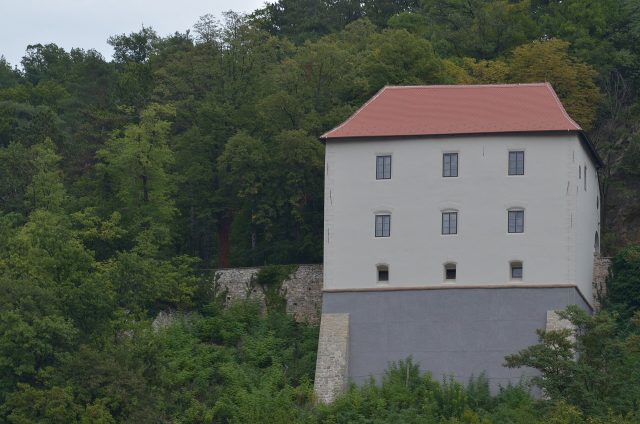
Photo: Mich973, CC BY-SA 3.0
Krapina feels like a place where time has settled into a slower, gentler rhythm. Tucked among the rolling green hills of Zagorje in northern Croatia, it doesn’t demand attention the way coastal towns do. There are no crowded promenades or souvenir stalls here—just quiet streets, the scent of fresh bread drifting from bakeries, and the occasional clink of glasses as locals share homemade wine at wooden tables. It’s the kind of town where history isn’t just preserved in museums but woven into the fabric of everyday life, where the past lingers in the worn cobblestones and the way people still greet each other by name.
The town’s claim to fame lies in its deep connection to human history. Perched on a hill above Krapina, the Museum of Evolution tells the story of the Neanderthals whose remains were discovered here—some of the most significant finds in Europe. But this isn’t a dry academic exhibit. Instead, it brings the past to life through reconstructions of ancient hunts, the clatter of stone tools, and even the imagined voices of our distant ancestors. The museum also traces the layers of cultures that have shaped the region—Celtic, Roman, Slavic—each leaving their mark. The town’s name itself comes from *krapina*, the old Slavic word for nettle, a plant once seen as a symbol of fertility and resilience.
Wandering through Krapina’s old center feels like stepping into a living postcard. Narrow streets lined with Baroque and neoclassical houses lead to the main square, where the 18th-century Church of St. Nicholas stands as a quiet witness to centuries of change. Nearby, the former town hall now houses a small museum filled with handcrafted tools, embroidered textiles, and other remnants of local life. In summer, the square comes alive with folk festivals, the air filled with the twang of tamburicas and the laughter of dancers in traditional dress. But in winter, the town wraps itself in stillness, broken only by the distant chime of church bells or the crunch of snow underfoot.
Beyond the town, the landscape unfolds in gentle waves of vineyards and forests. Zagorje’s hills are perfect for long walks or leisurely bike rides, with trails winding past family-run wineries where rare local grape varieties are cultivated. The region is also known for its thermal springs, where warm, mineral-rich waters bubble up from the earth, offering a place to unwind. The springs have drawn visitors for generations, though today they remain refreshingly free of crowds—just a few locals soaking in the quiet, the way they’ve done for decades.
What makes Krapina special is its refusal to perform for tourists. There are no grand hotels or flashy attractions, just a handful of cozy guesthouses where hosts might sit down with you over a glass of wine and share stories about the town. The food is simple but unforgettable—thick slices of *štrukli*, a baked cheese pastry, served with a dollop of sour cream, or hearty stews simmered with local herbs. People here move at their own pace, as if they’ve decided that life is too short to rush. And perhaps that’s why visitors leave feeling lighter, as if they’ve borrowed a little of that unhurried rhythm for themselves.
See & Do
All of them

Places on the map
Marker colour follows the categoryClimate and weather
Detailed weather: Krapina- Average temperature
- 12 °C
- Precipitation per year
- 815 mm
Average air temperature
°C
1
4
8
12
16
22
23
22
17
12
6
3
Jan
Feb
Mar
Apr
May
Jun
Jul
Aug
Sep
Oct
Nov
Dec


