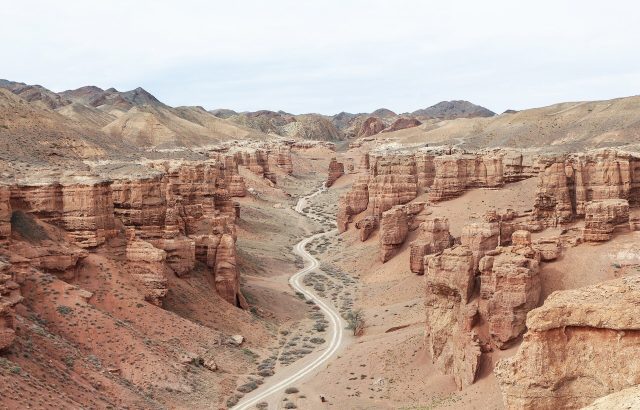
Charyn Canyon is one of those rare places where nature seems to have taken deliberate care to remind us of time’s grandeur—and our own smallness within it. Over millions of years, water and wind sculpted the rock into shapes so surreal they could pass for a film set. The viewing platform perched at the canyon’s edge offers a perspective that steals your breath: deep ravines carved by erosion, russet cliffs standing like ancient sentinels, and the endless steppe stretching toward a hazy horizon. There are no crowds here, no souvenir stalls, no chatter—just silence, the wind, and the unsettling sense that you’ve stepped to the edge of another world entirely.
The canyon’s history stretches back far beyond human memory. Geologically, its origins lie in an ancient lake that once filled this basin around twelve million years ago, fed by the Charyn River. As the water receded, it left behind a labyrinth of gorges, hoodoos, and rock formations that today are known as the Valley of Castles. Locals have long known of this place, but for the wider world, it remained hidden until Kazakhstan opened its doors to travelers in recent decades. Even now, it feels like a secret, a corner of the earth that time forgot.
What makes Charyn Canyon extraordinary is how little human hands have shaped it. The architecture here is entirely natural, a masterpiece of erosion that transforms stone into something resembling ruins, frozen waves, or colossal sculptures. The best time to see it is at sunset, when the light turns the cliffs into a shifting palette of reds, oranges, and purples. The shadows deepen, the shapes sharpen, and for a moment, the canyon feels alive. The viewing platform is positioned to frame the most dramatic sections—the narrow gorges, the sweeping valleys, even the small caves hollowed into the rock faces.
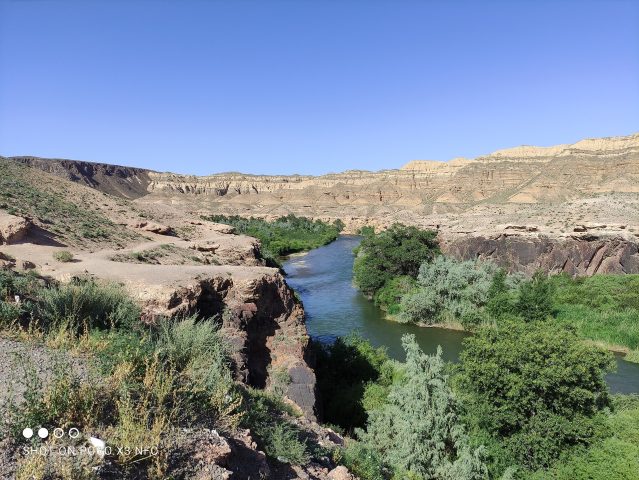
While the canyon is the main attraction, the Charyn River that carved it is just as compelling. Unlike most rivers in the region, it flows year-round, cutting through the canyon floor in a series of small waterfalls and pools. On hot days, the water is tempting, though the current can be deceptive, and the riverbed uneven. Along its banks, tugay forests—rare in these latitudes—provide shade and a splash of green against the arid landscape. The river is also a draw for local fishermen, who come in search of the fish that thrive in its waters.
For Kazakhs, Charyn Canyon is more than a natural wonder; it’s a place steeped in history and legend. Some say it was once part of a vital caravan route, where traders and warriors sought refuge in its labyrinthine gorges. Today, it stands as a symbol of untamed wilderness, a reminder that even in an age of cities and technology, there are still places where nature dictates the rules. That’s why people come here—not just for photographs, but for the quiet, for the chance to stand in a landscape that existed long before humans and will endure long after.
Reaching the viewing platform is straightforward, though the journey itself is part of the experience. From Almaty, the road east cuts through vast steppes and low hills before the first cliffs of the canyon appear on the horizon. The drive takes about three to four hours, depending on conditions, and it’s best to leave early to catch the sunrise or linger until dusk. Midday has its own magic, too—the sun brings out the texture of the rocks, while the shadows add depth to the scene.
The platform itself is deliberately unobtrusive, with nothing more than a small shelter to offer shade. There are no facilities here, so visitors usually bring their own water and snacks, settling in for a few hours to watch the light shift across the canyon. On windy days, the air hums with strange sounds—the whisper of the breeze through the ravines, the distant echo of nothing in particular. Some claim to hear voices in the wind, but that’s likely just the mind filling in the silence.
What lingers after a visit to Charyn Canyon is hard to put into words. Some leave with a quiet melancholy, others with a resolve to return. Most simply stand in awe, trying to grasp the scale of it all. There are no familiar landmarks here—no skyscrapers, no billboards, no crowds. Just earth, sky, and the wind, a force that reminds you how vast the world really is. That’s the canyon’s gift: a chance to step outside time, if only for a little while, and remember what it means to be small in the face of something enduring.