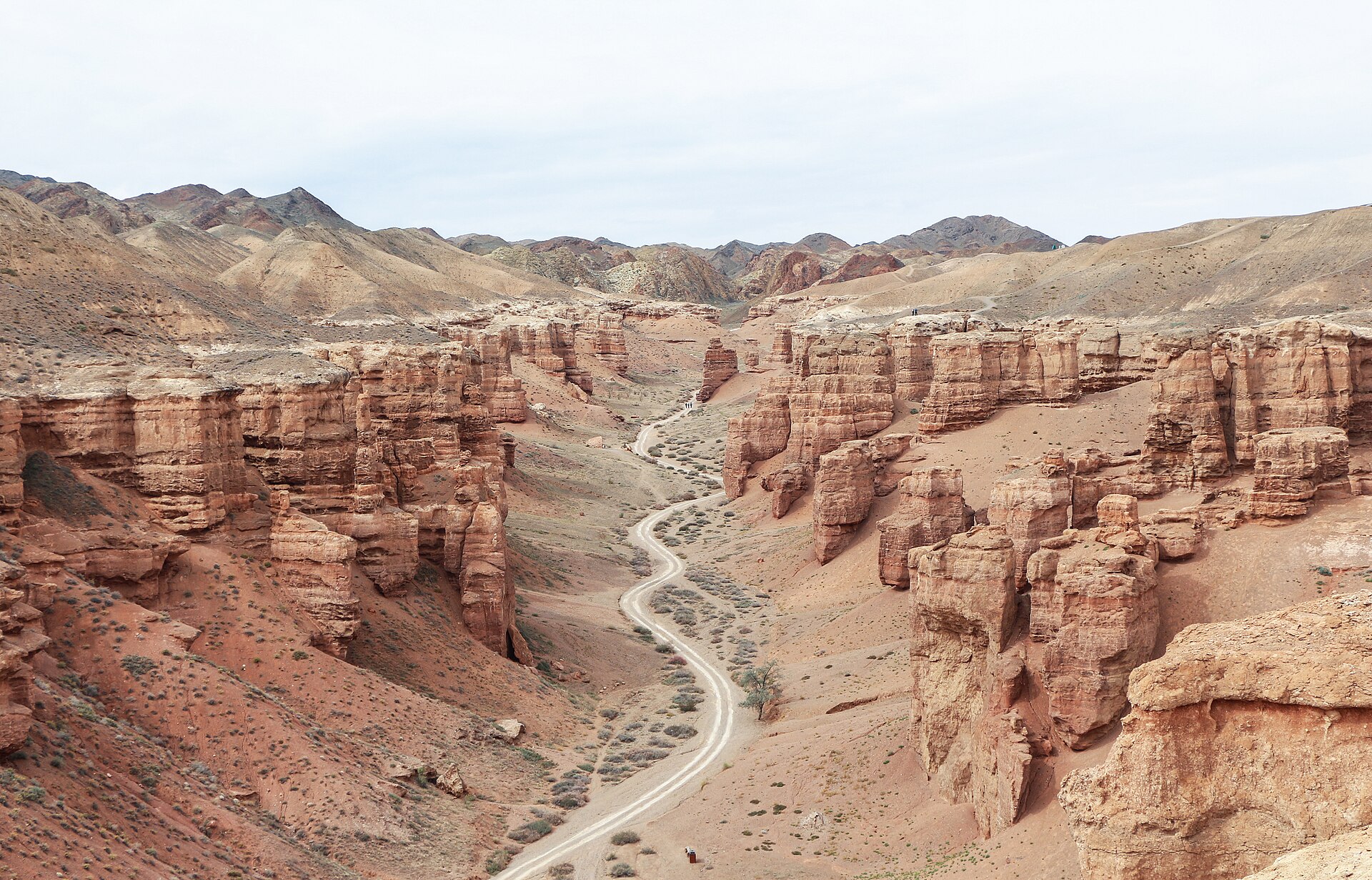
Charyn Canyon’s Valley of the Castles is one of those rare places where nature seems to have set out to prove just how much it can achieve without any human intervention. Tucked within the Kazakh stretch of the canyon, this landscape feels like the ruins of an ancient fortress, though no such structures ever stood here. Over millions of years, wind and water have sculpted the soft sedimentary rock into shapes that resemble crumbling towers, arched gateways, and weathered walls. The play of light and shadow across the reddish and golden hues only deepens the illusion, making it easy to imagine this as the remnants of some long-forgotten civilization. In reality, it’s pure geology—yet the mind fills in the gaps effortlessly.
The Charyn Canyon itself is often called a younger sibling to the Grand Canyon, though the comparison is more poetic than factual. Formed around twelve million years ago as the Charyn River carved its way through the rock, the canyon is still evolving, with erosion continuing to reshape its contours. The Valley of the Castles is just one section of this vast natural wonder, but it’s here that the rock formations take on their most dramatic and fantastical forms. The layers of sediment, exposed by time, tell a story of geological forces that have unfolded over millennia.
The mood of the valley shifts with the light. At dawn, the cliffs glow in soft pinks and ochres, as if molded from clay. By midday, they blaze a fiery red under the sun, only to deepen into rich crimson as evening approaches. On overcast days, the landscape takes on a brooding, almost mystical quality, with shadows stretching long and the air thick with silence. After rain, the effect is even more striking—dark rivulets streak down the slopes, and the scent of damp earth and sagebrush lingers in the air. It’s a place where the passage of time feels both vast and immediate.
For centuries, the local Kazakh people have regarded this land with reverence. Legends speak of the canyon as a dwelling place for spirits, a site of power where ancient nomads would pause to seek protection before crossing the desert. Even now, some travelers leave coins or ribbons at the base of the cliffs—a quiet nod to traditions that have endured for generations. There’s no scientific explanation for the pull this place exerts, but the sense of something intangible, something older than memory, is hard to shake.
Reaching the Valley of the Castles is simplest from Almaty, though the journey takes several hours. The route follows the A-351 highway east, past the town of Chundzha, before turning onto a rough track leading toward the canyon. Along the way, roadside cafés offer simple meals—flatbread with lamb, tea with milk—but don’t expect much in the way of modern amenities. It’s wise to bring water and snacks, especially if you plan to spend the day exploring. The road itself is part of the experience, winding through open steppe where the horizon stretches endlessly in every direction.
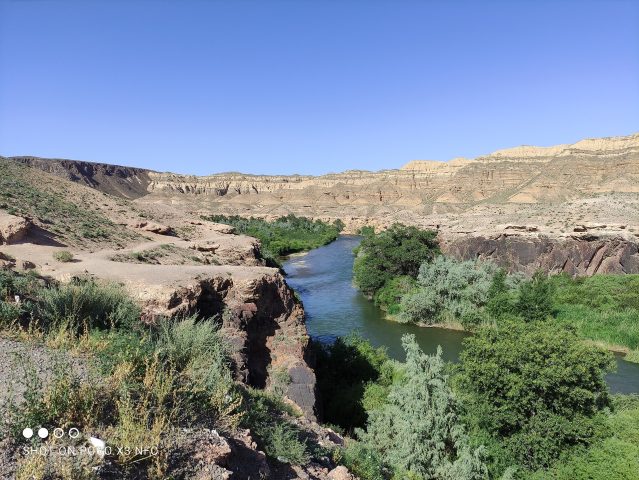
Once inside the valley, there are no marked trails or viewing platforms. The terrain is rugged, with loose rock underfoot and fragile cliffs that demand caution. Those who venture to the higher ridges are rewarded with sweeping views of the Charyn River snaking through the canyon below, its waters a stark contrast to the arid landscape. On clear days, the snow-capped peaks of the Dzungarian Alatau rise in the distance, their white summits a reminder of the vastness of this land. The silence up here is profound, broken only by the occasional cry of a bird or the whisper of wind through the grass.
For photographers, the Valley of the Castles is a dream. Every angle offers a composition—sharp contrasts of light and shadow, the interplay of warm and cool tones, the surreal shapes of the rock formations. Sunset is particularly magical, when the low sun bathes the cliffs in a golden glow, making them appear as if they’re on fire. But even without a camera, the place leaves an impression. The stillness is almost absolute, a rare thing in a world that rarely stops moving. It’s easy to see why people have sought out such places for centuries, drawn by the quiet and the sense of being part of something far older than themselves.
Though still remote, the Valley of the Castles is slowly gaining attention from travelers. Artists, writers, and adventurers come here seeking inspiration, solitude, or simply a break from the noise of modern life. In recent years, jeep tours and horseback rides have begun to appear, though mass tourism hasn’t taken hold—yet. The lack of development is part of the valley’s charm. There are no souvenir stands, no crowds, just the raw, unfiltered beauty of the landscape. It’s a place that feels untouched, as if time itself moves differently here.
If you decide to visit, be prepared for the elements. Summers can be scorching during the day, with temperatures plummeting at night. Spring and autumn bring strong winds, while winter dusts the canyon in a thin layer of snow, lending the cliffs an even more otherworldly appearance. No matter the season, cell service is unreliable, and the nearest town is a long drive away. It’s a place that demands self-sufficiency, but the rewards are worth it.
The Valley of the Castles doesn’t fit neatly into any category. It’s not quite a desert, not quite a mountain range, not quite like any other canyon. It feels like a stage set for some ancient myth, a place where the boundaries between reality and imagination blur. Whether you come for a few hours or a few days, it stays with you. The key is to take your time—to stand among the rocks, breathe in the dry steppe air, and listen to the silence. There’s no rush here. The land has waited millions of years to be seen; it can wait a little longer for you to truly look.