Charyn Canyon feels like a place where nature set out to prove it could craft something too perfect to be real. Stretching for nearly a hundred miles along the Charyn River in southeastern Kazakhstan, near the Chinese border, its sheer cliffs and wind-sculpted rock formations rise abruptly from the earth, as if carved by some deliberate, unseen hand. Unlike its more famous cousin in Arizona, Charyn remains quiet, untouched by crowds or commercialism. The only sounds here are the whisper of wind through the canyon and the occasional cry of a bird echoing off the stone.
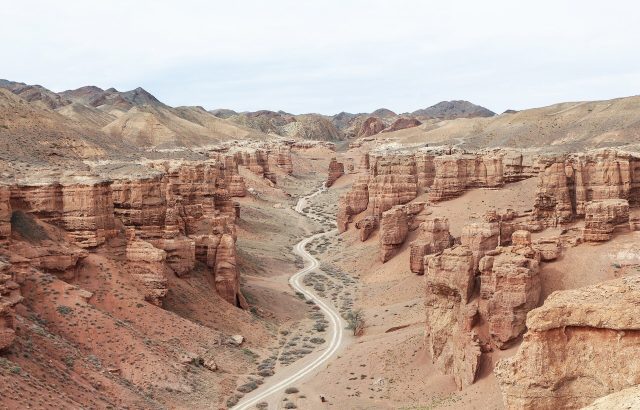
The canyon’s origins trace back millions of years, when the river began its slow, relentless work of eroding layers of sedimentary rock. Some of the formations are believed to be over twelve million years old, shaped by water and wind into shapes that defy logic—towers, arches, columns, and even figures that resemble castles or ancient fortresses. Locals have given the most striking formations their own names, like the Palace, the Sphinx, or the Turtle, each one carrying stories passed down through generations. These names aren’t just descriptions; they’re an attempt to make sense of the landscape, to weave it into human history.
The most visited section of the canyon is the Valley of Castles, where the rocks do indeed look like the ruins of a medieval stronghold. Walking through it, you can spend hours tracing the curves of the stone, watching how the light transforms its colors. At dawn, the cliffs glow pink; by midday, they turn ochre; and by sunset, they deepen into rich reds and purples. After rain, the wet rocks glisten, and the air fills with the scent of damp earth and sagebrush. It’s a place where the landscape seems to shift with the hour, as if alive.
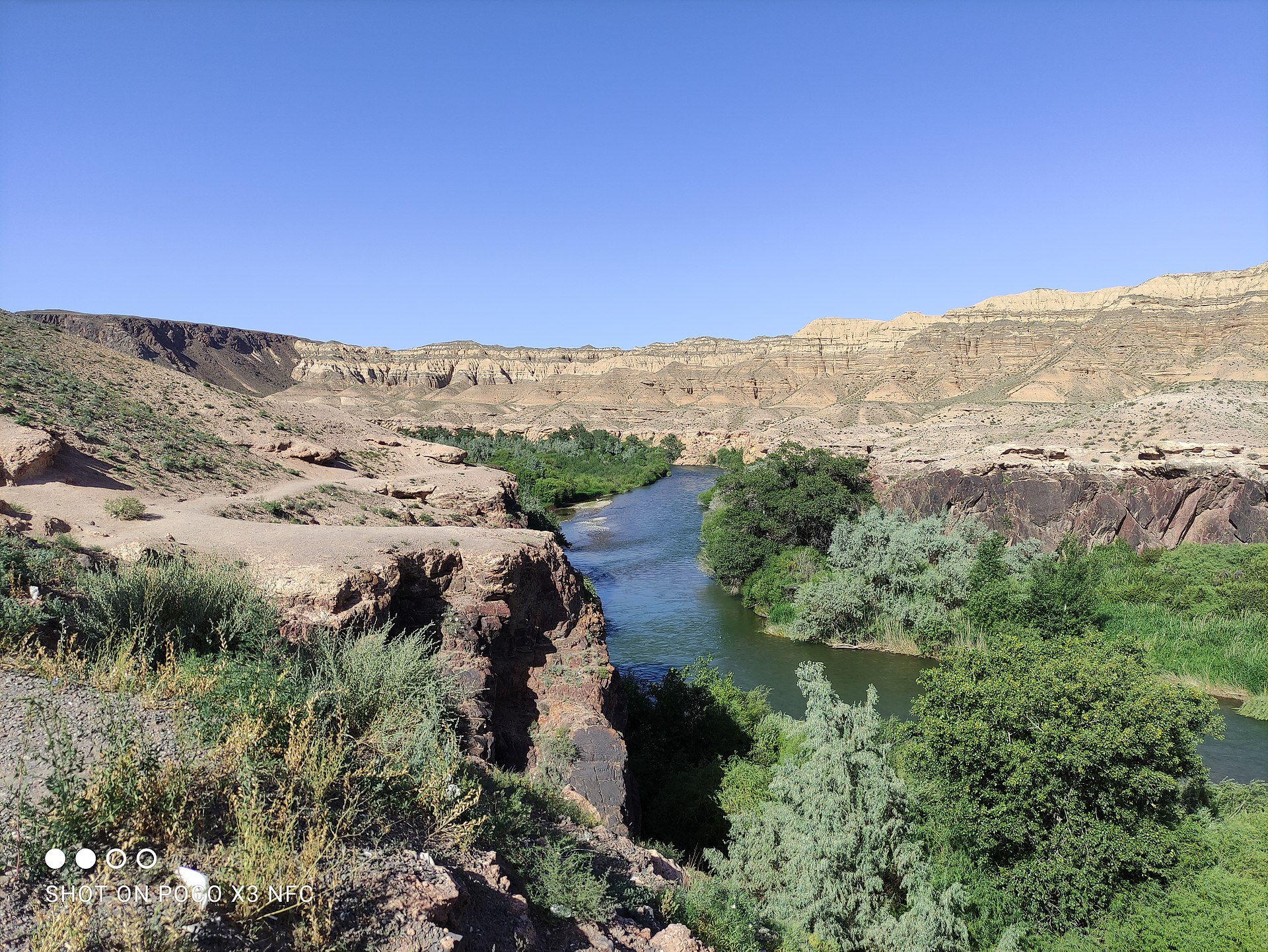
The Charyn River, flowing through the canyon’s depths, is shallow and calm, though it forms small rapids in places. Its water is clear, with a faint greenish tint, and in the heat of summer, both locals and visitors wade into its cool pools. Along the banks, tugay forests—rare thickets of poplar, willow, and oleaster—provide patches of green in the otherwise rocky desert. These forests offer shelter to birds and small animals, and to humans, they’re a welcome respite from the sun. The contrast between the stark cliffs and the lush greenery below is one of the canyon’s most striking features.
Charyn Canyon has long been a crossroads of history. During the Middle Ages, it lay along the Silk Road, where caravans carried goods between China and the Mediterranean. The terrain was treacherous—narrow gorges and arid steppes could trap travelers, but the canyon also offered refuge from bandits or sandstorms. Archaeologists still uncover traces of ancient campsites, coins, and pottery fragments in the area, evidence that people have lived here for thousands of years. The canyon’s isolation, which once made it dangerous, now makes it feel like a window into the past.
Today, the canyon draws not just travelers but scientists as well. Geologists study its erosion patterns, biologists research the unique tugay ecosystems, and historians piece together the routes of ancient traders. For most visitors, though, Charyn feels like a place of discovery. There are no crowded viewpoints or fenced-off paths—just natural trails leading to the best vantage points. The key is to take your time, to stand at the edge of a cliff and let the vastness of the canyon sink in.
The weather here is unpredictable. Summers can reach scorching temperatures, with little shade to offer relief. Winters are cold, though snow is rare, and the canyon takes on a stark, almost forbidding beauty, its rocks dusted with frost. The best times to visit are spring and early autumn, when the air is crisp and the landscape is at its most vibrant. In spring, wildflowers—tulips and poppies—blanket the slopes, while in autumn, the tugay forests turn golden. These seasons also bring milder temperatures, making it easier to explore without the extremes of summer or winter.
Getting to Charyn Canyon is easiest from Almaty, Kazakhstan’s largest city, about 120 miles to the northwest. The drive takes around three hours, most of it through open steppe where the horizon blurs into the sky. Along the way, small villages offer a taste of local life—dishes like beshbarmak, manti, or flatbread baked in a tandyr. There are no hotels or restaurants in the canyon itself, so most visitors come for the day or camp along the river. The lack of infrastructure only adds to the sense of adventure, as if you’re stepping into a landscape that hasn’t changed in centuries.
Charyn Canyon isn’t just a geological wonder; it’s a place where time seems to move differently. Standing on the edge of a cliff, looking down at the river winding through the stone, it’s easy to forget the noise of modern life. The canyon has a way of making you feel small in the best possible sense—reminding you of the vastness of the natural world and your place within it. Maybe that’s why people keep coming back, as if drawn by some unspoken promise that the canyon, in its quiet way, still holds secrets waiting to be uncovered.