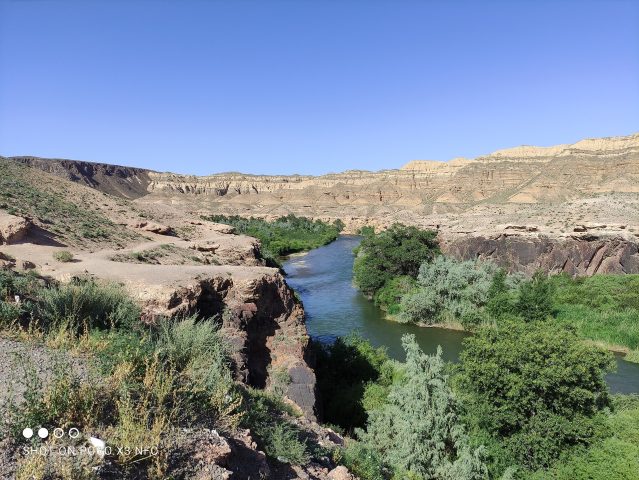
Altyn-Emel National Park stretches across southern Kazakhstan, where the steppe collides with mountains and deserts in a landscape unlike anywhere else in the country. This is a place where raw natural forces have shaped the earth into something almost otherworldly—a vast expanse of shifting sands, jagged canyons, and ancient secrets carried by the wind. The park follows the course of the Ili River, its boundaries encompassing not just dramatic terrain but also traces of human history that date back millennia. Here, the past and present exist side by side, untouched by the rush of modern life.
One of the park’s most famous wonders is the Singing Dune, a massive sand formation that seems to hum when the wind stirs its grains. The sound is eerie yet mesmerizing, a low, resonant drone that rises and falls with the breeze. Scientists explain it as the result of friction between moving sand particles, but local legends tell a different story—one of desert spirits whispering through the dunes. The dune itself is a living thing, constantly reshaped by the elements, yet always towering, stretching nearly three kilometers in length and rising up to 150 meters high. Standing at its base, you can’t help but feel the weight of its age and the mystery it carries.
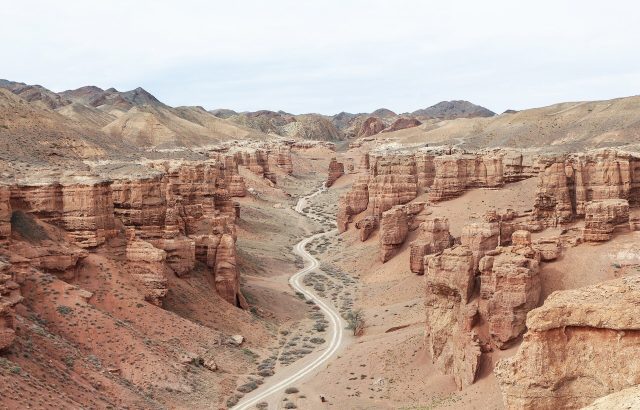
The canyons of Altyn-Emel are just as striking, none more so than Charyn Canyon, a deep gorge carved into reddish rock over countless centuries. Its walls twist and turn, forming shapes that resemble crumbling fortresses or the silhouettes of long-forgotten creatures. In some places, the cliffs rise a hundred meters above the riverbed, their layers telling a story of geological upheaval. The air here is dry, the silence broken only by the occasional rustle of wind through the sparse vegetation. Hardy plants cling to the rocks, and if you’re lucky, you might spot a goitered gazelle or an argali sheep navigating the steep slopes. Along the Charyn River, groves of Turanga poplars stand like ancient sentinels, their gnarled trunks bearing witness to centuries of change.
Beyond its natural beauty, Altyn-Emel holds a deep historical significance. Scattered across the park are burial mounds left by the Saka people, nomadic tribes who roamed these lands over two thousand years ago. These kurgan sites, marked by stone statues and earthen mounds, offer a glimpse into a culture that thrived along the edges of the known world. Archaeologists have uncovered artifacts suggesting that this region was once a crossroads of the Silk Road, where merchants, travelers, and warriors passed through, leaving behind fragments of their stories. The landscape itself feels like an open-air museum, where every rock and ridge has a tale to tell.
The climate here is as extreme as the terrain. Summers can be brutal, with temperatures soaring past forty degrees Celsius, while winters bring biting cold and frost. The best times to visit are spring and autumn, when the heat relents and the desert briefly blooms. In spring, patches of green emerge from the sand, and wildflowers dot the steppe. Autumn paints the hills in gold and amber, a fleeting burst of color before the long winter sets in. These seasons also bring a sense of quiet, a chance to experience the park without the distraction of crowds. The only sounds are the wind, the distant call of a bird, or the crunch of gravel underfoot.
Altyn-Emel is not a place for those seeking convenience. There are no luxury resorts or paved walkways—just raw, unfiltered nature. Visitors must adapt to its rhythms, whether driving along dusty tracks or hiking through rugged terrain. Some areas require special permits, and it’s wise to check ahead before setting out to the Singing Dune or the more remote canyons. Local guides, often descendants of nomadic families, share not just the park’s natural history but also the traditions of the people who have lived here for generations. Their stories add another layer to the experience, connecting the land to the lives of those who have called it home.
Wildlife is another of the park’s quiet marvels. The kulan, a wild ass native to Central Asia, roams the open plains, its numbers slowly recovering after years of decline. In the skies, golden eagles and vultures circle overhead, while smaller birds flit through the riverine thickets. The park is a haven for birdwatchers, with species ranging from rare raptors to waterfowl that gather along the Ili River. At dawn and dusk, the desert comes alive with movement—hares darting between rocks, foxes slipping through the shadows, and the occasional glimpse of a gazelle bounding across the steppe.
What makes Altyn-Emel truly special is its sense of isolation. It’s a place where you can stand in the middle of a vast emptiness and feel the weight of time. There are no souvenir stands or tour buses, just the land as it has always been. Camping here is an experience in itself—sleeping under a sky so clear the stars seem close enough to touch, waking to the first light over the horizon, and drinking tea by a fire as the desert wakes around you. It’s not for everyone, but for those who come, it leaves a mark. This is a landscape that demands patience and respect, rewarding those who take the time to listen to its silence.