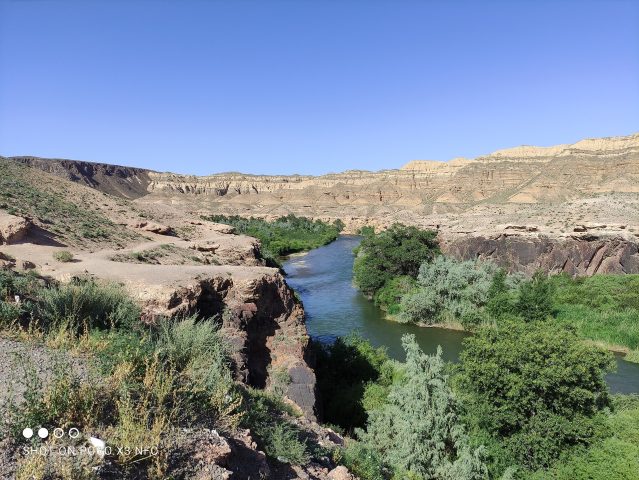
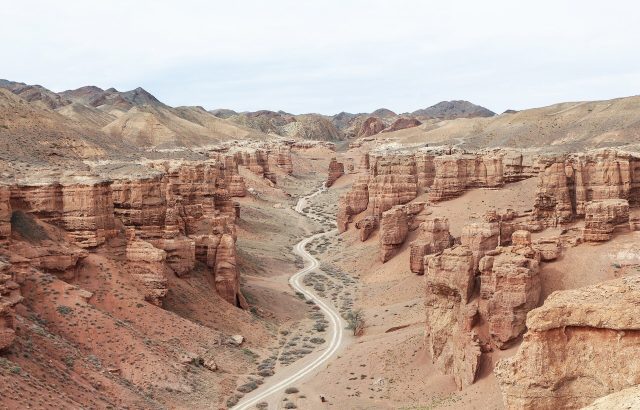
Charyn Canyon is often called Kazakhstan’s answer to the Grand Canyon, though on a more intimate scale. The comparison isn’t just about size—it’s about the way the landscape commands attention, with layers of red rock carved by wind and water over millions of years. The canyon stretches for nearly a hundred kilometers along the Charyn River, its cliffs shifting in hue from ochre to deep terracotta as the sun moves across the sky. There’s something almost theatrical about the way the light plays on the stone, turning the walls into a living canvas of earth and time.
The Nature Museum at the canyon’s entrance is small but thoughtful, designed to give visitors a deeper understanding of what they’re about to see. It doesn’t overwhelm with technical jargon or flashy displays. Instead, it lets the land speak for itself through fossils, rock samples, and simple explanations of how this dramatic terrain came to be. The exhibits include petrified shells and plant remains from an ancient sea that once covered the area, along with sedimentary rocks that tell the story of shifting climates and geological upheavals. Interactive maps and models help visualize the forces of erosion that shaped the canyon, making the abstract tangible.
Stepping outside after the museum, the landscape takes on new meaning. The cliffs are no longer just scenery—they’re pages in Earth’s history book, each layer a chapter written over millennia. The way the light changes throughout the day adds another layer of magic. In the early morning, the rocks glow soft pink, as if still holding the warmth of dawn. By midday, they blaze a deep, almost violent red, and by evening, they settle into shades of violet and gray. These shifts make every visit feel unique, as if the canyon itself is putting on a different performance each time.
Beyond its geological wonders, Charyn Canyon carries traces of human history. The museum touches on the nomadic cultures that once traveled these lands, using the river as a natural highway. There are legends, too—stories that turn the canyon into something more than just rock and water. One tale says the cliffs are the petrified remains of warriors who once guarded the valley. Another claims the canyon was carved by a celestial dragon searching for water, its fury splitting the earth open. These myths don’t just add color; they remind visitors that this place has always been part of a larger story, one that connects people to the land.
The canyon is divided into distinct sections, each with its own character. The most famous is the Valley of Castles, where the rock formations resemble the ruins of medieval fortresses, complete with towers and battlements worn smooth by time. It’s easy to spend hours wandering among them, tracing the shapes of wind-sculpted arches and spires. Another area, the Red Canyon, offers sheer cliffs that drop dramatically toward the river below. For those willing to hike farther, trails lead down to the Charyn River, where a grove of Sogdian ash trees—relics of the pre-glacial era—still thrive, their gnarled roots clinging to the riverbanks.
What makes Charyn Canyon special isn’t just its beauty, but the way it makes you feel. Unlike more famous natural wonders, it hasn’t been overrun by crowds. There’s space here to breathe, to listen to the wind rustling through the rocks, to watch the river carve its slow path through the stone. It’s a place where time seems to move differently, where the weight of centuries is visible in every layer of sediment. That sense of scale—of being a small part of something vast and enduring—is what draws people back.
The canyon isn’t just a summer destination. In winter, frost dusts the cliffs, turning them into a monochrome landscape of white and gray. The river, partially frozen, adds a quiet stillness to the scene. The museum explains how the seasons transform the canyon, from the wildflowers that bloom in spring to the way the light slants differently in autumn. Even the air feels different in winter—crisp and sharp, carrying the scent of snow and stone.
There’s no grand spectacle here, no man-made attractions competing for attention. Just the land as it is, shaped by forces far older than human memory. That simplicity is part of the appeal. Charyn Canyon doesn’t demand anything from its visitors—no tickets, no guided tours, no rush to see everything at once. It invites you to slow down, to walk the trails at your own pace, to sit by the river and watch the water flow. And if you return, it’s not for the sake of ticking off another landmark, but because the place has a way of staying with you. The rocks, the river, the endless sky—it all feels like something worth coming back to.