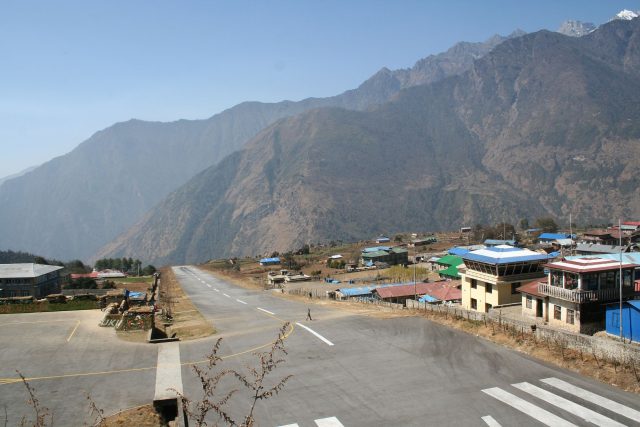
Everest doesn’t announce itself with a grand reveal. The world’s highest peaks don’t appear as dramatic silhouettes from a postcard. Instead, the mountains emerge quietly from a hillside near Salleri, where the air thins and sharpens, carrying the weight of what lies ahead. The horizon becomes a jagged line of snow-capped ridges, each one a day closer to Khumbu’s heart.
Salleri clings to a hillside at 2,400 meters. It’s not a tourist town but a waypoint for trekkers moving toward Everest or returning. Simple guesthouses serve butter tea while Sherpas share stories—these mountains are their home, their work, their daily backdrop.
The viewpoint is just a natural terrace where the land drops away. On clear mornings, Taboche, Cholatse, and Nuptse rise from the mist. No signs mark the spot, no designated photo ops—just the quiet understanding that the mountains reveal themselves on their own terms.
After days of walking through foothills where peaks hide behind clouds, this view clarifies what’s coming. The air will thin further. The trails will steepen. Each step will demand more.
But the climb doesn’t begin at base camp. It starts here, with the first unobstructed look at snow-covered slopes stretching upward.
In Salleri, time follows the sun. Locals rise with dawn’s rosy light and wind down as the sun dips behind ridges. Travelers linger for hours, watching light shift across slopes, turning rock to gold and snow to fire. Sometimes yaks pass with herders; other times, monks chant prayers to the peaks.
This land has seen generations of expeditions. Before trekking became an industry, early climbers stopped in Salleri to acclimatize. Older villagers remember when Khumbu had no paths, when the journey to base camp took weeks. They say the mountains haven’t changed, even as roads and lodges have.
For Sherpas, the Himalayas are life itself. They tend yaks, cultivate terraced potatoes, and build homes from stone and wood. The pace here isn’t hurried—it’s measured by the sun’s arc, not the clock’s hands. Travelers often find their own sense of time shifting, too.
At sunset, the mountains transform. Snow glows pink, then gold, then fades into evening’s deep blue. Even those not bound for Everest understand why people return. This isn’t just a place on a map. It’s where something larger begins to reveal itself. The journey to the top of the world is still distant, but the real adventure starts here—with the quiet realization of what the Himalayas are.