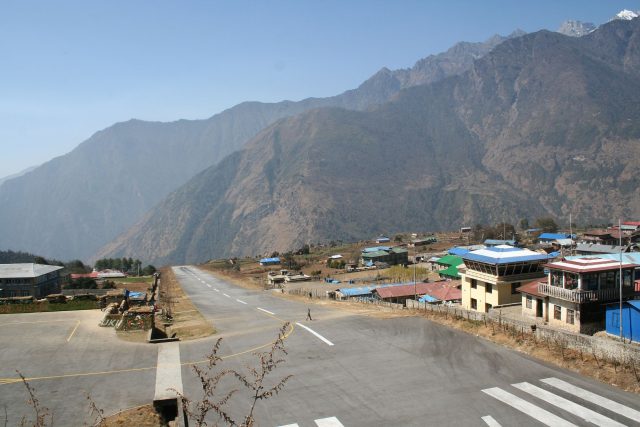
Salleri’s Market
Salleri’s market is where goods change hands and the town’s daily life unfolds. At 2,500 meters above sea level, the pace is slow, and the market is the center of it all. Unlike Kathmandu or Pokhara, Salleri keeps the rhythm of a highland village—faces are familiar, names are known, and trade mixes conversation with commerce.
The market doesn’t have orderly rows of stalls. It spreads along the main street, a mix of makeshift stands, baskets, and goods laid on the ground. Mornings start with the first light warming the air as locals—Sherpas, Tamangs, Newars, and villagers from nearby hills—arrive. They bring what they’ve grown or made: potatoes, buckwheat, apples, honey, woolen socks, knitted hats, wooden spoons, hand-forged knives. Shoppers move slowly, haggling and talking as they go.
Here, the market is about connection. It’s where news spreads—who married, who left for work in Kathmandu, who returned with stories. For many, it’s the only chance to see relatives or neighbors from distant settlements. A sale often leads to tea at a nearby stall, where conversations range from the weather to local politics.
The buildings around the market are simple. Most are two-story structures of stone and clay, with wooden balconies and corrugated iron roofs. Some vendors have awnings; others don’t. When monsoon rains come, people move under eaves or cover their goods with plastic. Trade continues because, for many, it’s their only income.
Salleri wasn’t always busy. Decades ago, it was just a village on the way to Everest. When trekking became popular, guides, porters, and lodge owners settled here. The market grew to meet their needs. Today, you can find basic trekking gear—walking poles, sleeping bags, thermoses—but the selection is limited compared to Kathmandu. For those who forgot something, it’s a lifeline.
For travelers, the market shows a side of Nepal’s highlands that brochures miss. There are no souvenir shops or pushy vendors. Instead, you see daily life: food, clothing, household items—things people need. Sometimes, a festival or wedding turns the market into a stage for music and dance.
The market is busiest in the morning. By midday, it quiets as people go home for lunch. It picks up again in the evening, but with less urgency. Most vendors leave by dark, though a few stay for last-minute shoppers. Even when empty, the market lingers in the scent of spices, the murmur of teahouses, the clatter of dishes.
Salleri’s market isn’t grand. There are no temples, fortresses, or dramatic views. Its charm is in its simplicity, in how it reflects the lives of those who depend on it. Every item, every person has a story. Spend a day here, and you’ll see why, for the people of Salleri, the market is more than trade. It’s the heartbeat of their world.