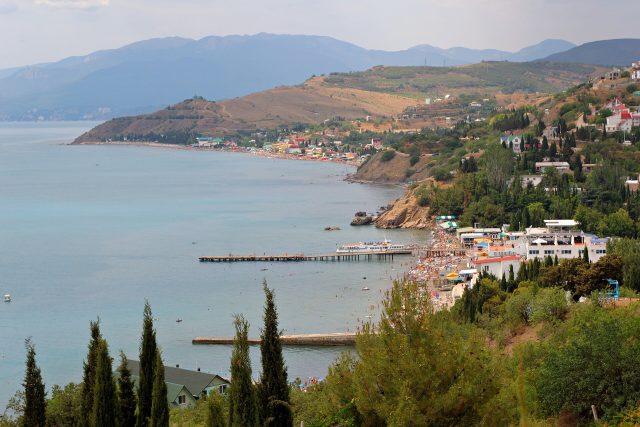
From the top of Mount Krestovaya, the Black Sea looks different every time. The hill isn’t tall, but it’s high enough to let you see the coastline as a living thing—cliffs covered in green, the curve of the shore where Malorechenskoye meets the water, and beyond that, the sea stretching into the distance. The platform at the summit is small, barely more than a flat spot on the rock. There are no railings, no signs, nothing to get between you and the view.
The mountain gets its name from the cross that has stood here for as long as anyone remembers. No one knows exactly when it was first put up. Some say it was in the 1800s, after the Crimean War, but there’s no proof. What matters is that the cross keeps getting replaced—each one a little different, but the tradition stays the same. The current one is metal, built to last, and people still leave stones at its base, stacking them like quiet offerings.
The climb starts where the village ends. The pavement turns to dirt, and the air smells of wild herbs. The path winds up through juniper bushes and dry grass, rising in slow turns. In spring, poppies cover the slopes like scattered fire. By summer, the heat brings out the scent of pine, and wormwood lines the trail with its silvery leaves. If you go early, the stones won’t burn your feet, and the sea below will be its deepest blue.
From the top, you can see Malorechenskoye’s pebbled beaches, Rybachye hugging the shore, and farther away, Solnechnogorsk. On clear days, Ayu-Dag rises to the west, its shape unmistakable. The weather changes everything—a storm can turn the sea dark, while a calm morning makes the horizon disappear into the sky. The mountain doesn’t just show you the view; it makes you feel how big it is.
This place has always been a meeting point. Shepherds used to bring their flocks here before the land was split into vineyards and resorts. In Soviet times, kids from pioneer camps hiked up for the view. In the nineties, people came looking for quiet. Now, there are benches and signs asking visitors to take their trash, but the mountain still feels empty if you step off the main path.
Sunset here is slow. The light changes first, turning the water from blue to gold, then to violet. Shadows stretch across the sea, and the villages below light up. The wind carries the smell of salt and earth. Time moves differently on the mountain—no schedules, just the sound of waves and the occasional voice drifting up from below.
Malorechenskoye is known for its beaches and wine. But the real reason to climb Krestovaya isn’t the postcard views. It’s the moments when the land feels older than the villages, when the sea seems to stretch back through centuries. The mountain doesn’t offer comfort or entertainment. It offers something quieter—a chance to see the world as it was long before roads and resorts, when the only sounds were the wind, the waves, and the creak of a cross in the breeze.