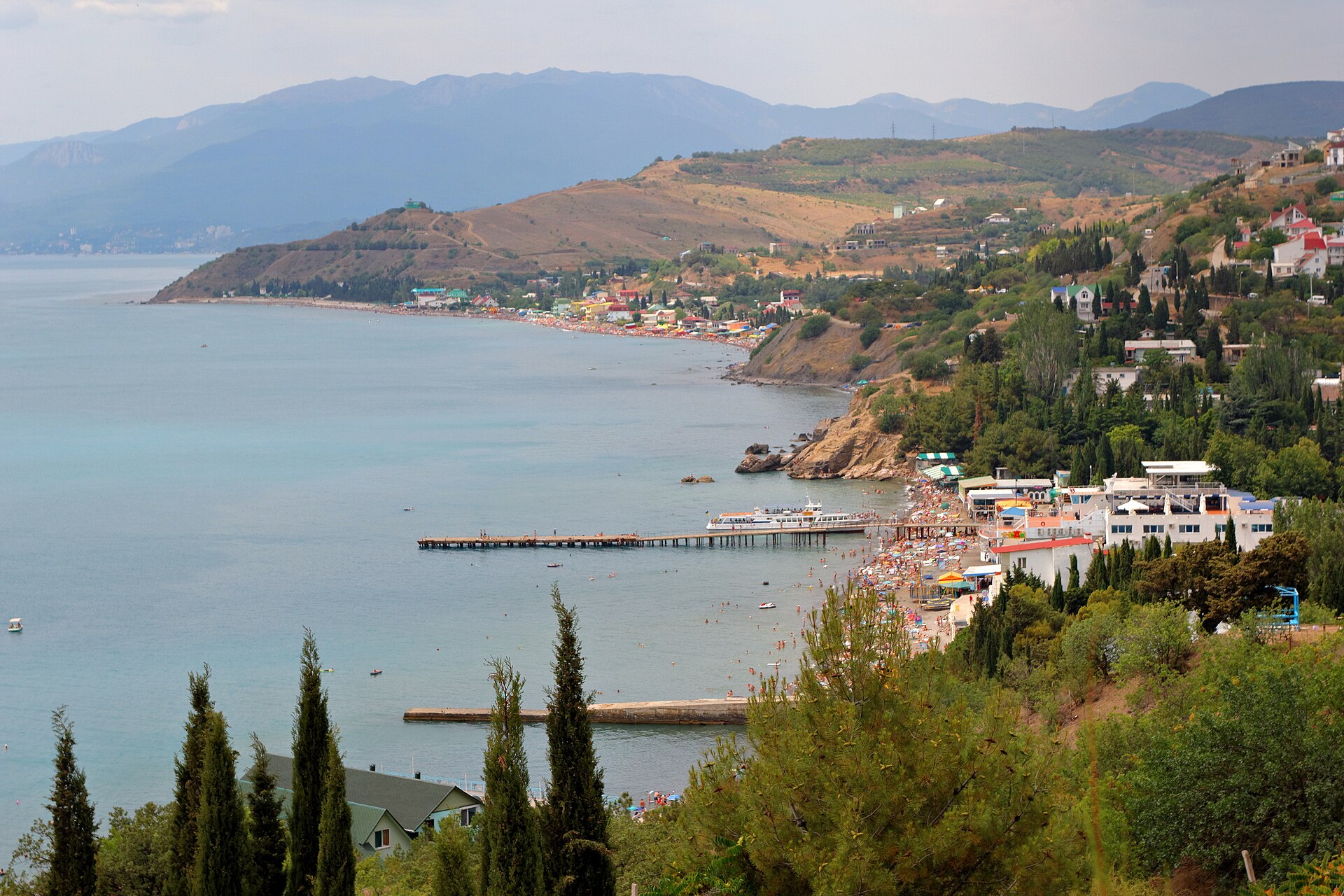
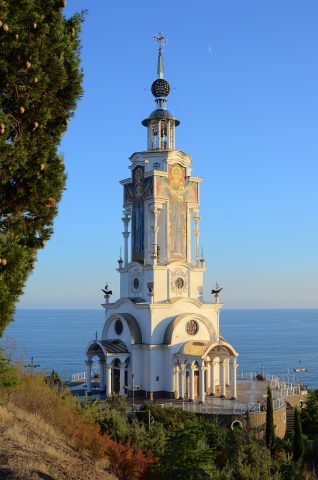
Perched on a low headland where the Crimean mountains meet the flat coastal strip, the Malorechenskoye Lighthouse doesn’t stand out at first. Its white stone tower blends into the greenery and scattered village buildings, looking like an old watchtower rather than a beacon. For over a century, though, it has guided ships along the peninsula’s southern shore.
The lighthouse was built in 1897, when Crimea was becoming a resort destination and maritime traffic was increasing. Lighthouses then were symbols of progress, marking the empire’s reach. The Malorechenskoye Lighthouse, though small, was part of a network that made the Black Sea safer for navigation—a role it still plays today.
The tower is twelve meters tall, but its slight elevation makes it visible from a distance. Built from local limestone, the same stone used in Sevastopol, it has weathered time well. The soft, golden-tinted stone in the evening light makes it seem like it’s always been there.
Inside, the lighthouse is simple. A narrow spiral staircase leads to the top, where a kerosene lamp once burned. Now automated, the beacon no longer needs a live-in keeper. The small keeper’s house still stands nearby, though. The job once required constant vigilance—maintaining equipment, refueling the lamp, ensuring the beacon never failed.
Unlike Crimea’s famous lighthouses at Ay-Todor or Meganom, Malorechenskoye has never been a tourist attraction. For locals, it’s a familiar landmark. Fishermen returning from sea looked for its light, and children saw it as one of the village’s most intriguing spots. During the Soviet era, it became part of the Black Sea’s navigational system. Even now, it continues its silent watch.
Around the tower, a small park offers a quiet place to sit. The only sounds are leaves rustling and the distant sea. From the top, the view stretches across the water, the village, and the hills covered in juniper and wild grasses. On clear days, the coastline is visible toward Alushta in the west and Sudak in the east. At dusk, the lighthouse begins its slow rotation, its beam cutting through the darkness.
Malorechenskoye isn’t like Yalta or Alupka. The village moves at its own pace—busy with summer visitors, quiet in winter. The lighthouse isn’t a must-see; it’s part of everyday life. There are no guided tours, but those who explore the shore often find it by chance.
New buildings—private homes, small guesthouses—have appeared around the lighthouse as tourism grows. Yet the area stays peaceful. Here, time slows. The sound of waves and the scent of the sea invite you to pause.
The names of the keepers who tended the beacon are mostly forgotten, but their work remains. The light they maintained still shines. The Malorechenskoye Lighthouse is more than a navigational aid—it’s part of Crimea’s landscape and history.