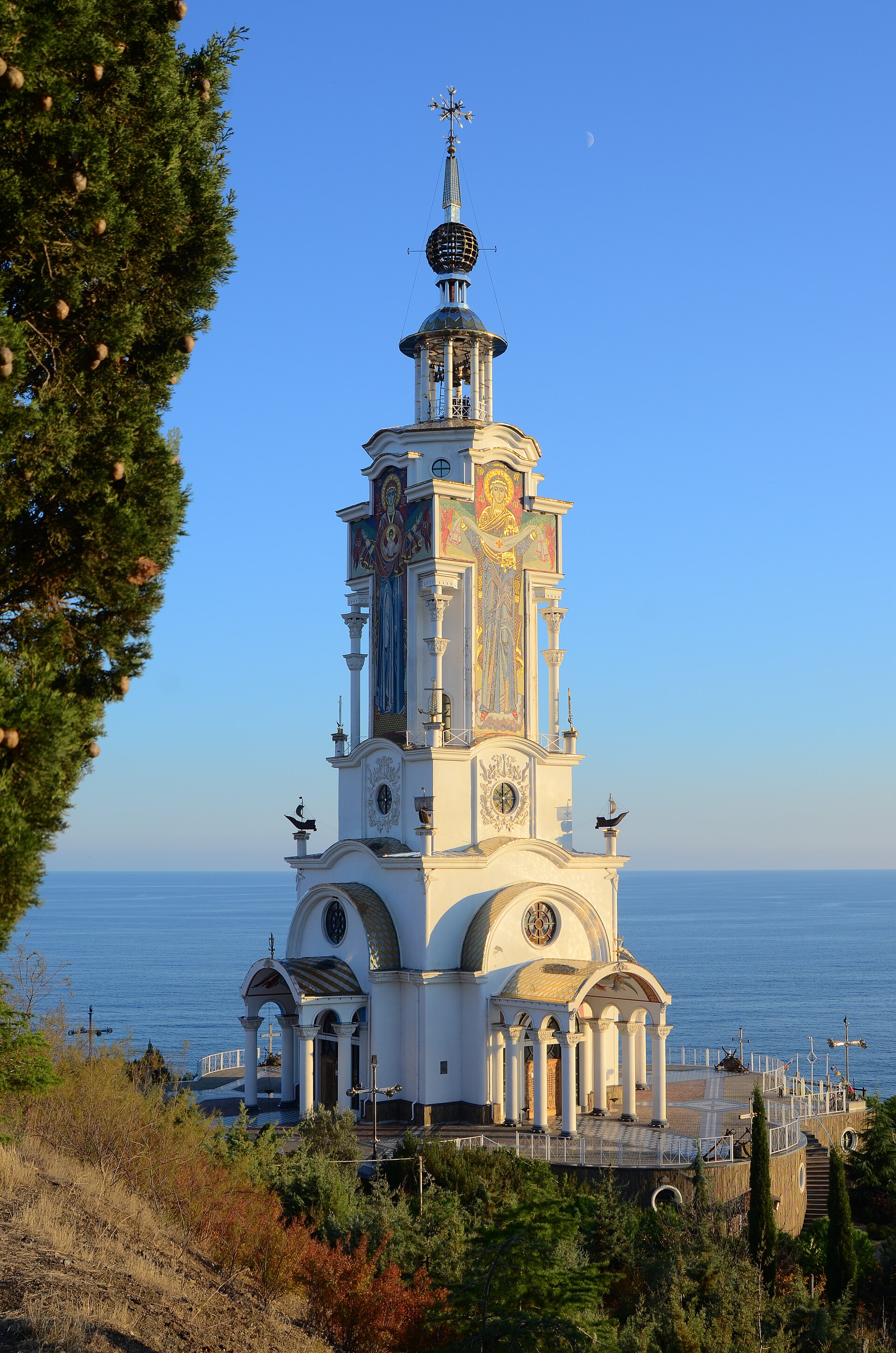
Perched on the edge of the Black Sea, where the Crimean mountains gently slope into the water, the Church of St. Nicholas the Wonderworker feels less like a traditional place of worship and more like a quiet guardian of the coast. Its white walls and domed silhouette stand out against the landscape, not for their grandeur, but for their unusual purpose—this is a church that also serves as a lighthouse, guiding ships through the waters while offering solace to those who step inside. The building’s dual role isn’t just a clever architectural trick; it reflects something deeper about this place, where the sea and faith have long been intertwined.
The idea for the church-lighthouse took shape in the early 2000s, born from a desire to create more than just another religious site. Locals and parishioners wanted a symbol of spiritual renewal for the region, but the concept evolved when an architect suggested merging the functions of a church and a lighthouse. The result was a structure that would serve both the faithful and sailors, a beacon in every sense of the word. Construction lasted several years, and in 2007, the church was consecrated in honor of St. Nicholas, the patron saint of travelers and seafarers—a fitting choice for a place where land and sea meet.
From the outside, the church-lighthouse is simple but striking. The main building is a low rotunda topped with a dome, surrounded by an open gallery that invites visitors to linger. The walls are clad in light stone, while the red-tiled roof contrasts softly with the blue of the sea. Inside, the space is small but warm, with an iconostasis crafted in a traditional style. Large windows flood the interior with natural light, making the church feel airy and serene. The most distinctive feature, though, is the bell tower, which doubles as the lighthouse. At its peak, a lantern casts its beam across the water at night, while during the day, it stands as a silent marker for ships navigating the coastline.
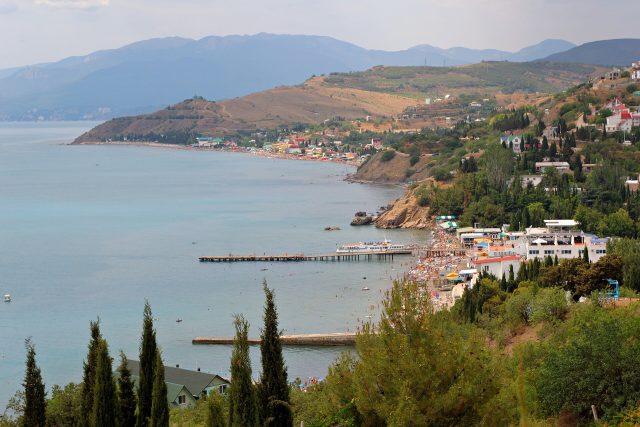
The church sits in Malorechenskoye, a quiet village nestled between the sea and the mountains. Unlike the bustling resorts of Crimea, this place moves at a slower pace. In summer, visitors come for the secluded beaches and the chance to wander through the surrounding hills, while winter brings a hushed stillness, as if the village itself is holding its breath. The church-lighthouse fits naturally into this rhythm. It’s visible from afar, yet it doesn’t overpower the landscape—it feels like a part of it, a place where the spiritual and the natural coexist without effort.
For the locals, the church has become more than just a place of worship. It’s a gathering spot for services, baptisms, and weddings, and on feast days, the building fills with parishioners and visitors alike. The most crowded time is on St. Nicholas Day, when pilgrims and curious travelers make their way here. But even on ordinary days, people come seeking quiet—a bench by the entrance, the sound of the waves, or just a moment of stillness. The church doesn’t demand attention; it simply offers a space to pause.
Over time, the church-lighthouse has grown into a cultural symbol for the region. Its image appears on postcards and in photographs of Crimea, and local artists often include it in their work. There’s something about it that resonates, a sense of how tradition and modernity can blend without conflict. It’s not a grand monument, nor does it claim to be. Instead, its value lies in the harmony it creates—the way it bridges the gap between the sacred and the practical, the past and the present.
Visiting the church is worth it for the view alone. From the terrace, the coastline unfolds in both directions: to the left, rocky cliffs rise sharply from the water, while to the right, the shore curves gently into a sandy beach. Straight ahead, the sea stretches endlessly, and on clear days, the horizon seems to blur, as if the Turkish coast might be visible in the distance. At dusk, when the lighthouse flickers to life, its beam dances across the waves, and the world feels a little slower, a little softer.
This isn’t a place that insists on being the highlight of Crimea. It doesn’t need to be. There’s no pressure to marvel, no expectation to perform. The church-lighthouse simply exists, offering a moment to step back, look around, and feel connected to something larger. No crowds, no fuss, no need to prove anything. Just the sea, the mountains, the light of the beacon, and the quiet murmur of prayers blending with the sound of the surf. And perhaps that’s enough.