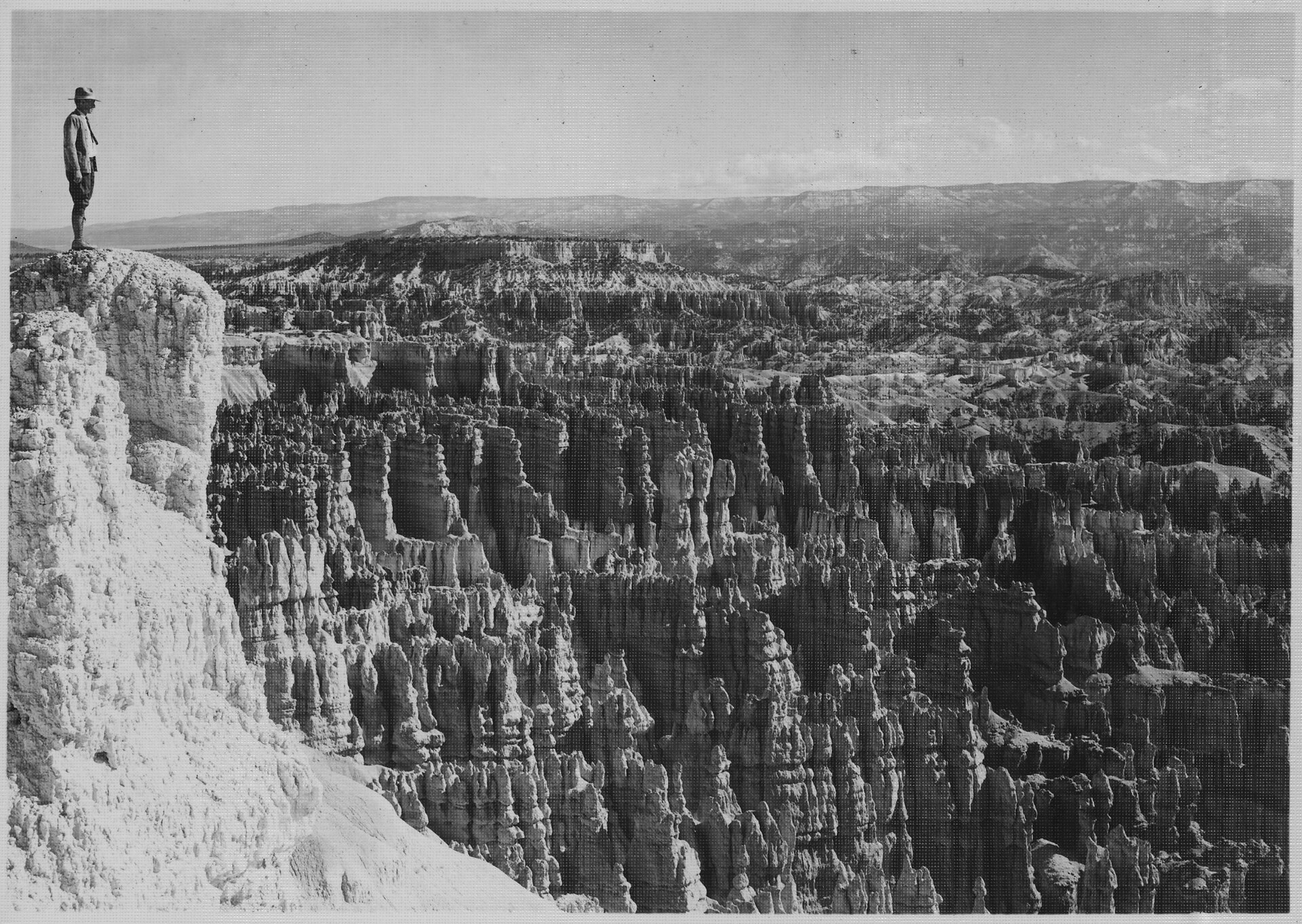
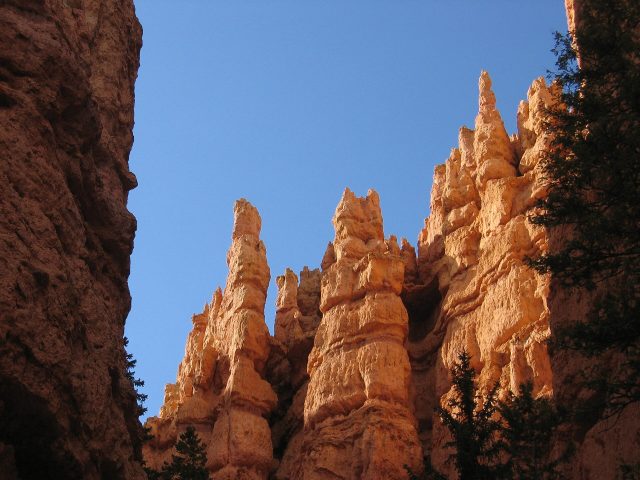
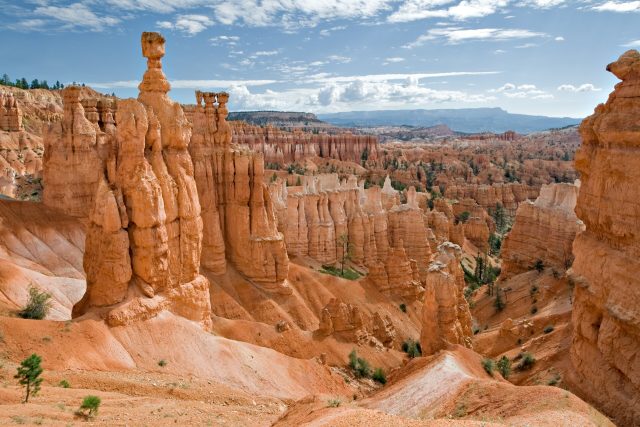
Inspiration Point is one of those rare places where the landscape feels deliberately designed to make you pause and reflect. Perched at nearly 8,200 feet above sea level, it offers a sweeping view of Bryce Canyon’s most iconic feature: the amphitheater of orange and red rock formations known as hoodoos. These towering, slender spires of sandstone, carved by wind and water over millions of years, stretch across the horizon like a petrified forest. Some resemble crumbling castles, others sharp needles or even human figures, their shapes shifting with the light. The effect is surreal, as if you’ve stepped into another world entirely. The best moments here come at dawn or dusk, when the low sun casts long shadows and deepens the hues, turning the rocks into a living palette of fire and earth.
The viewpoint sits at the edge of the canyon, accessible by a short but steep trail from the parking lot. The walk isn’t difficult, but the thin mountain air makes the climb feel more strenuous than it is. Once you reach the overlook, the full scale of the landscape unfolds—the hoodoos stand in dense clusters, their jagged silhouettes stretching for miles. On clear days, the view extends beyond the park’s boundaries to the distant mountain ranges lining the horizon. The elevation keeps the air cooler in summer, while winter transforms the scene into something quieter and more ethereal, with snow dusting the hoodoos like powdered sugar.
Inspiration Point isn’t just a scenic stop; it’s a window into the history of Bryce Canyon itself. The area was designated a national monument in 1923 before becoming a national park, but its story begins much earlier. The canyon takes its name from Ebenezer Bryce, a Mormon settler who arrived in the late 1800s. He famously described the place as a "hell of a place to lose a cow," a remark that captured both its beauty and its ruggedness. For modern visitors, the journey here is far less daunting, though the sense of awe remains. This overlook is one of the most popular in the park, and for good reason—it’s where many first grasp why photographers and nature lovers are drawn to this corner of Utah.
The hoodoos are nature’s architecture, shaped by the relentless forces of erosion. Rain and melting snow gradually wear away the softer layers of sandstone, leaving behind the harder sections that form these striking columns. Some rise over a hundred feet tall, their shapes occasionally evoking famous landmarks or mythical creatures. Geologists say these formations are temporary—millions of years from now, they’ll vanish entirely. But for now, they create a landscape unlike any other, a fleeting masterpiece of time and weather.
What makes Inspiration Point special isn’t just the view, but the way it makes you feel. There’s a sense of scale here that’s hard to find elsewhere, a reminder of the slow, patient work of the natural world. Unlike crowded tourist hotspots, this place has a quiet dignity. The only sounds are the wind rustling through the pines and the occasional murmur of other visitors. People come for the photographs, of course, but many stay for something less tangible—the chance to stand at the edge of the canyon and absorb the sheer vastness of it all.
The atmosphere shifts with the time of day. In the early morning, when sunlight first touches the hoodoos, the rocks glow a soft pink, and the air is crisp and cool. By midday, the colors deepen under the bright sun, and the shadows sharpen, revealing every crevice and ridge. As evening approaches, the light turns golden, then fades into purples and oranges, casting the hoodoos in a warm, almost otherworldly glow. Even seasoned travelers often find themselves speechless at moments like these.
Beyond the overlook, Inspiration Point serves as a starting point for those who want to explore further. The Rim Trail begins here, winding its way along the canyon’s edge before descending into the heart of the hoodoos. The path isn’t long, but it’s steep in places, with switchbacks that offer new perspectives at every turn. Those who take the time to walk it are rewarded with an intimate view of the formations, a chance to see them up close and appreciate their intricate details.
Winter transforms the canyon into a different kind of wonder. Snow blankets the hoodoos, softening their edges and muting their colors. The air is sharper, the silence more profound. Fewer visitors come in the colder months, so it’s possible to stand at the overlook and feel as if you have the entire place to yourself. The hoodoos, dusted with white, take on an almost ghostly appearance, their usual warmth replaced by a stark, serene beauty. For many, this is the most memorable time to visit.
Despite its popularity, Inspiration Point rarely feels crowded. Perhaps it’s because people come here not for entertainment, but for something deeper—a connection to a landscape that has existed for millennia. There are no distractions, no artificial embellishments, just the raw, unfiltered beauty of rock, sky, and wind. It’s the kind of place that lingers in your memory long after you’ve left, a quiet reminder of how small we are in the grand scheme of things. You might only spend a few minutes here, but those minutes have a way of staying with you.