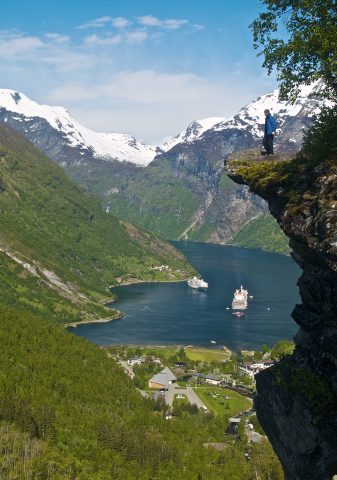
Geirangerfjord is one of those rare places where nature seems to have gathered its most dramatic forces just to remind us of its power. The narrow inlet cuts deep into the mountains, its dark waters framed by sheer cliffs draped in dense forest. Waterfalls plummet from such heights that they dissolve into mist before reaching the ground, creating an almost primordial scene—one where time feels suspended and humans are merely passing through. But to truly grasp the fjord’s scale and grandeur, you need to ascend, to stand where the view steals your breath before you even realize it’s gone.
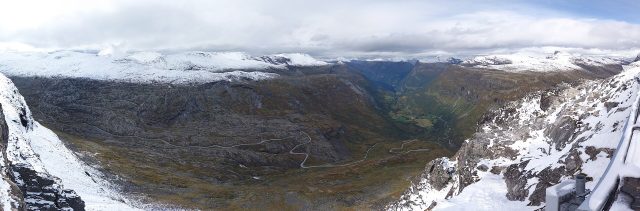
Perched at nearly fifteen hundred meters above sea level, Flydalsjuvet viewpoint is accessible only by a winding mountain road that clings to the slopes like a thread. The journey itself is part of the experience. The road twists sharply, with steep drops on either side and no barriers to soften the sense of height. On clear days, the panorama stretches far beyond the fjord itself, revealing neighboring valleys, glaciers, and peaks fading into the horizon. In winter, the viewpoint becomes a silent white expanse, while summer brings alpine meadows alive with wildflowers and the scent of damp stone carried on the wind.
The history of this place is inseparable from the road that leads to it. Built in the early twentieth century, when Norway was just beginning to open its doors to travelers, the route transformed access to Geirangerfjord, which was already considered one of the country’s natural wonders. Before its construction, reaching this height meant a long journey by boat or a trek along narrow paths used by local farmers and hunters. The road was revolutionary—it allowed people to see the fjord from above, rather than just from the deck of a ship or the shoreline. Today, it’s recognized as one of the world’s most scenic drives, drawing visitors as much for the journey as for the destination.
Flydalsjuvet itself is deliberately unassuming. A small paved area, bordered by a low stone wall, holds a few informational signs about the region’s geology and history. There are no cafes, no souvenir shops, no distractions—just the view and the quiet. That simplicity is part of its charm. Even in peak season, when dozens of visitors gather here, each person finds their own space at the edge, standing in silence, letting the landscape speak for itself.
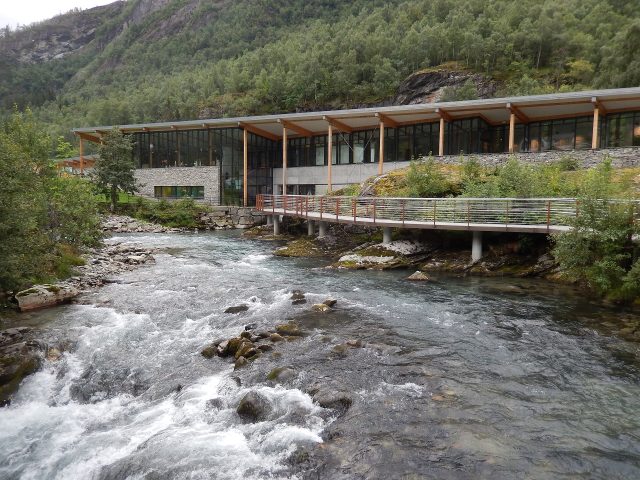
Architecture plays no leading role here—nature commands all attention. But if you look closely, you’ll notice how carefully the human elements have been integrated into the surroundings. The stone wall blends with the rock face, the asphalt doesn’t clash with the terrain, and even the road seems to belong, as if it grew from the mountain rather than being carved into it. This isn’t a place where people assert dominance over nature; it’s where they step back, allowing the landscape to remain untouched and unspoiled.
For Norway, Flydalsjuvet is more than just a tourist stop—it’s a symbol of the country’s relationship with its natural heritage. Geirangerfjord and its surroundings are a UNESCO World Heritage site, and this viewpoint helps explain why. There are no dams, no factories, no towering hotels marring the view. Even the road, despite its popularity, is managed to minimize its impact: traffic is controlled, and in places, it narrows to a single lane to preserve the landscape. The result is a place where nature’s grandeur isn’t just visible—it’s undisturbed.
The atmosphere here shifts with the seasons and the weather. In summer, the viewpoint buzzes with activity as tourists arrive by bus, snap photos, and chatter in different languages. But when clouds roll in, the crowd thins, leaving only those willing to wait for the mist to lift. Winter is quieter still—few venture up the treacherous road, and those who do are rewarded with absolute silence and the feeling of standing at the edge of the world. The snow blankets everything, muffling sound, and the fjord below becomes a ribbon of dark water cutting through white.
For locals, Flydalsjuvet is more than a landmark—it’s part of daily life. Many work in tourism, guiding visitors, running hotels, or staffing cafes in Geiranger below. But others live here year-round, far from the noise of cities, and for them, the view from the viewpoint is a familiar sight that never loses its wonder. They know every turn of the road, every rock on the slope, yet each visit reveals something new. Perhaps that’s the secret of this place: it never grows stale because it’s always changing, always alive.
If you find yourself here, take your time. Stand at the edge, listen to the wind, watch the clouds drift over the cliffs, and see how the sunlight dances on the water far below. Maybe then you’ll understand why Norway draws people back again and again—not just for its beauty, but for the sense of freedom that comes from standing at the edge of a fjord and realizing how vast the world truly is.