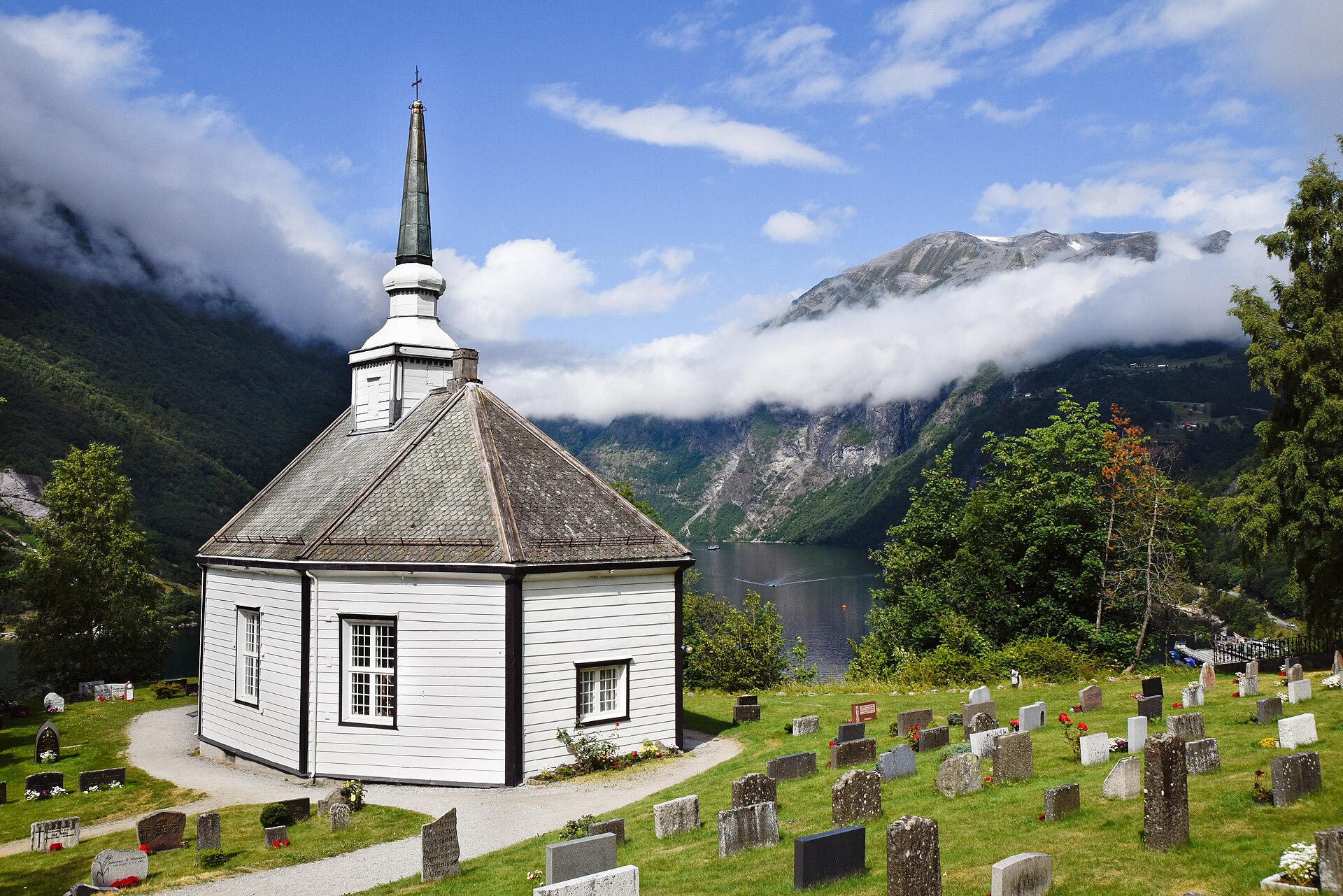
Perched on a hillside above the village, Geiranger Church overlooks the fjord with quiet dignity. Its white wooden walls and slender spire have become as much a part of the landscape as the steep mountains that rise behind it. Built in the 19th century, it may not be one of Norway’s oldest churches, but there’s a timeless quality to its design—simple yet elegant, blending seamlessly with the rugged beauty of the surrounding nature.
The church’s story is closely tied to Geiranger’s transformation from a quiet farming and fishing village into one of Norway’s most famous tourist destinations. In the 18th century, the fjord was just a part of daily life for the locals, not yet the world-renowned sight it is today. When travelers began arriving in the 19th century, drawn by the dramatic scenery, the old wooden church from the 1600s could no longer accommodate the growing number of visitors. A new building was needed—one that would reflect the village’s newfound importance while staying true to Norwegian traditions.
Designed by architect Hans Linstow, the church was completed in 1842, embodying the ideals of national romanticism. Linstow sought to create a structure that honored Norway’s wooden architecture while giving it a modern, refined touch. The result is a graceful building with tall, pointed windows, intricate carvings on the facade, and a slender bell tower topped with a spire. Inside, the light wood and clean lines create a sense of warmth and reverence, with every detail carefully crafted to feel both welcoming and solemn.
Though small in size, the church’s proportions make it feel surprisingly spacious. Sunlight filters through the large windows, casting a soft glow over the interior. Above the altar hangs a copy of Adolf Tidemand’s famous painting of Jesus in the Garden of Gethsemane, the original of which is kept in Oslo’s National Museum. The church also retains some of its original furnishings, including old pews and an organ, all of which were brought over from the previous building.
For the people of Geiranger, this church is more than just a landmark. It’s where generations have gathered for baptisms, weddings, and funerals—a place where personal and communal histories intertwine. Even in the height of tourist season, when visitors pass through on their way to the fjord’s viewpoints, the church remains a quiet sanctuary, untouched by the bustle outside.
The small cemetery surrounding the church holds the graves of those who lived and worked in Geiranger over the centuries. Some were fishermen lost at sea, others farmers who spent their lives on the steep slopes. The headstones are simple, without grand monuments, but each one carries a story. Locals still come here to pay their respects, while visitors walking among the graves often pause, reminded of how fleeting life is compared to the enduring landscape.
Geiranger Church stands as a bridge between the past and present, a reminder that even in a place as heavily visited as the Geirangerfjord, there are still corners where time moves differently. There are no crowds here, no souvenir shops, no tour groups rushing by. Just the stillness of the wooden walls, the light streaming through the windows, and the quiet sense that within these walls, the lives and faith of those who came before are still remembered.