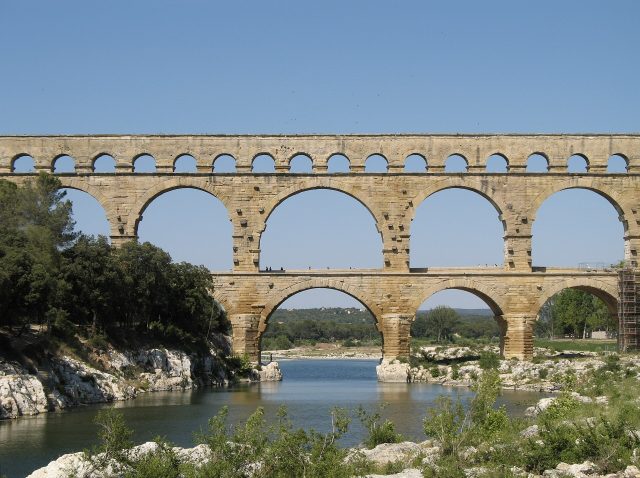
The esplanade at Pont du Gard is where history and landscape merge so seamlessly it feels as though time itself has softened its pace. The Roman aqueduct, rising above the Gardon River valley, isn’t just an ancient structure—it’s a living part of the terrain, shaped by the same hills and vineyards that surround it. From this slight elevation, the three tiers of arches stretching across the river come into view, their presence so natural it’s easy to forget they were built by human hands. There are no crowds here, no rush for the perfect photograph, just the quiet rustle of olive trees in the breeze and the occasional call of a bird circling overhead.
Pont du Gard was constructed in the first century to supply water to the city of Nîmes, thirty kilometers away. The Romans engineered the slope with such precision that water flowed effortlessly, gravity doing the work without the need for pumps. The aqueduct functioned for nearly five hundred years before gradually falling into disuse—not because it failed, but because the needs of the people changed. In the Middle Ages, its stones were repurposed for local buildings and churches, yet the core of the structure endured, as if the land itself had decided to preserve this testament to Roman ingenuity.
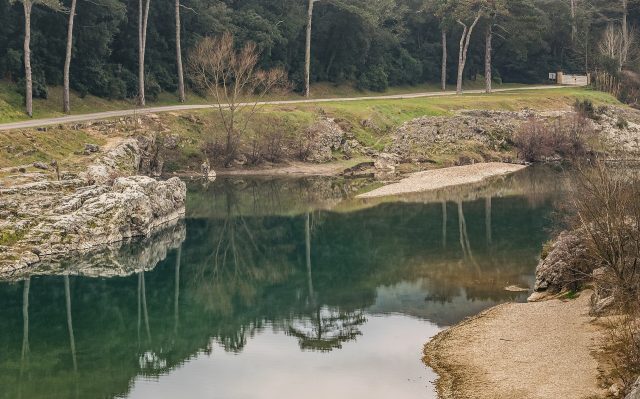
The esplanade isn’t just a viewpoint; it’s part of a longer path that winds along the river and through the surrounding forest. From here, you can descend to the water’s edge, where the river runs clear and cool even in the height of summer. Locals sometimes swim in its shallows, though it’s not always officially permitted. On hot days, the shadows of the arches stretch across the water, creating shifting patterns of light and dark. As evening falls, the stones take on a golden hue, reflecting the last rays of the sun. If you’re lucky, you might spot herons gliding over the river or fishermen casting their lines from the bank.
What’s striking about Pont du Gard isn’t its size, but its harmony. The three tiers—each serving a distinct purpose—are more than a functional design; they’re an aesthetic statement. The Romans didn’t build solely for utility; they built for beauty, and here, that intention is impossible to miss. The warm, yellowish limestone, quarried nearby, blends with the surrounding cliffs, its weathered surface bearing the marks of centuries. Cracks and crevices don’t detract from the structure; they make it feel real, as if it’s still breathing.
There are no tourist traps around the esplanade—no overpriced cafés or souvenir stalls. Instead, there’s a small museum where you can learn about the aqueduct’s history, and trails leading deeper into the natural park. The landscape is both wild and cultivated: vineyards give way to lavender fields, which in turn fade into oak groves. If you follow the riverbank further, you might stumble upon old mills or abandoned farmhouses, their crumbling walls hinting at lives lived long ago.
It’s easy to imagine the scene centuries ago: carts rumbling across the top tier, the river below carrying water to Nîmes. The world has changed, but the sense of connection to the past remains. Pont du Gard isn’t a museum piece; it’s part of the living landscape. It doesn’t demand admiration—it simply exists, a reminder that human creations can endure as long as the land itself.
The best time to visit the esplanade is early morning or late evening, when the light is soft and the sun isn’t beating down. At these hours, you’ll likely have the place to yourself, with nothing but the sound of the river and the wind in the trees. Autumn is particularly beautiful, when the vineyards turn shades of red and gold, and the air carries the scent of damp earth. Even in winter, there’s a quiet magic here—fewer visitors, just the stillness of the arches standing against the sky.
Pont du Gard doesn’t need embellishment. It’s a sight that speaks for itself, one that doesn’t require explanation or promotion. This is a place where you can simply be: stand by the river, walk along the paths, touch the stones that have stood for two thousand years. There’s no rush, no need to prove anything or hurry elsewhere. Just the river, the aqueduct, and the sky above—timeless and unchanging.