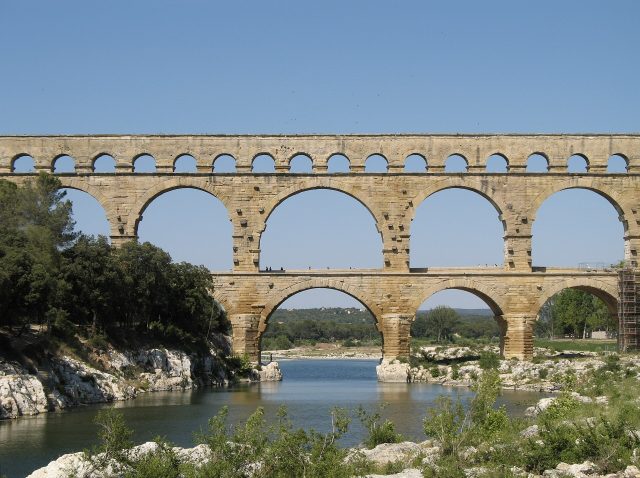
The Pont du Gard isn’t just a bridge—it’s one of the most astonishing feats of ancient engineering still standing today, nearly untouched by time. Nestled in the quiet Mediterranean landscape of southern France, a short distance from the small town of Vers-Pont-du-Gard, it rises above the Garrigue hills, where low oak scrub and lavender cling to rocky slopes, and the Gardon River winds lazily through the valley. Built by the Romans in the first century AD, this aqueduct was once part of a vast water system stretching fifty kilometers from Uzès to Nîmes. Now, it remains not only a monument to classical architecture but also a striking example of how human ingenuity can harmonize with nature rather than dominate it.
The structure itself is a marvel of proportion and precision, towering nearly fifty meters above the river in three tiers of arches. The lowest level consists of six massive spans, the middle of eleven, and the uppermost—once carrying the water channel—of thirty-five. The stones were quarried nearby, cut so precisely that many joints still hold without mortar. Roman engineers calculated the aqueduct’s gradient with meticulous care, a mere thirty-four centimeters per kilometer, allowing water to flow by gravity alone. Yet for all its solidity, the Pont du Gard doesn’t feel imposing. Its lines are so balanced that it seems almost organic, as if it had always been part of the landscape.
The aqueduct’s history is deeply tied to the rise of Nîmes, known in Roman times as Nemausus, a thriving city in the province of Gallia Narbonensis. Nîmes was famous for its baths, fountains, and public amenities, all of which demanded a steady water supply. Construction began under Emperor Augustus and was completed under Claudius, taking about fifteen years. Water from the Eure spring near Uzès traveled the route to Nîmes in a day, feeding not just bathhouses but private homes, gardens, and even the city’s sewer system. Remarkably, the aqueduct served its original purpose for only about five centuries before falling into disuse. By the Middle Ages, locals began dismantling it for building material, though the core structure survived. It wasn’t until the 18th century that its historical significance was recognized, and restoration efforts began.
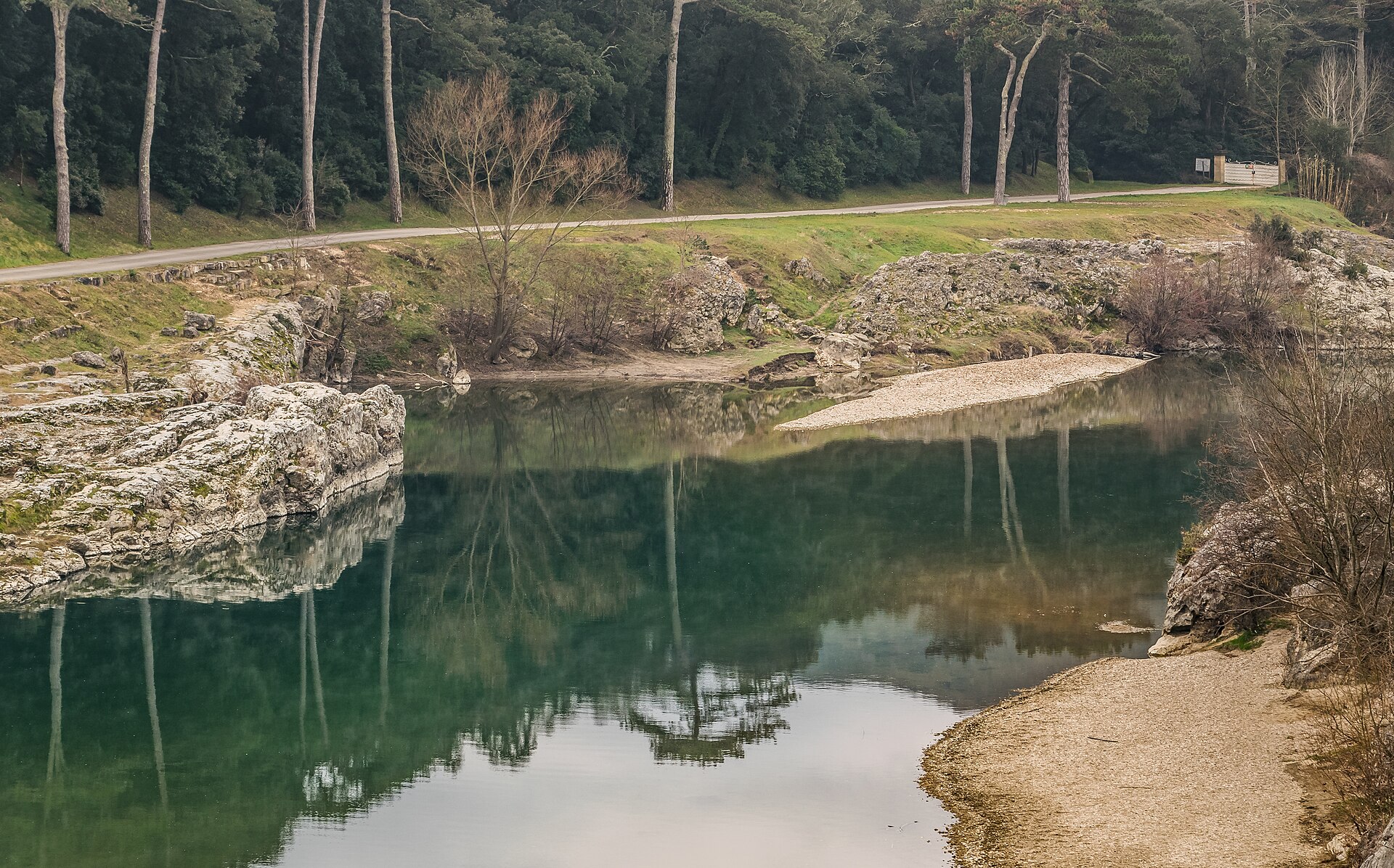
Today, the Pont du Gard is more than an ancient relic—it’s a place where time feels suspended. A sprawling park surrounds the site, with walking paths that meander along the river and through the fragrant Mediterranean scrub. In summer, the area draws visitors not just for the aqueduct but for the chance to swim in the Gardon’s clear, cool waters, which form natural pools at the bridge’s base. The river here is strikingly transparent, with a faint blue tint, its banks lined with reeds and willows. Picnics on the grass are common, and the bravest leap from small cliffs into the water below.
For those curious about the aqueduct’s past, a museum near the bridge offers a deeper look. Exhibits include detailed models of the structure, reconstructions of Roman water systems, and artifacts unearthed in the area. The displays go beyond engineering, painting a picture of daily life in Roman Gaul—how people lived, worked, and relied on the aqueduct’s steady flow. One of the most fascinating aspects is learning how Roman builders overcame challenges like tunneling through hills or maintaining consistent water pressure. The museum strikes a good balance, providing enough context to appreciate the scale of the achievement without overwhelming visitors.
What makes the Pont du Gard special is the way it blends history with the natural world. Unlike crowded tourist hotspots, this place feels untouched by modern rush. The only sounds are the rustle of leaves and the murmur of the river, as if time moves differently here. In the evening, when the setting sun bathes the bridge in golden light, it’s easy to imagine stepping back two thousand years. That sense of timelessness is why the Pont du Gard endures—not just as a monument, but as a reminder that some human creations are built to last, as graceful and enduring as the day they were made.