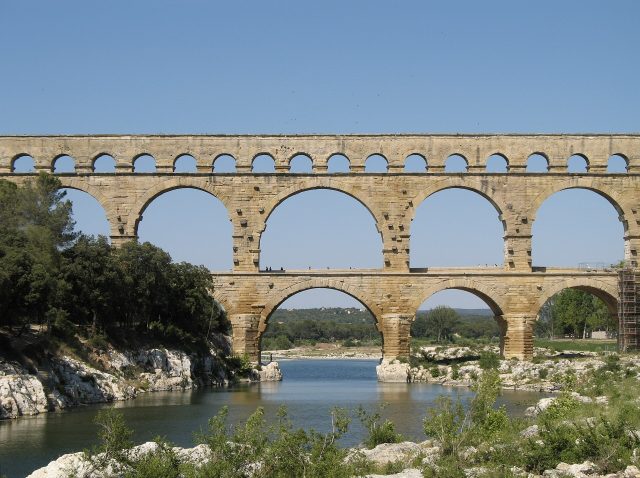
The Pont du Gard isn’t just a bridge—it’s one of the most remarkable surviving feats of Roman engineering, standing almost exactly as it did two thousand years ago. Built in the first century AD, this massive aqueduct once carried water from the springs of Uzès to the city of Nîmes, thirty kilometers away. The structure itself is a marvel, but what makes it truly extraordinary is how it connects us to the past. The Discovery Center nearby doesn’t just present the Pont du Gard as a tourist attraction; it invites visitors to see it as part of a living history, where every stone tells a story of ingenuity and endurance.
The bridge spans the Gardon River in three tiers of arches, rising nearly fifty meters above the water. At around three hundred meters long, it was the tallest bridge the Romans ever built, and for centuries, it remained unmatched in scale. What’s even more impressive is the precision behind its construction. The aqueduct had a gradient of just thirty-four centimeters per kilometer, allowing water to flow by gravity alone. The system functioned flawlessly for nearly five hundred years, a testament to the skill of Roman engineers who designed it without modern tools. Standing beneath its towering arches, it’s hard to imagine how such massive stone blocks were quarried, transported, and assembled—yet that’s precisely what makes the Pont du Gard so awe-inspiring.
The Discovery Center, just a short walk from the bridge, serves as a gateway to understanding its history. The exhibits go beyond the aqueduct itself, exploring life in the Roman province of Gallia Narbonensis, which once included this region. Visitors can trace the fifty-kilometer journey of water from Uzès to Nîmes, learning why this particular route was chosen and how the Romans overcame the challenges of terrain. Interactive models and multimedia displays bring the past to life, particularly in the reconstructions of the construction process. Watching how workers moved and placed the stones—without cranes or heavy machinery—offers a glimpse into the sheer scale of the project.
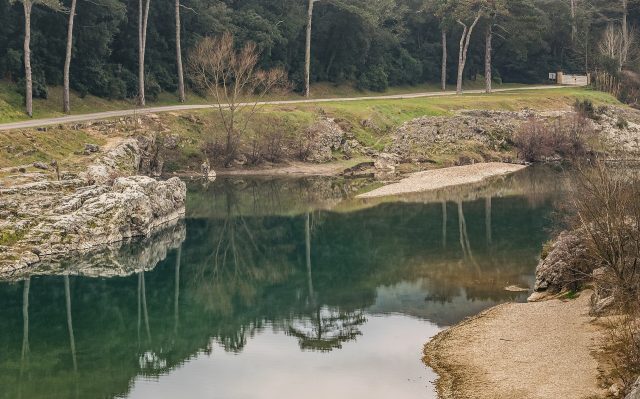
Beyond its historical significance, the Pont du Gard is also a place of natural beauty. The surrounding area is a protected zone, where Mediterranean landscapes thrive with their distinctive flora and fauna. Well-marked trails lead along the river to viewpoints that offer some of the best perspectives of the aqueduct. In summer, the Gardon’s clear waters and lush greenery make it a popular spot for swimming or simply relaxing by the riverbank. The scenery here has changed little over the centuries, offering a quiet escape from the noise of modern life.
For those who want a deeper connection to the past, the center offers guided tours that go beyond technical details. Guides share stories of daily life in Roman Nîmes—how water from the aqueduct fed public baths, fountains, and private homes, and why this engineering feat was so vital to the city’s growth. Occasionally, the center hosts hands-on activities where visitors can try their hand at ancient building techniques or learn about Roman crafts. These experiences make the history feel tangible, turning a visit into something more than just a lesson.
The Pont du Gard is accessible year-round, with different approaches offering unique views. On one side of the river, a pedestrian area provides the most picturesque vantage points, where visitors can take in the full grandeur of the bridge. Nearby, small cafés and shops offer a place to rest or pick up a souvenir. On the opposite bank, the museum complex serves as the starting point for tours and houses exhibits that can easily fill an afternoon. While entry is ticketed, the pass covers access to all areas, including the museum, viewpoints, and walking trails.
At night, the bridge is illuminated, casting a soft glow over its arches. The effect is striking, as if the structure has been frozen in time. The quiet of the evening, broken only by the sound of the river, makes the experience even more immersive. There’s no rush here, no crowds jostling for the perfect photo—just the bridge, the water, and the sense of standing in a place that has endured for millennia.
Visiting the Pont du Gard isn’t just about seeing an ancient monument; it’s about stepping into a story that’s still unfolding. It’s a chance to imagine the Roman engineers who designed it, the workers who built it, and the people who relied on the water it carried. The aqueduct may no longer serve its original purpose, but its legacy remains—a reminder of what human ingenuity can achieve, and how the past continues to shape the present.