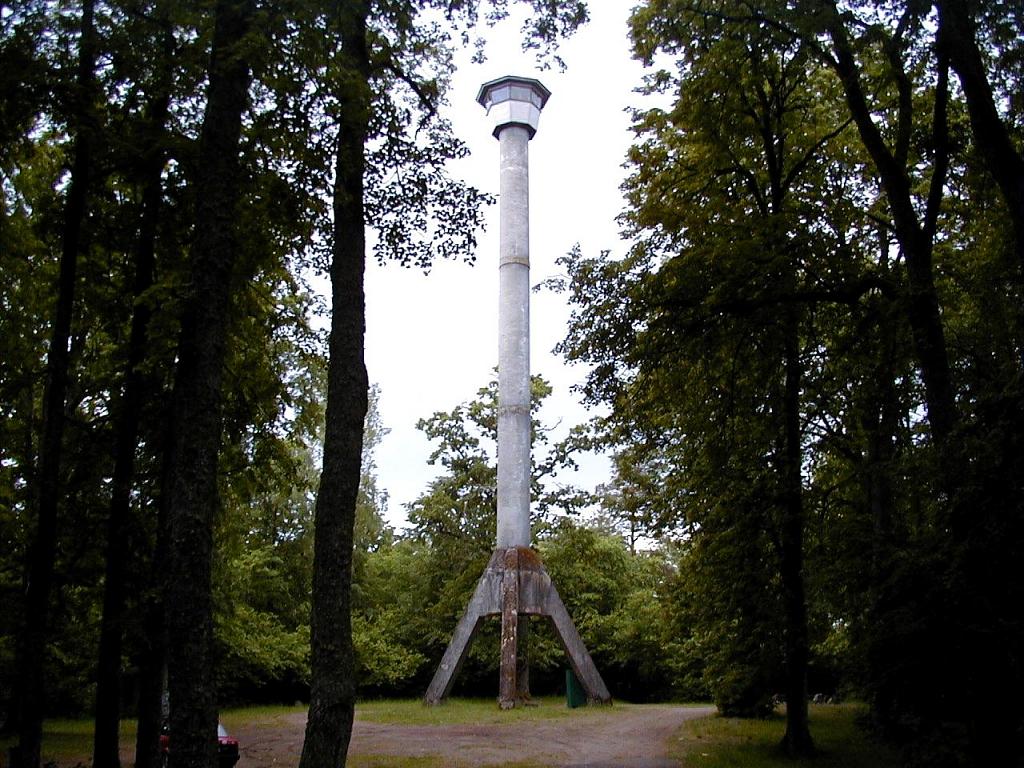
Perched on the edge of a quiet forest in Sigulda, the observation tower on Zilaiskalns offers more than just a view—it’s a quiet witness to the region’s layered past and the slow, steady rhythms of the Gauja Valley. The hill itself, rising gently above the surrounding landscape, has long been a landmark in this part of Latvia, though its significance has shifted with time. In the early 20th century, Zilaiskalns was a site of national gatherings, where Latvians would come together for song festivals and cultural events, a tradition that reflected the country’s growing sense of identity. The tower, built later, stands as a modern echo of that era, a place where history and nature intersect without fanfare.
The structure itself is unassuming, a simple metal framework that blends into the trees rather than dominating them. It was erected in the 1980s, a time when such towers were common across the Soviet Union, often serving as both lookout points and symbols of state presence. Yet here, the tower feels less like a relic of ideology and more like a practical addition to the landscape. Its design is functional—narrow stairs winding upward, a platform at the top just wide enough for a handful of people to stand and take in the view. There’s no grand architecture, no ornate details, just a straightforward climb to one of the best vantage points in the area.
From the top, the Gauja Valley unfolds in all directions, a patchwork of dense forests, winding riverbends, and the occasional glint of a village roof. On clear days, the view stretches far enough to make the landscape feel vast, almost untouched. The river, a defining feature of the region, cuts through the valley like a silver thread, its banks lined with sandstone cliffs that have eroded into dramatic shapes over centuries. In autumn, the forests turn shades of gold and russet, while winter brings a quiet stillness, the trees dusted with snow. Even in summer, when the valley is lush and green, there’s a sense of timelessness here, as if the land has always looked this way.
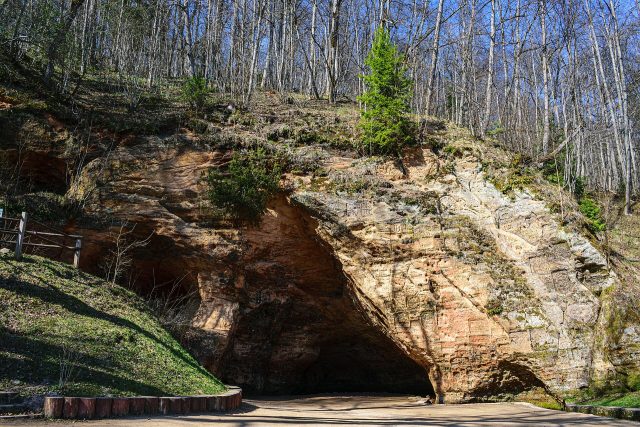
The tower is part of a network of trails that crisscross the Gauja National Park, Latvia’s oldest and largest protected area. Hikers often pass by on their way to other landmarks—Turaida Castle, the Gutmanis Cave, or the bobsleigh track built for the 1986 Soviet Winter Games. But Zilaiskalns has its own quiet appeal. Unlike the more famous sites in Sigulda, it doesn’t draw crowds. There are no souvenir stalls or guided tours, just the occasional visitor making the short climb for the view. The lack of commercialization gives the place a certain authenticity, as if it exists solely for those who seek it out.
The hill’s name, Zilaiskalns, translates to Blue Hill, though the origin of the name is a bit of a mystery. Some say it comes from the bluish tint of the sandstone cliffs visible from the summit, while others suggest it refers to the way the hill appears in the distance, shrouded in mist. Whatever the reason, the name suits the place. There’s something intangible about the light here, especially in the early morning or late afternoon, when the valley seems to glow with a soft, almost ethereal quality.
For locals, the tower is a familiar landmark, a place to walk the dog or meet friends for a picnic. For visitors, it’s often a brief stop on a longer journey through the national park. But those who take the time to linger will notice details that go unnoticed in a hurried visit—the way the wind rustles through the pines, the distant call of a bird of prey circling over the valley, the faint scent of wild thyme underfoot. The tower isn’t just a viewpoint; it’s a pause in the landscape, a moment of stillness before moving on.
The climb up is short but steep enough to quicken the breath, the metal steps ringing slightly underfoot. At the top, the platform sways gently in the wind, a reminder of the tower’s height. There are no barriers, no safety nets, just an open view and the sense that you’re standing at the edge of something much larger than yourself. It’s a feeling that lingers long after you’ve descended, a quiet connection to a place that has seen generations come and go without changing all that much.
In a region known for its castles and caves, Zilaiskalns might seem like a minor attraction. But that’s part of its charm. It doesn’t demand attention; it simply offers itself to those who are willing to look. Whether you come for the history, the view, or just the chance to stand above the treetops for a while, the tower on Zilaiskalns is one of those places that stays with you—not because it’s grand or dramatic, but because it feels real.