Gikongoro is a quiet town in southern Rwanda, far from the usual tourist trails. The town holds places that carry the weight of the country’s past—stories of suffering, resilience, and the slow work of healing. One such place is the Gikongoro School, a building that has become more than just an educational institution. It stands as a reminder of the 1994 genocide, a symbol of loss and the fragile hope for reconciliation that followed.
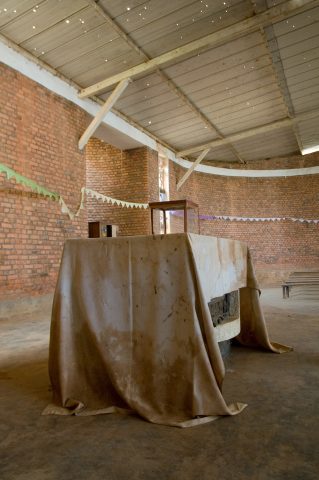
The school sits on the edge of town, surrounded by low green hills. From the outside, it looks like many other schools in Rwanda—single-story red-brick buildings, open courtyards, and a few shade trees. But the signs of its history are unmistakable. Some windows are boarded up, the walls bear faded inscriptions in Kinyarwanda, and in the yard, a simple memorial stands without fanfare.
In April 1994, as violence erupted across Rwanda, Gikongoro School became a refuge for hundreds fleeing the killings. The genocide claimed over eight hundred thousand lives, mostly Tutsi and moderate Hutu. Thousands sought shelter in churches, hospitals, and schools, believing these places would protect them. At Gikongoro, families—women, children, the elderly—gathered in the classrooms and courtyards, trusting local authorities and international observers to keep them safe. For a few days, it seemed they might be right.
Then everything changed.
The school, meant to be a sanctuary, became a trap. Militias surrounded the building. Over the following days, they systematically killed those inside. Survivors described how people were led out in groups under the pretense of evacuation, only to be executed beyond the school’s walls. Others were shot in the classrooms or the yard. Bodies were buried in shallow pits nearby or burned to erase evidence. When the violence ended, the school stood empty, its silence broken only by the cries of relatives searching for the missing.
The school was abandoned for years. Locals avoided it. The roof leaked, walls cracked, and weeds grew in the courtyard. Rwanda began to confront its past in new ways. Initiatives emerged to preserve the memory of the genocide and encourage reconciliation between communities. Gikongoro School became part of that effort.
By the early 2000s, the building had been partially restored. Today, children attend classes here again, but the school is not what it once was. One wing now houses a memorial room. Photographs of victims, personal belongings, and documents from that time are kept there. You can see handwritten lists of names on yellowed paper, children’s drawings left behind in classrooms, and everyday items—cups, clothes, shoes—that belonged to those who once took shelter here.
Gikongoro School has no guides, no dramatic explanations, no interactive exhibits. People come on their own. Some walk silently through the classrooms. Others talk to locals. A few sit in the courtyard, staring at the distant hills. The atmosphere isn’t oppressive, but it’s impossible to leave without feeling something. It makes you think about how fragile peace can be and why remembering the past matters.
The school remains an active place of learning. The children who study here know its history, but for them, it’s a place to gain knowledge. Teachers don’t dwell on the tragedy, but they don’t ignore it. They explain what happened, why remembering matters, and how to build a future without hatred. In this way, Gikongoro School does more than preserve the past—it helps shape a new generation of Rwandans.
For visitors, the school is a landmark without crowds, souvenir stalls, or flashy signs. Just silence, memory, and the quiet hope that one day the pain will fade, even if the lessons remain. That’s why Gikongoro School matters—not just to Rwanda, but to anyone who believes in moving forward.