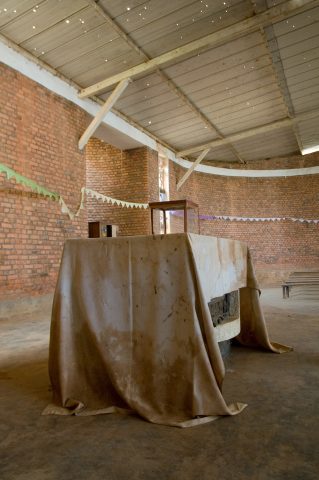
Murambi Genocide Memorial stands on a quiet hill outside Gikongoro, a place where history isn’t just recorded—it lingers in the air, in the silence between breaths. The buildings that house the memorial were once a technical school, a place of learning and hope. In April 1994, that hope turned to horror when thousands of Tutsi and moderate Hutu sought refuge here, believing the school would offer safety. Instead, it became a site of unimaginable violence, one of the many dark chapters in Rwanda’s past. Today, the memorial serves as a stark reminder of how quickly peace can shatter, and how fragile human life can be.
The architecture of the memorial is unassuming—long, single-story structures with large windows and open classrooms, built in a colonial style that feels both practical and austere. Inside, time seems to have stopped. The wooden desks remain, the blackboards still hang on the walls, now covered in dust. Some rooms hold fragments of the past: scattered clothing, personal belongings left where they fell. But the most haunting presence is the hundreds of bodies preserved in lime, laid out for visitors to see. They were not buried, a deliberate choice to ensure the memory of what happened here endures, unsoftened by time.
Walking through Murambi is not like visiting a museum. There are no glass cases or carefully curated displays. Instead, the memorial presents history in its raw, unfiltered form. The bodies lie on wooden platforms, some in contorted positions, frozen in moments of terror. Photographs of the victims line the walls, along with names where they could be identified, and brief accounts of how events unfolded. The effect is overwhelming, as if the tragedy occurred not decades ago, but only yesterday. The weight of what happened here presses down on you, impossible to ignore.
Yet Murambi is not just a place of mourning; it is also a place of remembrance. Rwanda’s path after the genocide has been one of reconciliation, not forgetting. Every April, during the national commemoration of the genocide, Murambi becomes a focal point for ceremonies. Families of the victims, survivors, and those who seek to understand gather here to light candles, read names, and pray. The atmosphere is somber, the rituals deeply personal. It is difficult to witness, but necessary—an act of defiance against the forces that once sought to erase entire communities.
The surrounding landscape holds its own stories. The hills around Gikongoro were sites of mass killings, and the small villages nearby were places where neighbors turned against one another. Today, the area is peaceful, with green slopes and scattered homes, but the past is never far away. Simple memorials mark mass graves, and locals often know the history of each hill, each valley. Some are willing to share those stories with visitors, offering a glimpse into a time most would rather forget.
Murambi also functions as a documentation center. One of the buildings houses an archive of photographs, documents, and testimonies from survivors. These materials provide context—how the genocide was planned, how the world responded (or failed to), and why help arrived too late. For researchers and journalists, it is an invaluable resource, but even casual visitors can gain a deeper understanding of the events that shaped Rwanda. The archive is not just a collection of facts; it is a testament to the resilience of those who lived through the horror and those who continue to bear witness.
There are no tourist amenities here—no cafes, no gift shops, no guides spinning entertaining tales. What you find instead is silence, respect, and the sense that you are standing on sacred ground. Murambi is not a place for casual visits; it demands something from you, whether it’s reflection, empathy, or simply the willingness to listen. For many Rwandans, it is a pilgrimage site, a place to honor lost loved ones and seek answers to questions that have haunted them for decades. For outsiders, it offers a chance to confront history not as a distant abstraction, but as something immediate and deeply human.
The memorial leaves no one untouched. Some visitors depart shaken, others lost in thought, but few remain unchanged. That, perhaps, is its purpose—to ensure that the world does not forget the lives behind the numbers, the faces behind the statistics. Murambi is not just about the past; it is about the present and the future, a reminder that memory is not just a burden, but a tool for building something better. It is a place where history is not just remembered, but felt.