The Ntarama Genocide Memorial stands as a quiet witness to one of the darkest chapters in Rwanda’s history. Located near the small southern town of Gikongoro, this site was once a Catholic church where hundreds sought refuge during the 1994 genocide against the Tutsi. Instead of safety, they found violence—over five thousand people were killed here in a matter of days. Today, the church and its surroundings have been preserved as a memorial, a place where the past lingers in the air, heavy and unshaken.
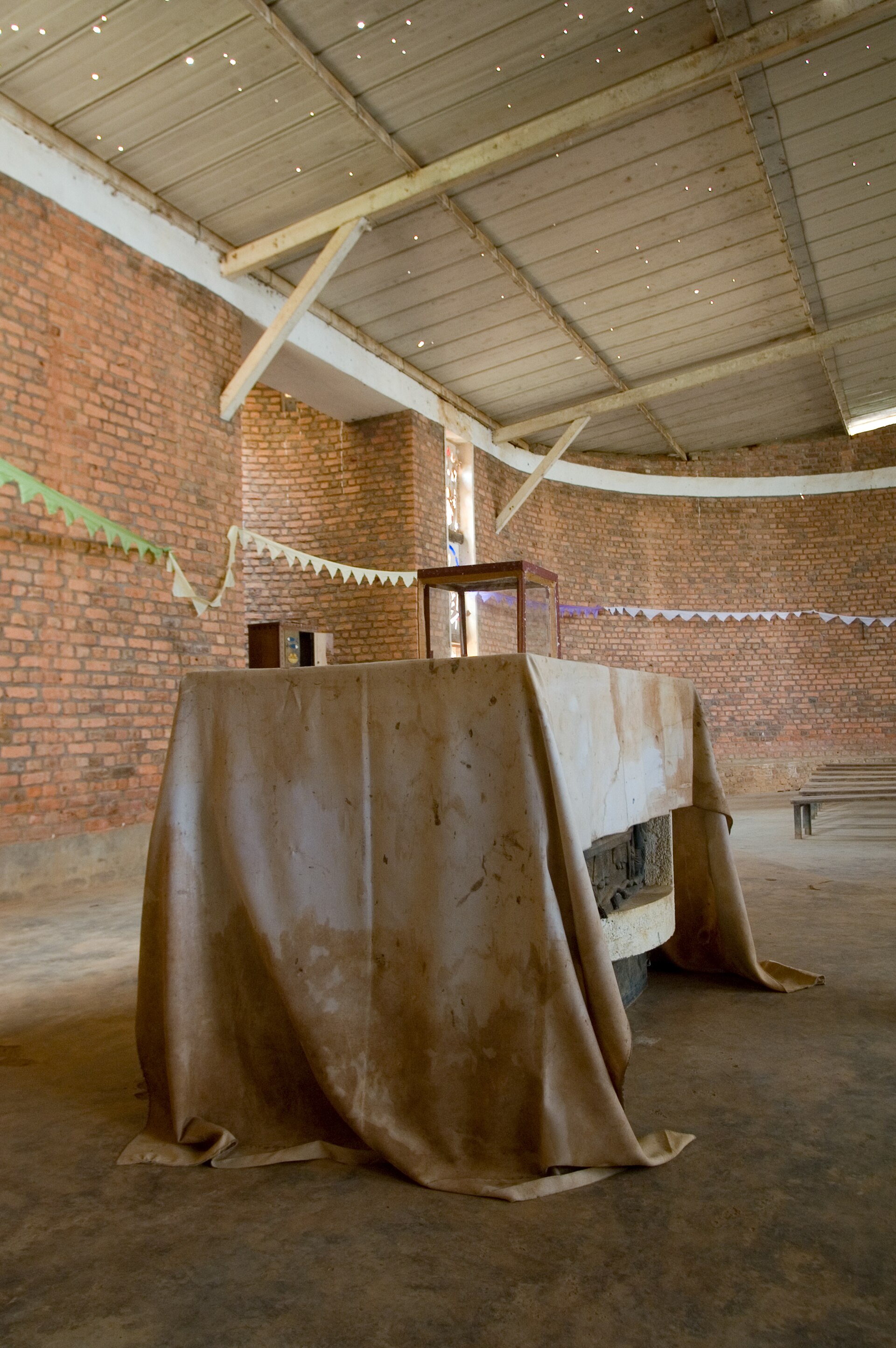
The building itself remains much as it was in 1994. Inside, the pews still stand in rows, the altar untouched, the windows shattered. Bullet holes pockmark the walls, and the floor bears stains that tell their own story. Scattered across the space are the remnants of lives interrupted—clothes, shoes, personal belongings left behind in haste. The effect is unsettling, as if time has frozen, leaving the horror of those days suspended in the present. Visitors often find themselves standing at the threshold, hesitant to step inside, as though crossing the line between witness and intruder.
Adjacent to the church, a small museum holds photographs, documents, and testimonies from survivors and witnesses. The exhibits trace the events leading up to the massacre, the desperate attempts to resist or escape, and the brutal reality of what unfolded. There is no sensationalism here, no attempt to manipulate emotions—just the facts, laid bare. The scale of the tragedy becomes impossible to ignore, not through grand displays, but through the weight of what is left unsaid.
For many Rwandans, Ntarama is more than a historical site. It is a place of mourning, where families come to remember those they lost. On any given day, you might see people standing silently against the church walls or sitting on the grass, lost in thought. The memorial is deeply personal, a reminder of lives cut short and a nation forever changed. Yet it is also a place of reflection, where visitors—both Rwandan and foreign—come to understand the past in the hope of preventing its repetition.
The architecture of the memorial is unadorned, reflecting the starkness of its purpose. The church, built in the mid-20th century, is a simple structure of red brick with narrow windows and a pitched roof. Inside, the space is vast but dimly lit, the sparse light filtering through broken panes and casting long shadows. Outside, a modest garden holds memorial plaques inscribed with the names of the dead. There are no grand monuments here, no sweeping declarations—just the quiet presence of memory.
Ntarama is one of many genocide memorials in Rwanda, but its impact is uniquely profound. Churches were traditionally seen as sanctuaries, places of safety and refuge. The fact that this one became a site of mass killing makes the betrayal feel even more acute. The memorial does not shy away from this contradiction; it simply presents the truth, leaving visitors to grapple with its implications. Respect is expected here—no loud conversations, no unauthorized photographs, no casual disregard for the weight of the place.
In the years since the genocide, Rwanda has worked tirelessly to rebuild and reconcile. Memorials like Ntarama play a crucial role in this process, serving as both a reminder of what was lost and a testament to the country’s resilience. There is no room for hatred here, only a commitment to preserving the memory of the victims and ensuring that the world does not forget. For those who visit, the experience is rarely just about history—it is about confronting the fragility of peace and the cost of indifference.
Each April, during the national commemoration of the genocide, Ntarama becomes a focal point for ceremonies and gatherings. Survivors, families of the victims, and officials come together to honor the dead. But even outside these formal observances, the memorial remains a place of quiet visitation. School groups, researchers, and travelers pass through its gates, each leaving with a deeper understanding of what happened here. The lessons of Ntarama cannot be found in textbooks; they must be felt, standing in the same space where so many lives were extinguished.
What makes Ntarama different from other memorials is its refusal to dramatize or simplify. There are no towering sculptures, no sweeping narratives—just the church, the silence, and the unspoken weight of what occurred. It does not offer explanations or justifications; it simply presents the past as it was, leaving visitors to draw their own conclusions. For Rwanda, it is a step toward healing. For the world, it is a reminder that history’s darkest moments demand more than just acknowledgment—they demand remembrance.