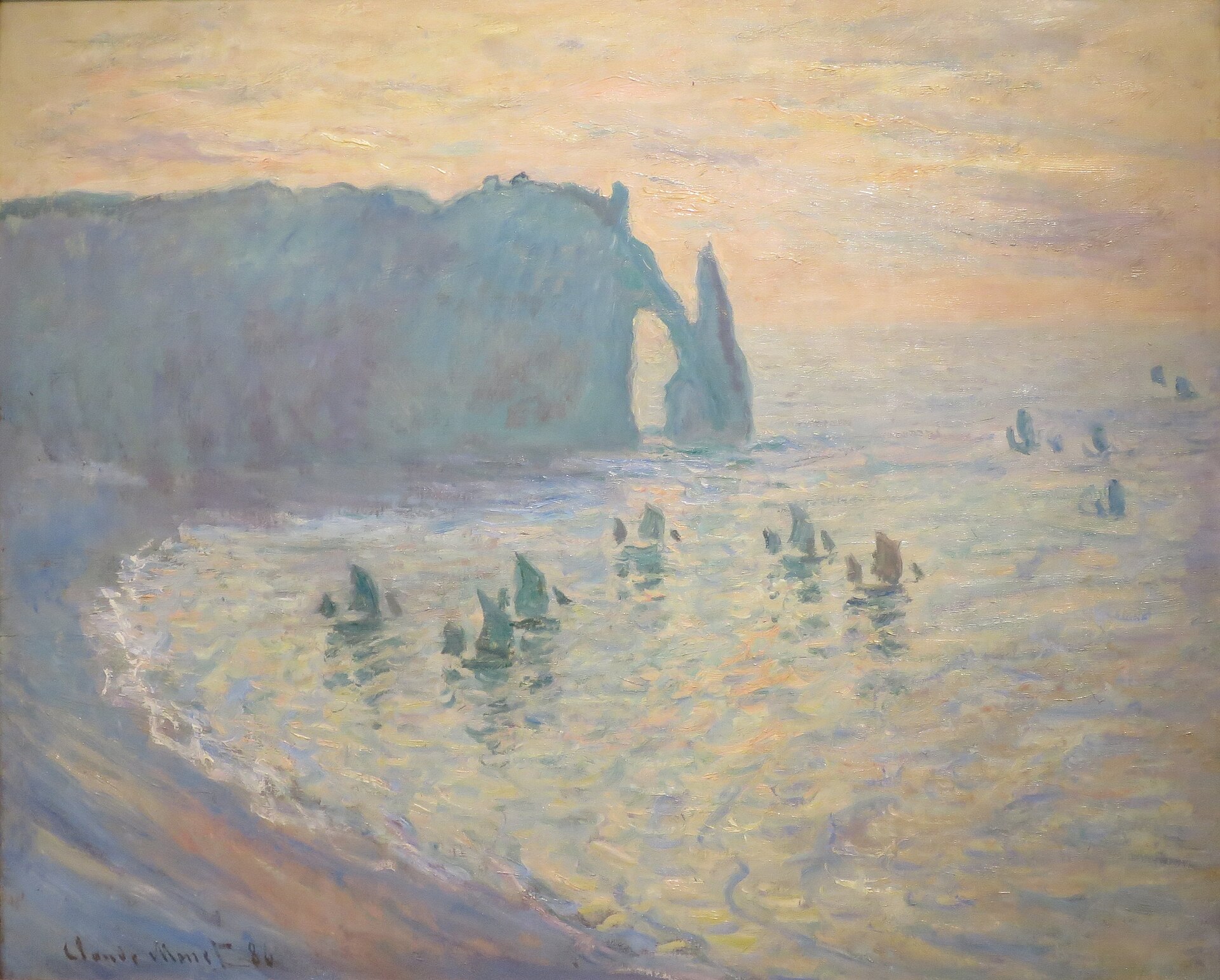
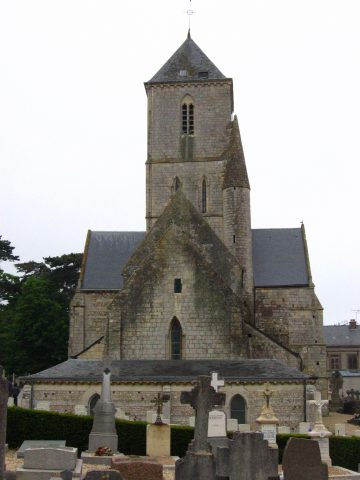
Étretat feels like a place where the sea and the land have been locked in a slow, sculptural dance for millennia. The town itself is small, a quiet cluster of houses and narrow lanes that could easily be overlooked if not for the dramatic cliffs that rise from the shoreline like the bones of some ancient creature. These chalk-white formations, carved by wind and waves over countless ages, dominate the landscape, their strange shapes—arches, spires, hidden caves—seeming almost deliberate, as if designed by an artist rather than nature. The most famous of them, the Manneporte, is a colossal stone arch that frames the horizon, its hollow center offering a glimpse of the endless sea beyond.
The cliffs have always been tied to the rhythm of the ocean. For centuries, fishermen used them as landmarks, navigating the treacherous waters of the English Channel by their silhouettes. But in the 19th century, Étretat was discovered by a different kind of traveler—artists and writers drawn to its raw, untamed beauty. Monet, Corot, and Hugo all spent time here, capturing the play of light on the cliffs or the way the sea crashed against the rocks. Their work helped turn this stretch of Normandy coast into a destination, not just for those seeking inspiration, but for visitors who wanted to experience the same wild, windswept scenery that had moved them. Today, the paths and viewpoints make it easier to explore, though the cliffs themselves remain as imposing as ever.
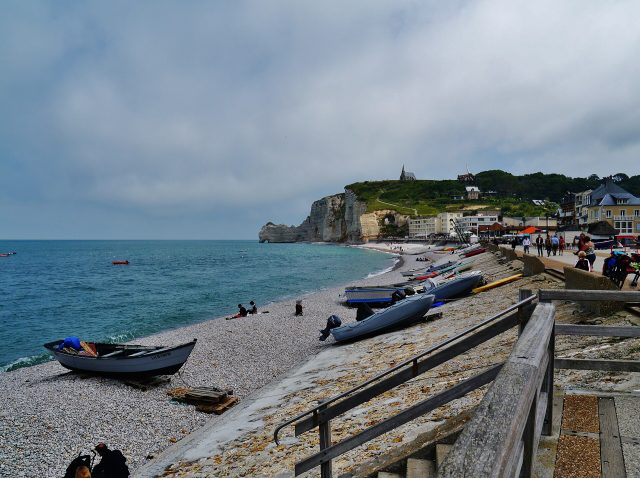
A walk along the shore begins at Étretat’s pebble beach, where the smooth stones give way to sheer walls of chalk. From here, the Amont cliff looms overhead, its hundred-meter height making it the tallest of the formations. Once a beacon for sailors, its summit is now accessible by a steep trail that winds through gorse and heather. The climb is worth it for the view alone—the entire bay unfolds below, from the distant white cliffs near Le Havre to the rolling green hills inland. On clear days, the sea shifts from pale turquoise near the shore to deep blue where it meets the sky, a gradient that seems to stretch forever.
The best time to see the cliffs up close is during low tide, when the receding water reveals caves and crevices usually hidden beneath the waves. The most famous of these is the Grotte d’Amour, or Cave of Love, named for a local legend about a pair of lovers who sought refuge here from disapproving families. Inside, the air is cool and damp, the walls slick with algae, the ceiling hung with fragile stalactites. When storms roll in, the waves roar into these hollows with a force that shakes the ground, but on calm days, the silence feels almost sacred, broken only by the distant cry of gulls.
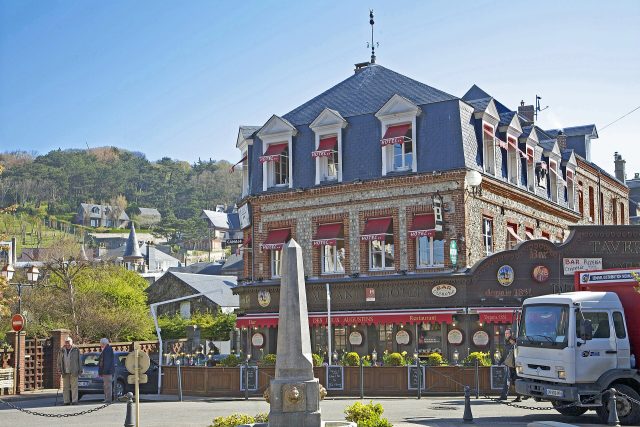
Étretat’s charm isn’t just in its natural wonders, though. The town itself has a quiet elegance, its streets lined with old villas built in the half-timbered Norman style. Many of these houses date back to the late 1800s, when wealthy Parisians began escaping to the coast for the summer. One of the most notable is the Villa Le Taste, where Guy de Maupassant once stayed. Now, these buildings often house small hotels or cafés, their terraces offering views of the sea. There’s a sense of timelessness here, as if the town has always existed in this same unhurried rhythm, its pace dictated by the tides rather than the clock.
The locals treat visitors with a kind of quiet indifference—not unwelcoming, but not overly eager either. Life in Étretat moves at its own speed. Fishermen set out in the early morning, their boats small against the vastness of the sea, and return by afternoon with the day’s catch, which they sell straight from the dock. The cafés serve oysters and mussels fresh from the water, while bakeries fill the air with the scent of buttery Norman apple tarts. There’s no rush, no urgency, just the steady pulse of a place that has seen generations come and go.
What makes Étretat special isn’t just the cliffs or the sea, but the way they shape the character of the place. The landscape here feels alive, constantly shifting under the force of the elements. The cliffs stand as a reminder of how fragile the boundary between land and water really is—how, over time, even the hardest stone can be worn away by the patient persistence of the waves. It’s easy to feel small here, standing at the edge of the continent, where the earth drops away into the endless blue. That sense of scale, of being both insignificant and deeply connected to something larger, is what lingers long after you leave.