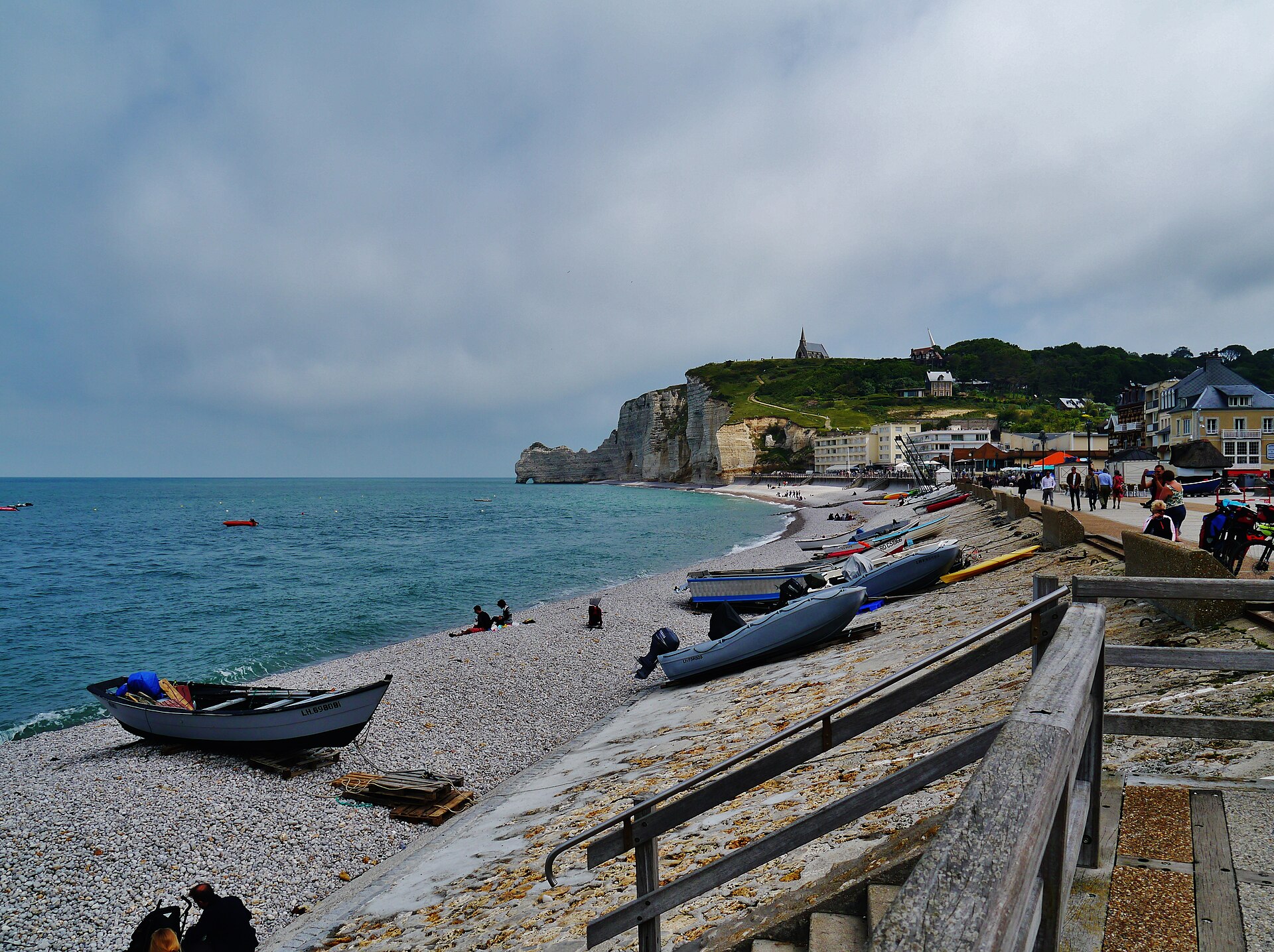
Étretat is a quiet seaside town on the Normandy coast, where the sea meets towering chalk cliffs in a way that feels almost theatrical. There’s no bustling boardwalk or crowds here, just the sound of waves against stone, the scent of salt and seaweed, and a wind that carries the weight of centuries. The beach isn’t just a stretch of shore—it’s a natural stage, where every rock and curve of the coastline tells a story older than the town itself.
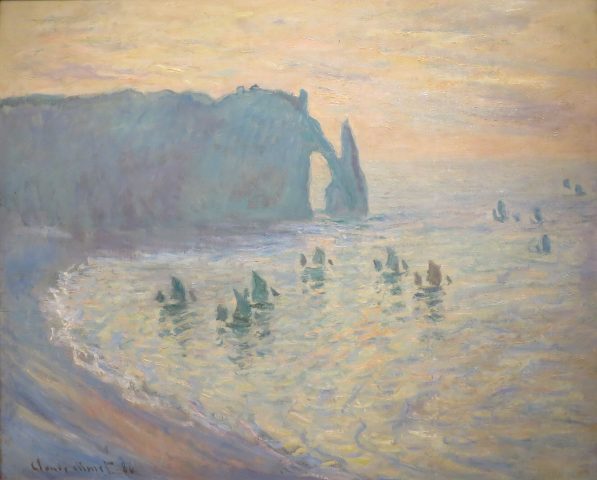
The cliffs around Étretat are more than just a dramatic backdrop; they’re a geological marvel, shaped over millions of years by the relentless work of wind and water. The chalk formations rise like ancient ruins, their arches and spires defying gravity. The most famous of these is the Manneporte, a colossal arch that frames the sea like a gateway to another world. Nearby, the Aval arch stretches like a stone bridge, while the Aiguille, a slender needle of rock, stands as if carved by a sculptor’s hand. These formations have drawn artists for generations—Monet, Corot, and Delacroix all tried to capture their shifting moods on canvas. Even Guy de Maupassant, who grew up nearby, wrote about them with a sense of awe, as if they held some secret of the past.
The beach itself is nothing like the golden sands of the French Riviera. Instead, it’s covered in smooth, rounded pebbles that shift underfoot with a quiet, rhythmic crunch. They stay cool even on warm days, a small comfort against the brisk sea air. The water here is never as warm as in the south, but it’s clear, changing from emerald to steel gray depending on the light. Swimming is best at low tide, when the waves recede and the shore widens, revealing hidden pools and stretches of wet stone. At high tide, the sea presses close to the cliffs, leaving only a narrow strip of beach between water and rock.
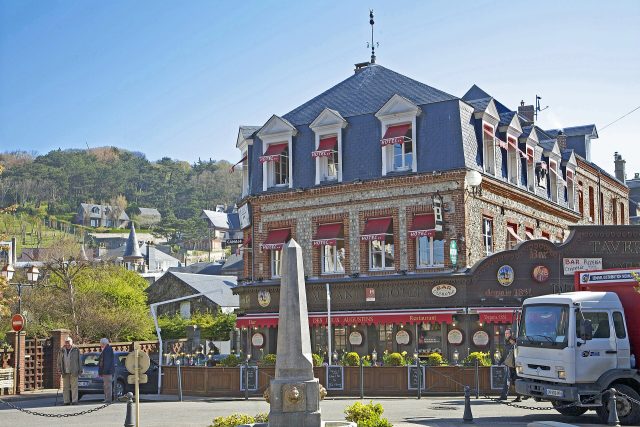
Étretat wasn’t always a retreat for artists and travelers. In the 19th century, it was a humble fishing village, where locals hauled in herring and cod and relied on the cliffs for shelter from storms. That changed when the railway arrived, bringing Parisians in search of fresh air and solitude. Soon, the town became a haven for painters and writers, who rented small houses by the sea and spent summers here. Today, Étretat still feels like a place out of time—narrow streets lined with pale stone houses, cafés serving oysters and cider, and an absence of modern hotels or chain stores. There are no high-rises or shopping centers, just the quiet rhythm of a town that has refused to hurry.
Walking along the shore isn’t just about admiring the cliffs; it’s a chance to glimpse fragments of a much older world. The chalk deposits sometimes reveal fossils of ammonites and belemnites, ancient sea creatures that once swam in prehistoric oceans. Locals used to collect these as souvenirs, but now the cliffs are protected, their layers of history preserved. Even without hunting for fossils, the beach feels like a place where time moves differently. The best moments come at sunset, when the cliffs glow pink and gold, and the sea shimmers with reflected light, as if the whole scene has been dipped in honey.
For those who want more than just the beach, there are paths leading up the cliffs to viewpoints that offer sweeping vistas of the bay. The trail to the Manneporte is one of the most popular, though the climb can be steep, especially after rain when the rocks are slick. The reward is worth it—a panorama of endless sea, with the beach below looking small and serene, like a postcard from another era. Another route follows the coast to a neighboring cove, where the cliffs form a natural amphitheater. At low tide, it’s possible to walk beneath the arches, but the sea here is unpredictable, and a sudden wave can catch the unwary.
Étretat isn’t a place for those who crave excitement or luxury. It’s for people who find joy in simple things—a walk along the shore, the taste of salt on the breeze, an evening spent watching the light fade over the water. There are no amusement parks or nightclubs, just the quiet hum of the town settling into itself. In the evenings, when the day-trippers leave, the beach belongs to the locals again. Fishermen mend their nets, children kick a ball across the pebbles, and old men sit on benches, watching the sea as if waiting for something. It’s as if Étretat exists in its own time, indifferent to the world beyond.
Winter transforms the town. The crowds vanish, and the beach becomes a windswept expanse where storms crash against the cliffs with thunderous force. The waves send spray flying high into the air, and the wind howls through the arches like a living thing. Yet even in this raw, untamed state, Étretat has a strange beauty. The cliffs seem more imposing, the sea more powerful, as if the town is reminding visitors of nature’s indifference to human plans. Those who come in the off-season are rewarded with solitude and a glimpse of Normandy stripped bare—wild, stark, and quietly magnificent.
This is a place that doesn’t try to impress. There are no grand hotels or gimmicks, just the unvarnished truth of the landscape—the cliffs, the sea, the wind that carries the scent of salt and seaweed. Maybe that’s why Étretat has endured for so long. In a world that moves too fast, places like this are rare. They don’t change, or at least not in ways that matter. They simply exist, waiting for those who know how to slow down and listen.