Manor d’Aval is one of those quiet places in Normandy where time seems to slow down, as if the world beyond its stone walls moves at a different pace. Tucked away near the coastal town of Étretat, it sits among rolling green hills and the dramatic chalk cliffs that define this stretch of shoreline. The manor doesn’t announce itself from a distance—it waits, half-hidden, until you’re close enough to sense its presence. Then, what appears to be just another old estate reveals itself as something more: a house with layers of history, built not just of stone and timber, but of the lives that have passed through it over centuries.
The architecture is unmistakably Norman, a style that balances solidity with grace. Thick walls of local stone rise to meet steep, tiled roofs, while tall windows with delicate glazing let in just enough light to soften the interior. The facade is marked by carved wooden beams, a nod to the region’s craftsmanship, and a small portico with columns lends the entrance a subtle elegance. Inside, the original details remain—wide oak staircases, fireplaces hewn from the same pale stone as the cliffs outside, and parquet floors worn smooth by generations of footsteps. These are the kinds of spaces that feel lived-in even when empty, as if the echoes of conversations and laughter still linger in the air.
The manor’s story is woven into the broader history of Normandy itself. In the Middle Ages, the land belonged to local lords, but by the 18th century, it had become a retreat for wealthy bourgeois families who sought refuge from the bustle of cities like Rouen or Le Havre. This was a time when the ideals of the Enlightenment took hold in France, and Manor d’Aval became a gathering place for thinkers, writers, and artists. Over glasses of cider and calvados, they debated philosophy, literature, and the changing world around them. Some say that ideas born within these walls later found their way into books and paintings that shaped French culture. Whether or not that’s true, the manor certainly played its part in the intellectual life of the region, offering a quiet stage for the exchange of ideas.
Today, the estate remains a private residence, its doors closed to casual visitors. But even from the outside, it holds a certain allure. The surrounding park is less a manicured garden than a natural extension of the landscape—wild, overgrown, and full of winding paths that lead to unexpected clearings. Here, the past feels close enough to touch. It’s easy to imagine 18th-century guests strolling beneath the same ancient trees, their conversations drifting on the breeze that carries the scent of the sea. The park doesn’t try to impress; it simply exists, a quiet companion to the manor itself.
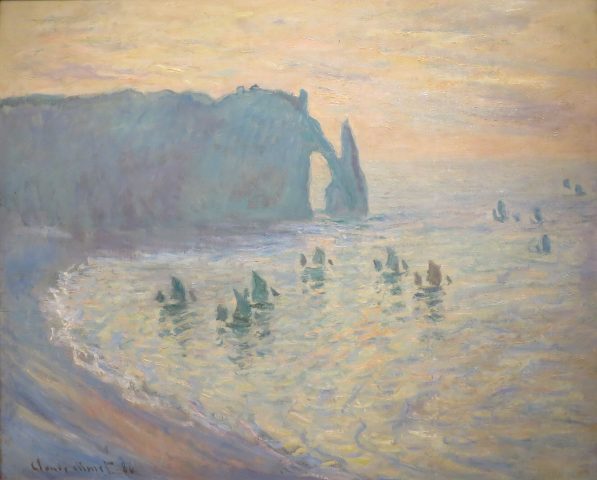
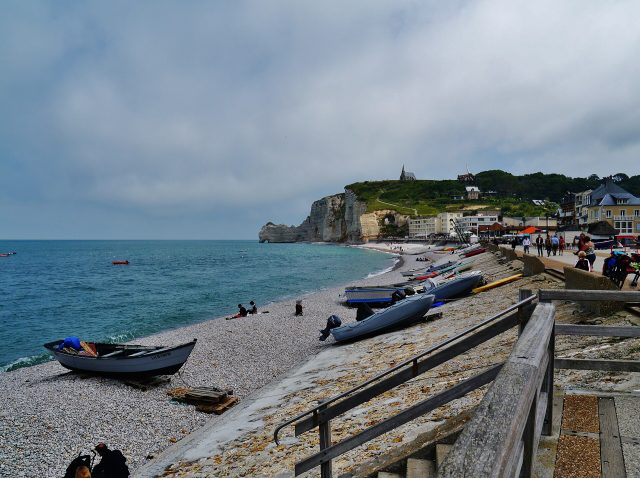
Étretat, the town that lies just beyond the manor’s gates, is a place of raw, natural beauty. Its fame rests on the towering chalk cliffs—Aval, Amont, and Manneporte—that rise from the English Channel like the ruins of some ancient fortress. Artists and writers have long been drawn to their stark grandeur. Monet painted them, Corot sketched them, and Maupassant wrote about them, each capturing a different facet of their enduring presence. Manor d’Aval stands as a kind of counterpart to these natural wonders, a human-made landmark that has witnessed the same tides, storms, and shifting light. Together, they tell a story of a place where nature and history are inseparable.
In an age when so many historic sites have been turned into attractions, Manor d’Aval remains refreshingly untouched. There are no crowds here, no souvenir stands or guided tours—just the sound of the wind through the trees and the distant crash of waves against the cliffs. The manor doesn’t demand attention; it invites contemplation. That might be why it feels so compelling. It doesn’t exist for the sake of visitors; it exists for its own sake, a silent guardian of the past.
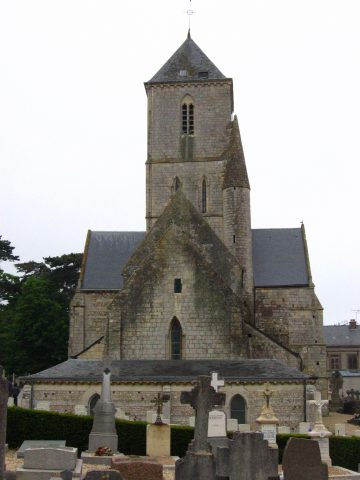
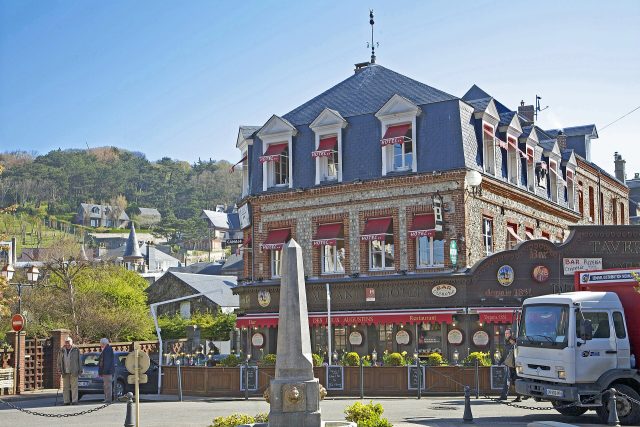
If you find yourself in Étretat, resist the urge to rush straight to the cliffs. Take a moment to wander the town’s narrow streets first, to step inside the old church of Saint-Martin, or to linger in one of the small cafés where locals gather. Then, when you’re ready, set out toward the manor. The path winds through fields and small groves, each step carrying you further from the present and closer to the rhythm of another era. This is the real Normandy—not the one on postcards, but the one that lingers in the quiet corners, where the past isn’t just remembered but still alive.