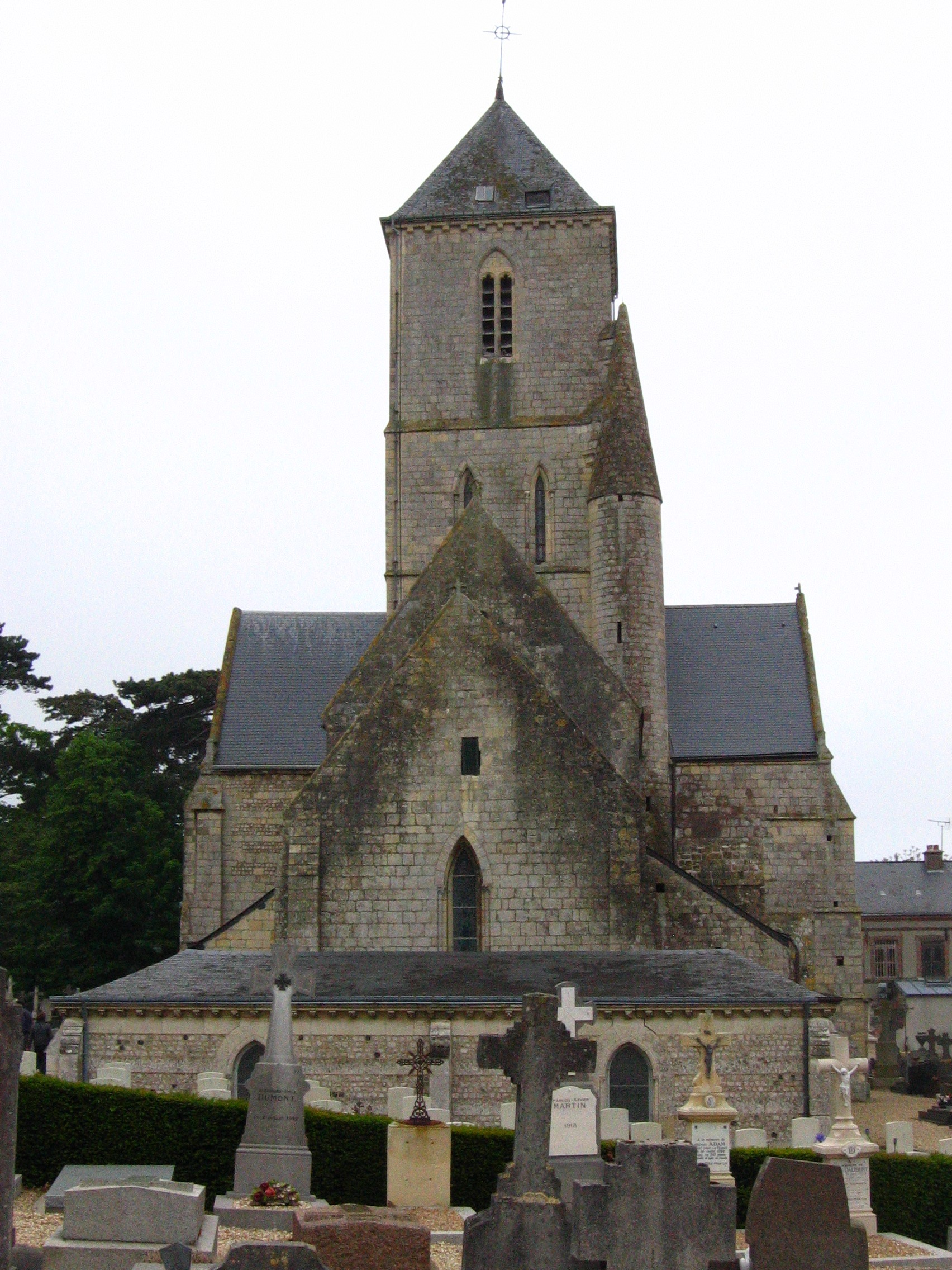
Notre-Dame of Étretat is one of those rare places that feels suspended in time, a quiet witness to centuries of Norman life. Perched on a gentle rise in the heart of the town, its spire has long served as a landmark for travelers approaching the coast, a steady presence against the shifting tides and weather. Built in the 12th century, the church bears the marks of Romanesque design, though its structure has been altered over the years—expanded, repaired, and adapted to the needs of its congregation and the changing tastes of the era. What remains is a building of understated dignity, shaped by the rhythms of a small fishing community that once relied on it not just for worship, but for gathering, solace, and continuity.
From the outside, the church is unassuming, its simplicity a contrast to the grand cathedrals of larger cities. The stone walls, quarried from local limestone, bear the patina of the sea air—moss clinging to the crevices, the occasional crack where salt and wind have worn away at the surface. The main facade is modest, with a rounded arch above the entrance and a narrow rose window set into the wall above. The bell tower, added later, gives the building an asymmetrical silhouette, a quirk that makes it instantly recognizable. Inside, the space is small but bright, the wooden pews groaning softly underfoot, the tall, pointed windows filtering the light into a soft glow that pools across the stone floor.
The history of Notre-Dame is inseparable from that of Étretat itself. In the Middle Ages, the town was a bustling port, a hub for trade with England, and the church stood at the center of daily life. It was here that children were baptized, couples married, and the dead laid to rest. Sundays brought the entire community together after mass, the square outside buzzing with conversation, deals struck over fish and grain, news exchanged between neighbors. During the Hundred Years’ War, Étretat found itself caught in the crossfire, its buildings looted and damaged, but each time the church was rebuilt. Its survival became a point of pride, a symbol of the town’s resilience in the face of hardship.
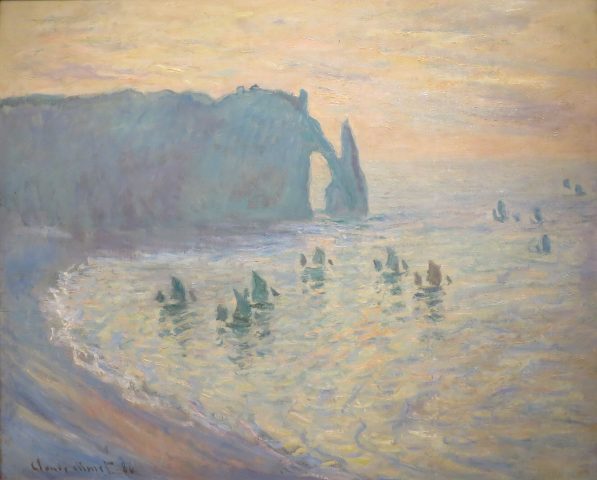
By the 19th century, Étretat had transformed into a fashionable retreat, drawing artists, writers, and aristocrats drawn to its dramatic cliffs and shifting light. Claude Monet, Guy de Maupassant, and Jacques Offenbach were among those who spent time here, and the church often appeared in their work. Monet, in particular, painted Notre-Dame repeatedly, capturing it at dawn, dusk, and under stormy skies, each canvas a study in how light could transform the ordinary into something transcendent. Those paintings helped cement the church’s place in the cultural imagination, turning it from a local landmark into a piece of France’s artistic heritage. Today, visitors often pause outside, comparing the real building to its painted versions, trying to see what Monet saw—the way the stone seems to glow at certain hours, or how the shadows pool in the corners of the square.
Inside, a few details stand out. The altar, carved in a neo-Gothic style, is framed by wooden panels, their intricate patterns worn smooth by time. The stained glass, though not as vivid as in larger cathedrals, casts a muted, peaceful light across the nave. The statue of the Virgin Mary with the infant Jesus, brought here in the 16th century, remains one of the church’s most revered objects, its origins the subject of local legend. In the side chapels, old tombstones and memorial plaques tell quiet stories of the people who once lived in Étretat—fishermen, merchants, families whose names have faded but whose presence lingers in the stone.
Notre-Dame is more than just a historical monument; it’s a place that still breathes with life. On Sundays, the church fills with the voices of parishioners, while on weekdays, tourists drift in and out, pausing to take in the cool stillness of the interior. Outside, a small garden with benches offers a place to sit, the distant sound of the sea a constant murmur in the background. It’s easy to imagine the generations who have passed through these doors—their joys, their sorrows, the quiet moments of reflection that have unfolded here over the centuries. In a town where time seems to move at its own pace, the church is a reminder of how much has stayed the same.
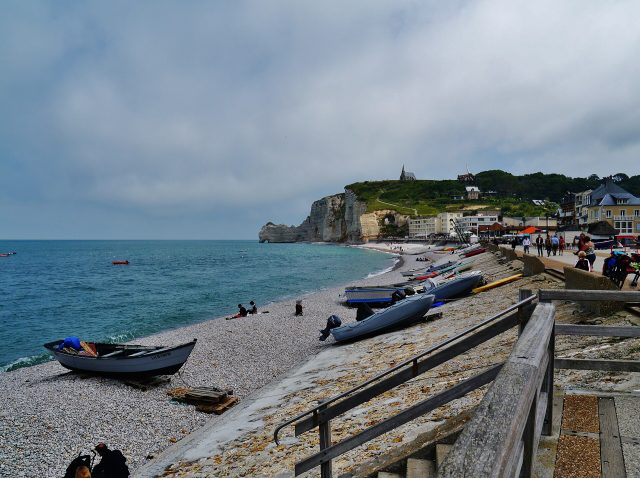
If you visit Étretat, resist the urge to rush straight to the famous cliffs or the beach. Instead, take a moment to step inside Notre-Dame. Run your fingers along the cool stone of the walls, listen to the way sound carries under the vaulted ceiling, let your eyes adjust to the dim light filtering through the windows. There’s something about places like this—where the weight of history is almost tangible—that makes travel feel like more than just movement from one place to another. It’s a chance to connect with the people who came before, to stand where they stood, and to feel, if only for a moment, the quiet persistence of time.