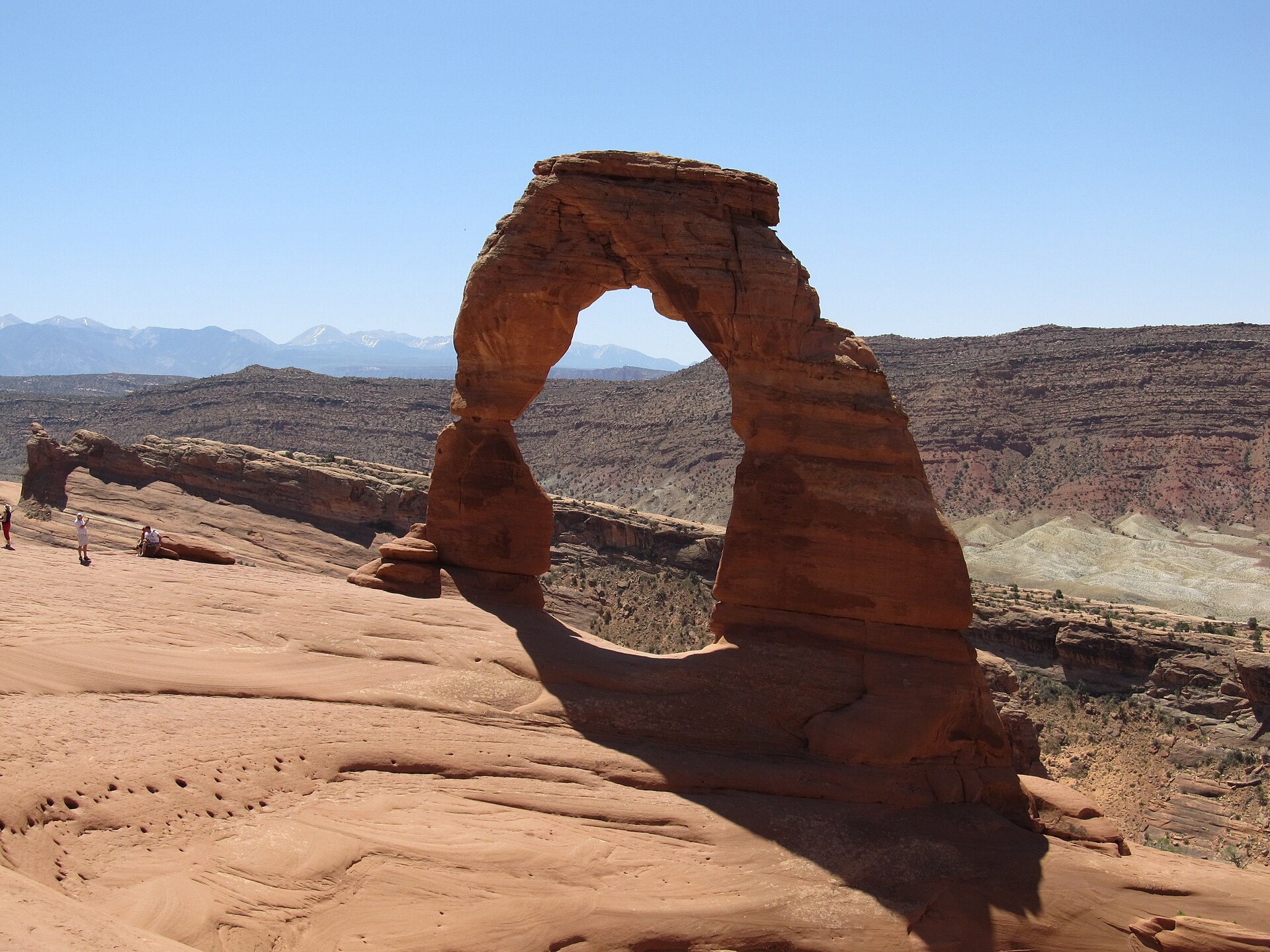
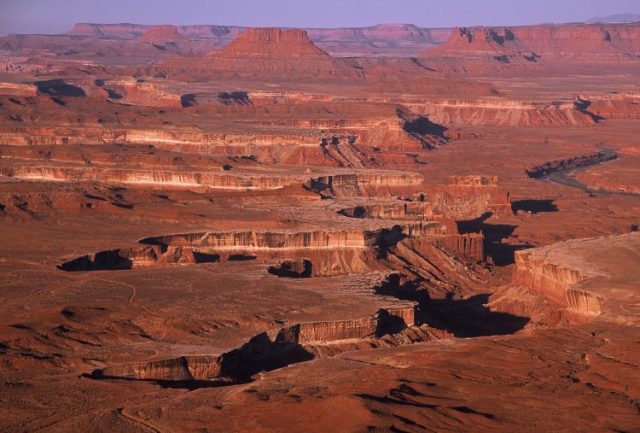
Dead Horse Point is one of those rare places where the land feels deliberately sculpted, as if nature set out to prove just how dramatic it could be. Perched on the edge of a high plateau in southeastern Utah, the formation looks like a massive stone ring suspended above the Colorado River canyon. From this vantage, the river winds far below like a ribbon, its curves accentuated by the deep red cliffs that frame it. The scale of the landscape plays tricks on the eye—what appears distant and delicate is actually vast and enduring. The name itself carries a haunting quality, tied to an old tale about wild mustangs that once roamed the area. According to legend, a herd became trapped on the plateau, dying of thirst when they couldn’t find their way down. The story may be more myth than history, but it lingers in the air, adding a layer of quiet mystery to the place.
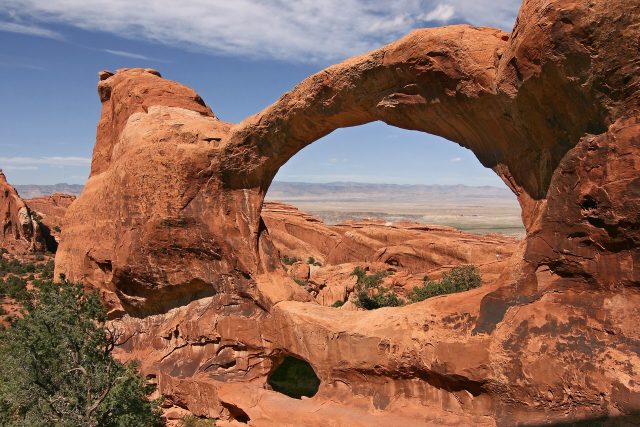
The arch, like so much of Utah’s red rock country, was shaped over millions of years by the slow, relentless forces of erosion. The sandstone here began as ancient dunes, laid down when this part of the continent was covered by a shallow sea. Over time, wind, water, and temperature shifts wore away the softer layers, leaving behind the harder rock that now forms arches, spires, and balanced boulders. Dead Horse Point isn’t the largest or most famous of these formations—that title belongs to others in nearby Arches National Park—but it has a certain intimacy. Standing at the overlook, the canyon below feels almost like a miniature, a diorama of the West’s rugged beauty. Yet the reality is far grander: the river carving its way through stone, the cliffs stretching for miles, the silence broken only by the occasional gust of wind.
Unlike the more crowded parks in the region, Dead Horse Point sees fewer visitors, which makes it ideal for those who prefer solitude. There are no tour buses, no lines at viewpoints, no crowded parking lots. Instead, the drive itself becomes part of the experience—a winding dirt road cutting through rolling red hills, with the occasional glimpse of another traveler in the distance. Most people who come here are looking for the same thing: a moment of stillness, a chance to step away from the noise of everyday life. The overlook is designed to blend into the landscape, with wooden platforms that don’t distract from the view. Informational signs offer just enough context about the geology and history without overwhelming the scene.
The real draw, though, is the sense of scale. From the overlook, the Colorado River looks like a thin blue thread, though it’s a powerful force that has carved this canyon over millennia. On clear days, the horizon seems to stretch forever, and the colors of the rock shift with the light—deep crimson at dawn, soft pink at dusk, and everything in between. The air is dry and crisp, carrying the faint scent of sagebrush and sun-warmed stone. It’s a place that invites lingering, whether to watch the shadows lengthen across the canyon or simply to sit and listen to the silence.
For those who want to explore further, there are hiking trails that lead away from the main overlook. Some descend toward the river, offering a different perspective on the canyon’s layers. Others follow the rim of the plateau, revealing new angles on the landscape. The trails aren’t as demanding as those in nearby parks, but they still require caution—drop-offs are steep, and the desert weather can change quickly. Even a short walk around the arch leaves a lasting impression, as if you’ve stepped into a world that exists outside of time. The rock formations here have a way of making human concerns feel small, a reminder of how fleeting our presence is in the grand scheme of things.
The land hasn’t always been this quiet. Thousands of years ago, Ancestral Puebloans lived in the region, leaving behind petroglyphs and the remnants of their settlements. Later, in the 19th century, cowboys and prospectors passed through, drawn by the promise of open land and hidden riches. By the mid-20th century, Hollywood had discovered the area, using its stark beauty as a backdrop for Westerns. Today, traces of that history are subtle—a weathered corral here, a rusted telegraph pole there—but they hint at the lives that once moved through this now-empty space. It’s a reminder that even the most remote places have stories, if you know where to look.
The best time to visit is in the spring or fall, when temperatures are mild and the desert isn’t at its most unforgiving. Summer can be brutal, with midday heat that makes even short hikes a challenge. Winter brings a different kind of quiet, with occasional snow dusting the red rock, creating a striking contrast. But Utah’s weather is unpredictable, and even in the height of summer, storms can roll in without warning. No matter when you come, it’s wise to be prepared—water, sunscreen, and sturdy shoes are essential, as the nearest town is an hour away.
There’s a raw simplicity to Dead Horse Point that sets it apart from more developed parks. There are no gift shops, no restaurants, no amenities of any kind. Visitors need to bring everything they might need, from food to first-aid supplies. That lack of infrastructure is part of what makes the place feel so untouched. It’s not a destination for those who want convenience, but for those who want to experience the desert on its own terms. The drive back to Moab often leaves a lingering sense of awe, a quiet appreciation for how fragile and enduring this landscape really is.
Standing at the edge of the canyon, it’s easy to forget that the rock beneath your feet is still changing. Wind and water continue their work, slowly wearing away the sandstone, ensuring that one day the arch will collapse, just as others have before it. But for now, it stands—a silent testament to the forces that have shaped this land for millions of years. Dead Horse Point isn’t just a place to see; it’s a place to feel, to reflect on the vastness of time and the smallness of our place within it. In a world that often feels too loud and too fast, it offers something rare: a moment of stillness, a chance to simply be.