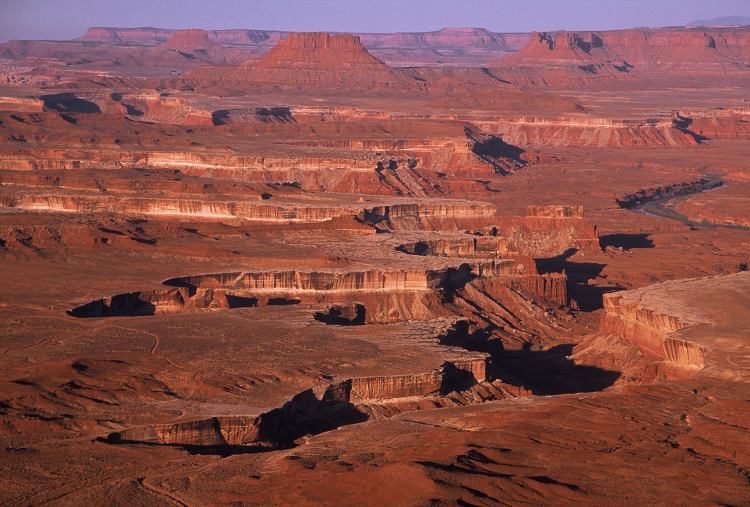
Canyonlands is a place where the earth feels torn open by time and the elements. Here, in southeastern Utah, nature has carved one of North America’s most dramatic landscapes—deep canyons, jagged spires, winding rivers, and vast deserts stretching to the horizon. Covering over three thousand square kilometers, this national park holds layers of history, from ancient geological formations to traces of the first people who called these lands home thousands of years ago.
The park is divided into distinct districts, each with its own character. The most famous is Island in the Sky, a high plateau that rises like a massive table above the surrounding canyons. From its overlooks, the views are staggering—labyrinthine gorges carved by the Colorado and Green Rivers, distant rock formations that resemble castles or strange creatures. It’s easy to imagine these cliffs once formed the bed of an ancient sea, now lifted high above the desert, a testament to the relentless power of erosion.
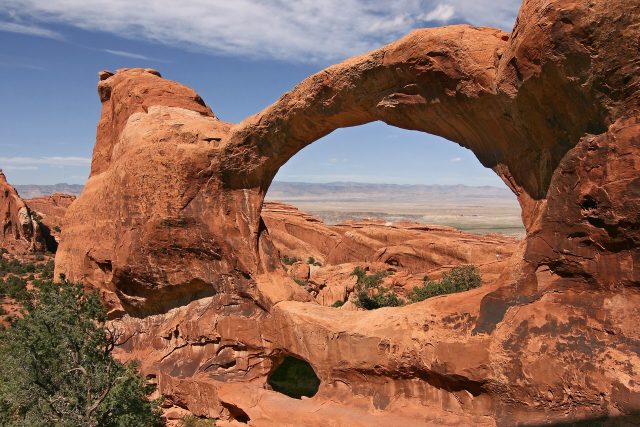
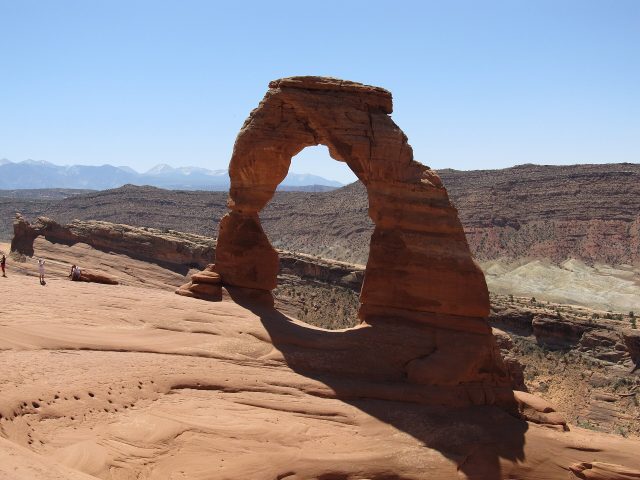
Then there’s The Needles, named for its towering sandstone spires that jut from the earth like giant needles. These formations are the result of wind and water sculpting the rock into intricate shapes over millennia. The area also holds remnants of ancient Indigenous life—petroglyphs, ruins of dwellings built by the Ancestral Puebloans. Walking the trails here, you might stumble upon crumbling stone walls or rock art, quiet reminders that people have lived in these canyons for centuries.
The Maze is the park’s wildest and least accessible district. There are no paved roads, and reaching some areas requires navigating rough terrain or descending steep paths into the canyons. This is where solitude seekers come to feel like explorers. The Green River cuts through the Maze, creating sheer-walled gorges where silence reigns, broken only by the rush of water or the whisper of wind. Days can pass without seeing another person, the landscape untouched and raw.
Canyonlands isn’t just for looking—it’s for doing. Hiking, mountain biking, river rafting, and even rock climbing draw visitors who want to engage with the land. One of the most famous routes is the White Rim Road, a hundred-kilometer loop along the canyon’s edge, offering sweeping views at every turn. For those who prefer water, floating down the Colorado River through the canyons provides a different perspective—clear, cold water framed by walls hundreds of meters high, as if paddling through the bottom of a vast bowl.
The park’s history is tied to the story of the American West. In the 19th century, these lands were part of routes used by settlers and prospectors, including the Old Spanish Trail, which connected New Mexico to California. Later, cattle drives passed through, and in the early 20th century, there were attempts to mine the area, though the harsh conditions made them short-lived. Eventually, nature reclaimed the land, and in 1964, Canyonlands became a national park, preserving its rugged beauty for the future.
Unlike more famous parks, Canyonlands remains quiet and remote. There are no crowds like at the Grand Canyon or Yosemite, no hotels or restaurants—just a few campgrounds and nearby guest ranches in Moab. That simplicity is part of its appeal. Nights here are spent under a sky dense with stars, the only sounds the distant howl of coyotes and the wind. It’s a place where time slows, and the outside world feels far away.
Visiting Canyonlands isn’t just a trip—it’s a step into another world. Every rock, every bend in the river, every gust of wind reminds you how fragile and powerful nature is. It’s a place to escape the noise of modern life and remember that the earth is older and vaster than we often realize. Whether you come for a day or a week, the park leaves an impression of something grand and untamed, a landscape that lingers in the mind long after you’ve left.