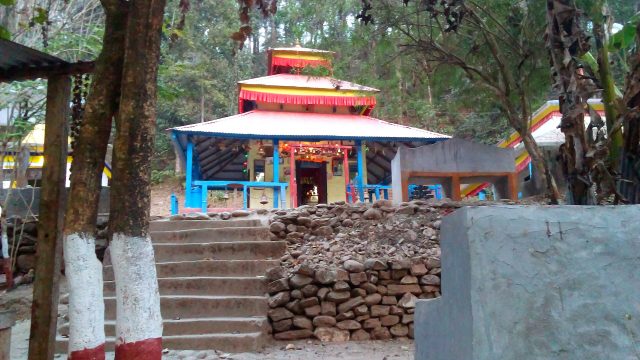
Shiva Mandir in Khandbari isn’t just a temple—it’s a place where faith, history, and the everyday life of a small Nepali town quietly intertwine. Tucked away in the eastern part of the country, in Sankhuwasabha district, this modest shrine is dedicated to Shiva, one of Hinduism’s most revered deities. For the people who live here, it’s more than a religious site; it’s a gathering point where tradition and modernity coexist, where anyone can pause for a moment of stillness amid the rhythm of daily life.
The temple’s architecture follows the familiar style of Nepali Shiva shrines—small, sturdy, and unassuming. Built from stone, its sloping roof is adorned with intricately carved wooden details, a hallmark of local craftsmanship. The entrance is often framed by statues of deities and mythical figures, while inside, a simple altar holds the lingam, Shiva’s sacred symbol. Unlike the grand temples of Kathmandu or Patan, Shiva Mandir doesn’t impress with size or opulence, but its quiet authenticity creates a sense of warmth and belonging.
The history of the temple is closely tied to Khandbari itself. The town grew from a small settlement along an old trade route between Nepal and Tibet, a place where cultures and beliefs have long mingled. Shiva Mandir likely dates back several centuries, emerging as Hinduism took root in the region. While no one knows the exact year it was built, the temple stands as a reminder of how faith has shaped these hills over generations.
For pilgrims and travelers, Shiva Mandir offers more than just a place to pray. There are no crowds here, no tour groups rushing through—just the steady hum of devotion. Locals visit not only during major festivals but on ordinary days, lighting oil lamps, leaving offerings, or simply sitting in the shade of the trees that surround the temple. The atmosphere is unhurried, almost intimate, as if the temple has always been part of the community’s daily life.
One of the most vivid moments in the temple’s year is Maha Shivaratri, the great festival honoring Shiva, celebrated across Nepal. On this night, the temple comes alive with devotees who travel from distant villages. Chanting fills the air, incense smoke curls toward the sky, and the flicker of oil lamps casts a soft glow over the gathered crowd. Even those who don’t consider themselves religious often find themselves moved by the energy of the night—a reminder of something deeper, something timeless.
Khandbari isn’t a place that draws tourists in the way Kathmandu or Pokhara do. It’s a town where life moves at its own pace, where the mountains loom in the distance and people go about their days without hurry. Shiva Mandir fits naturally into this landscape. It doesn’t try to impress or stand out; it simply exists, as much a part of the surroundings as the hills or the winding roads. That unassuming presence is perhaps its greatest strength.
Visiting the temple doesn’t require much preparation. A little respect for local customs—removing shoes before entering, dressing modestly, asking before taking photos—is all that’s needed. Inside, you might see devotees performing rituals, the priest conducting puja, or the slow drift of incense smoke toward the ceiling. Occasionally, wandering sadhus—ascetics devoted to Shiva—pass through, sharing stories and blessings with those who listen.
Shiva Mandir isn’t the kind of place you’ll find in glossy travel magazines. There are no gilded statues, no elaborate frescoes, no architectural marvels. But that’s precisely why it feels real. This is a temple that exists for the people who believe in it, not for the sake of visitors. If you ever find yourself in Khandbari, it’s worth stopping by, even just for a few minutes. Here, you’ll catch a glimpse of Nepal as it truly is—far from the well-trodden paths, but closer to the heart of what makes these places endure.