
Patan
Nepal · 8 places
Photo: Clemensmarabu, CC BY-SA 3.0
Lalitpur, or Patan as it’s known to locals, is one of the three ancient cities in the Kathmandu Valley that refuses to be swallowed by modernity. Its narrow stone-paved streets wind between two-story houses with intricately carved wooden windows, while temple spires rise above the rooftops, some standing for centuries. Unlike the bustling energy of Kathmandu, Patan moves at its own pace, as if time here slows just enough to notice the details that slip by unnoticed in the rush of everyday life.
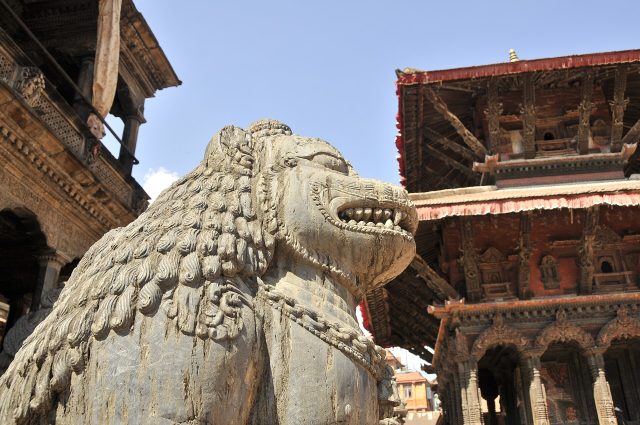
At the heart of the city lies Durbar Square, a UNESCO World Heritage site that feels less like a tourist attraction and more like a living museum. Every stone here carries the weight of history, shaped by the Malla dynasties that ruled from the 13th to the 18th century. The square is dominated by a palace with gilded windows, surrounded by dozens of temples, pagodas, and shrines built in the Newari architectural style. Among them, the Krishna Temple stands out with its stone columns and elaborate carvings, still a place of worship where locals bring flowers and light incense at dawn. By midday, visitors wander between the structures, trying to unravel the myths and legends woven into their walls.
Patan has long been a city of artisans, where craftsmanship is passed down through generations. In small workshops tucked along the streets, you can watch woodworkers carve masks, metalworkers hammer out statues of deities, or artists paint thangkas—traditional Buddhist scrolls—with meticulous precision. The city’s art school is particularly renowned, teaching not just technique but the philosophy behind each stroke. If you’re lucky, you might even get the chance to try your hand at painting a clay tile under the guidance of a master, an experience that lingers long after you leave.
Yet Patan isn’t stuck in the past. Over the years, it has quietly embraced the present, with cafés serving spiced Nepali tea and fresh pastries, galleries showcasing contemporary art, and bookshops stocking rare finds in English and Nepali. As evening falls, rooftop restaurants fill with locals and travelers alike, drawn by the view of the Himalayas glowing in the sunset—visible on clear days even from here. The city doesn’t try to impress; it simply exists, balancing its quiet pride in history with an unhurried confidence in what comes next.
Life in Patan unfolds at its own rhythm. Mornings bring schoolchildren in uniforms hurrying to class, vendors arranging piles of fresh vegetables and spices on their stalls, and elderly men sitting on wooden benches, chatting over the day’s news. On weekends, the square hosts lively markets where everything from homemade cheese to antique coins changes hands. There’s no rush, no forced hospitality—just the quiet authenticity of a place that has always been itself. That, perhaps, is what makes Patan so compelling: it doesn’t perform for visitors. It simply lives.
See & Do
All of them

Eat & Drink
All of them
Places on the map
Marker colour follows the categoryClimate and weather
Detailed weather: Patan- Average temperature
- 19 °C
- Precipitation per year
- 1557 mm
- Sunshine hours per day
- 5.6 h
Average air temperature
°C
11
13
17
20
22
24
24
24
23
20
15
11
Jan
Feb
Mar
Apr
May
Jun
Jul
Aug
Sep
Oct
Nov
Dec


