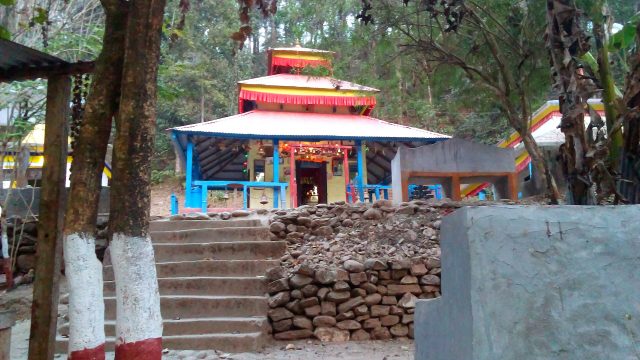
Perched on a hill overlooking a valley where Nepal’s fate was once decided, Sindhuli Gadhi is a monument to memory. The temple that once stood here has vanished, leaving behind scattered ruins of a fort that shaped the Anglo-Nepalese War in the early 1800s. From this height, the Arun River winds through the landscape, and the surrounding ridges still look as daunting as they did to the soldiers who fought here. On clear days, the Himalayas appear in the distance, their snow-capped peaks a reminder of how vast this land is.
This was one of the last defenses for the Nepali army against the British East India Company. In 1814, the British, pushing north, met fierce resistance from the Gurkhas. The fort sat on a critical pass, its steep slopes and narrow paths making it nearly impossible to breach. The Nepalis, outnumbered and outgunned, used the terrain to hold their ground. The British eventually broke through, but the victory cost them dearly—one of their hardest campaigns in the region.
The fort is now little more than fragments of stone walls and crumbling bastions. Moss covers the rocks, and ditches fill with earth and leaves. Even in decay, Sindhuli Gadhi feels heavy with history. You can almost see the scene two centuries ago: soldiers in Gurkha attire, kukri knives at their waists, standing firm against an advancing army. Locals say that on quiet evenings, the echoes of battle still linger, as if the past refuses to fade.
The temple that named the site once stood within the fort’s walls. Now, only its foundation and a few carved stone slabs remain. It was likely a small Hindu shrine, perhaps for Shiva or Kali—common in Nepal’s high places. Today, pilgrims are rare. The site draws travelers and schoolchildren from nearby villages, who come to learn about the battles that shaped their country.
To reach Sindhuli Gadhi, start from Khandbari, a small town in eastern Nepal. The drive takes about an hour by car or motorcycle, but the last half-kilometer is a steep, winding walk. The climb is tough, especially in the midday sun, but the view from the top is worth it. Below, the valley spreads out in patches of green—rice paddies and banana groves—while the mountains roll on endlessly. Farmers still work the terraced slopes, just as they have for centuries.
This isn’t a polished tourist spot. There are no cafes, no souvenir stalls, no signs at every turn. Just the wind in the trees, the call of birds, and the quiet over the ruins. That lack of distraction is what makes Sindhuli Gadhi special—it offers history without filters. For those who look beyond the scenery, this place feels like stepping into the past.
Nepal’s government has started preserving sites like Sindhuli Gadhi, focusing on conservation, not restoration. Informational plaques now stand near the ruins, and the path to the summit has been cleared. But the place still feels abandoned, and that’s part of its charm. It lets you experience history without modern gloss.
If you come here, don’t rush. Stay until sunset, when the light turns the mountains gold and crimson. The air cools, carrying the scent of blooming trees. You can sit on a weathered stone and imagine the scene two hundred years ago, when a nation’s fate hung in the balance. In moments like these, it’s clear why this place still holds its history—and why it matters to anyone who values the past.