Shalom Al Yisrael Synagogue is one of those quiet places in Jericho where the weight of history lingers in every stone. Tucked away in the heart of the ancient city, it doesn’t announce itself with grand facades or towering domes. Instead, it sits modestly among modern buildings and palm groves, its unassuming presence belying the layers of time contained within its walls. Step inside, though, and you’re immediately struck by the sense that this is a rare survivor—a place where Jewish life in the region has endured against all odds.
Dating back to the 6th century, during the Byzantine era, the synagogue stands in a city that was already ancient even then. Jericho’s history stretches back millennia, and this small structure is a testament to the Jewish community that once thrived here. The name Shalom Al Yisrael, meaning "Peace upon Israel," is taken from the mosaic floor that once greeted worshippers. Today, those words remain the focal point of the synagogue, their Hebrew letters still bold and clear, a direct link to the people who gathered here centuries ago to pray, study, and preserve their traditions. The same ground that once felt the footsteps of Roman soldiers and later Arab conquerors now bears witness to a different kind of continuity.
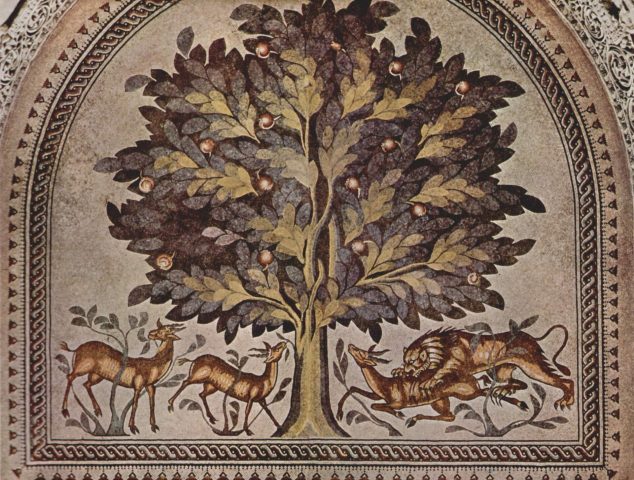
The mosaic floor is a masterpiece of early Byzantine art, its intricate patterns weaving together geometric designs, floral motifs, and the unmistakable image of the menorah, the seven-branched candelabrum central to Jewish symbolism. What makes it particularly fascinating is the subtle blending of influences. Alongside the Jewish elements, there are hints of Christian iconography, a reflection of the era in which the synagogue was built. In the 6th century, Palestine was a crossroads of cultures and faiths, and Jericho, with its fertile lands and strategic location, was a hub of trade and exchange. The synagogue likely served as more than just a place of worship—it was a communal space where daily life unfolded, where Torah scrolls were kept, and where the rhythms of the city’s Jewish population found their center.
Like Jericho itself, the synagogue’s history is one of resilience and adaptation. After the Arab conquest in the 7th century, the Jewish community in the city gradually dwindled, and the building’s original purpose faded. Over time, it was abandoned, buried beneath the shifting sands, and forgotten. It wasn’t until the late 19th century that the mosaic was rediscovered by chance, when locals digging a well stumbled upon its fragments. The real revelation came in 1936, when archaeologists, led by Dmitry Baranovsky, uncovered the remains of the ancient structure. Since then, Shalom Al Yisrael has drawn scholars, pilgrims, and curious visitors, though access has never been straightforward. The building’s survival is a quiet triumph, a reminder that even in a land marked by upheaval, some stories refuse to be erased.
Today, the synagogue is both a museum piece and a living place of worship. Inside, the atmosphere is one of stillness, the high ceilings and cool stone floors creating a sense of timelessness. The soft light filtering through narrow windows casts gentle shadows on the reconstructed bimah, the raised platform from which the Torah is read. Fragments of columns hint at the building’s former grandeur, while outside, a small garden with olive trees offers a place to sit and reflect. There’s no grand spectacle here, no ornate decorations—just the quiet dignity of a space that has seen centuries pass and yet remains.
Jericho is often called the oldest continuously inhabited city in the world, and Shalom Al Yisrael is one of the few places where that antiquity feels tangible. There’s a humility to it, a lack of pretense that makes it all the more powerful. It doesn’t demand attention like the grander religious sites of later eras; instead, it invites contemplation. The synagogue stands as a testament to the enduring nature of faith and tradition, even when entire communities have faded into history. For many visitors, stepping inside is less about sightseeing and more about connecting with something deeper—a sense of continuity that transcends the centuries.
Beyond its historical significance, the synagogue is also a reminder of Jericho’s place in a broader narrative. The city has always been a meeting point, a place where different cultures and religions have intersected. Walk through its streets today, and you’ll find the echoes of ancient Jewish life alongside the legacies of Christian pilgrims, Muslim rulers, and Crusader knights. Each group left its mark, but Shalom Al Yisrael is unique in how much of its original character has survived. That’s perhaps why it resonates so deeply. Standing within its walls, it’s impossible not to wonder about the generations who came before and those who will follow.
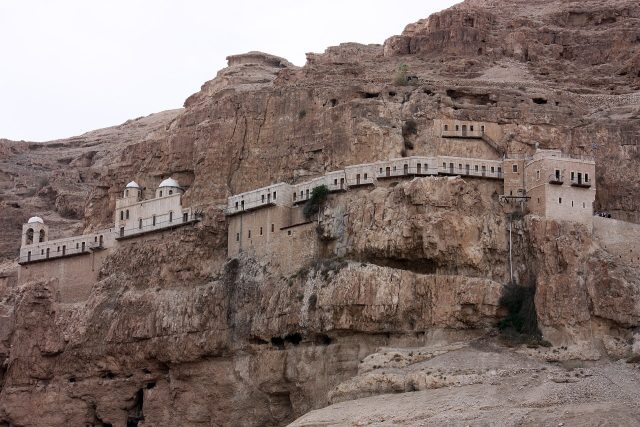
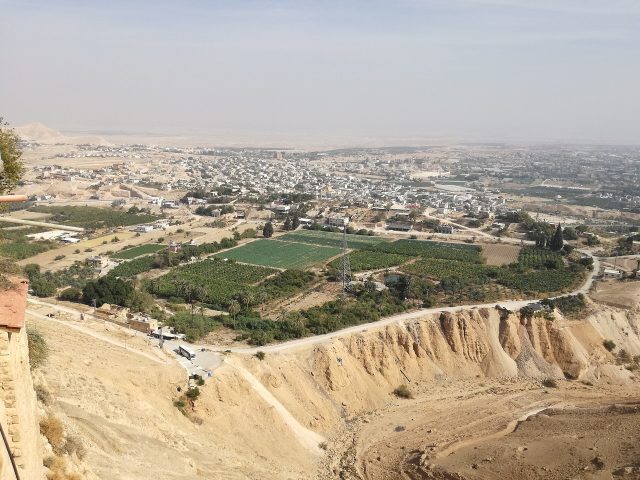
Jericho itself is more than just an archaeological site—it’s a living city, surrounded by palm groves and banana plantations. The markets are alive with the scent of spices and fresh produce, and the cafes serve sweet dates and juices made from recipes passed down through generations. After visiting the synagogue, you might wander through the souk, where vendors sell handmade ceramics and traditional sweets, or take the cable car up the Mount of Temptation for a sweeping view of the Jordan Valley. Yet even amid the bustle, Shalom Al Yisrael remains a quiet anchor, a place where the past feels close enough to touch.
For those interested in the history of religions, the synagogue offers a rare glimpse into a world where faiths coexisted, clashed, and sometimes borrowed from one another. It’s a reminder that Palestine has always been a land of overlapping stories, where the boundaries between communities were never as rigid as they might seem in hindsight. In Jericho, those layers are still visible, and Shalom Al Yisrael is one of the clearest windows into that complexity. It doesn’t offer easy answers or grand narratives—just the quiet persistence of a place that has outlasted empires, wars, and the slow march of time. And perhaps that’s what makes it so compelling. In a region where history is often contested, here it simply is.