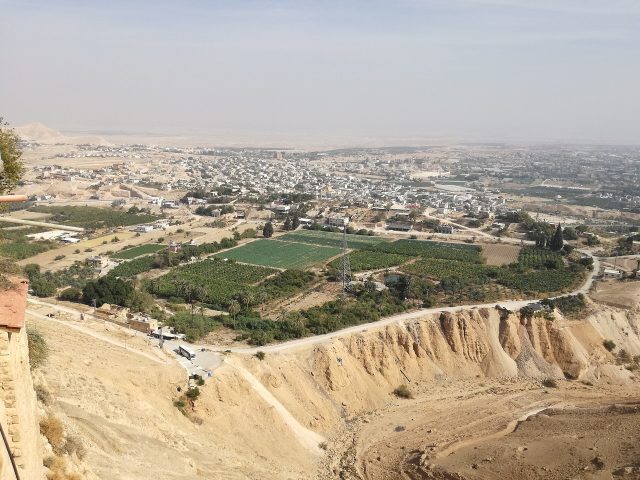
The Mount of Temptation rises abruptly from the plains of Jericho, its slopes a stark contrast of sun-bleached rock and sparse vegetation. From its summit, four hundred meters above the Dead Sea, the view stretches across the Jordan Valley—golden desert sands giving way to the lush green of date palm groves, with the distant Moab Mountains hazy on the horizon. This is where, according to tradition, Jesus spent forty days and nights in fasting and prayer, resisting the temptations of the devil. The mountain’s very name carries the weight of that struggle, a silent witness to a moment that has shaped faith for centuries.
Jericho, one of the oldest continuously inhabited cities in the world, has always been tied to this mountain. Its people have lived in its shadow for millennia, and the land here is layered with history. Long before the first monasteries appeared, the mountain’s caves sheltered hermits and ascetics drawn to its solitude. By the Byzantine era, these humble dwellings had grown into monastic communities, their cells carved directly into the rock. Over time, they evolved into the Monastery of the Temptation, known locally as Qarantal, a place where the sacred and the rugged landscape merge seamlessly.
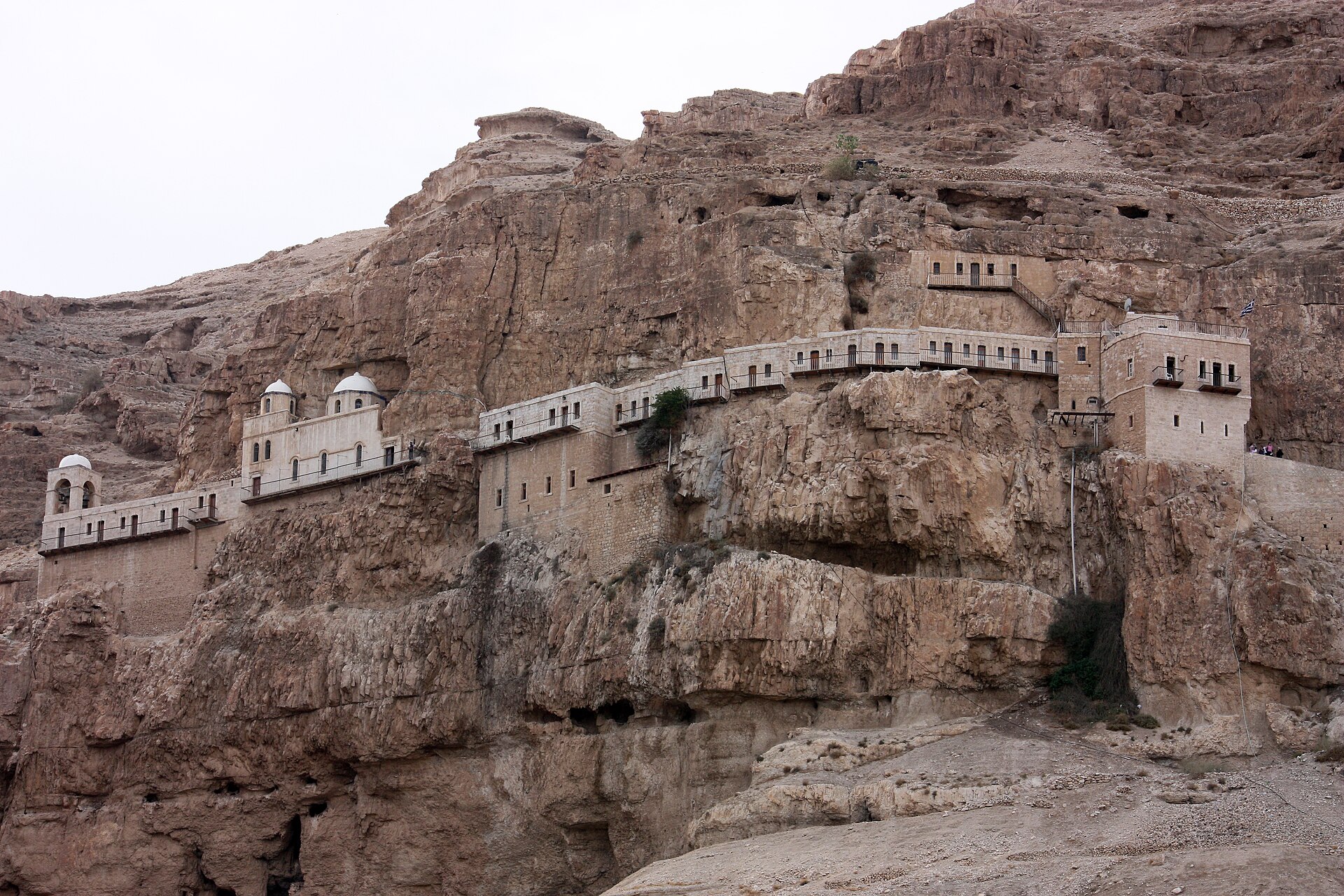
The monastery clings to the mountainside, its stone walls blending into the cliff face as if nature itself had shaped them. Narrow terraces and arched windows seem to grow from the rock, and the only way to reach it is by following a winding path that cuts through the slope. Inside, dimly lit corridors lead to small chapels and monastic cells, where Greek Orthodox monks still live and pray. The main church is dedicated to the temptation of Christ, its walls covered in faded frescoes depicting scenes from the Gospels. One of the most revered spots is the cave where Jesus is said to have fasted, its rough stone altar blackened by the smoke of countless candles left by pilgrims over the years.
The climb to the top is not an easy one. The path twists and turns, sometimes shaded by the occasional tree, other times exposed to the relentless sun. In the heat of the day, the air shimmers, and the stones radiate warmth. Those who make the journey are rewarded not just with the view but with a sense of quiet that feels almost tangible. Halfway up, a small platform offers a breathtaking perspective of Jericho below, a patchwork of green and brown against the vastness of the desert. It’s a place to pause, to imagine the countless pilgrims and hermits who have walked this same path over the centuries, seeking something beyond the ordinary.
The mountain holds meaning for many traditions. For Christians, it is a place of spiritual trial and triumph. For Muslims, it is part of the broader narrative of prophets and divine messages. For Jews, it is a reminder of the ancient lands of their ancestors. Yet even those who come without faith find themselves moved by the atmosphere here. The wind rustles through the dry grass, the sun moves slowly across the sky, and the stones beneath your feet seem to carry the weight of all who have walked them before.
At the foot of the mountain, life in Jericho goes on as it has for generations. The markets buzz with activity, selling dates, spices, and fresh produce. Children play in the streets, and elders sit in the shade of palm trees, sipping tea. But glance upward, and the mountain is always there—a silent presence, neither inviting nor forbidding, but undeniably powerful. It doesn’t promise an easy journey, nor does it offer grand revelations. Yet those who make the climb often leave with something intangible, a quiet understanding that lingers long after they’ve descended.
Today, the Mount of Temptation is more than just a physical landmark. It has become a symbol, woven into the cultural and spiritual fabric of the region. Its image appears in icons, literature, and art, a testament to its enduring significance. In a world that changes rapidly, the mountain remains constant, a silent guardian of the stories and struggles of those who have sought meaning in its heights. It doesn’t demand belief or devotion—it simply stands, as it always has, offering a place to reflect, to question, and perhaps to find a moment of clarity in the vastness of time.