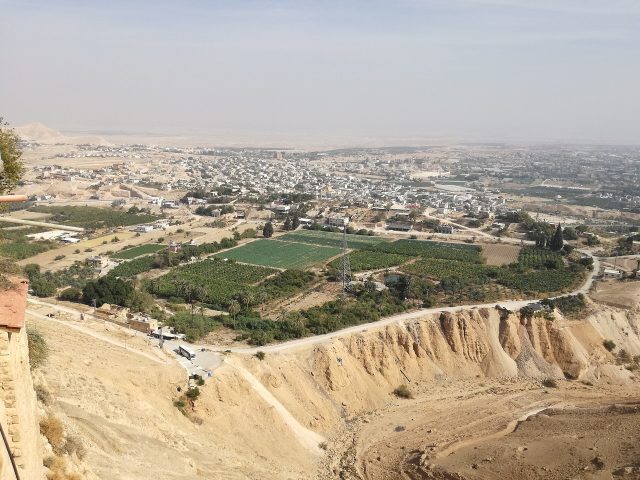
Hisham’s Palace feels like a place where time has paused, leaving behind echoes of an era long past. Tucked just outside Jericho, these ruins stand as a quiet testament to the power and sophistication of the Umayyad Caliphate, when this region was a center of culture and influence. The remains of the palace rise unexpectedly from the desert landscape, surrounded by ancient palm groves and dry hills. There are no crowds here, no modern distractions—just the sense that you’ve stumbled upon something rare, something that has endured against the odds.
The palace was built in the 8th century under the rule of Caliph Hisham ibn Abd al-Malik, a time when the Umayyad dynasty was at its height. Art, architecture, and scholarship flourished, and this desert retreat was meant to be a winter residence—a place of leisure and entertainment for the caliph and his court. Jericho’s warm climate and fertile land made it an ideal location, a green oasis in an otherwise harsh terrain. But the palace’s life was short-lived. Within decades of its completion, an earthquake reduced it to ruins, and for centuries, it lay forgotten beneath the sands.
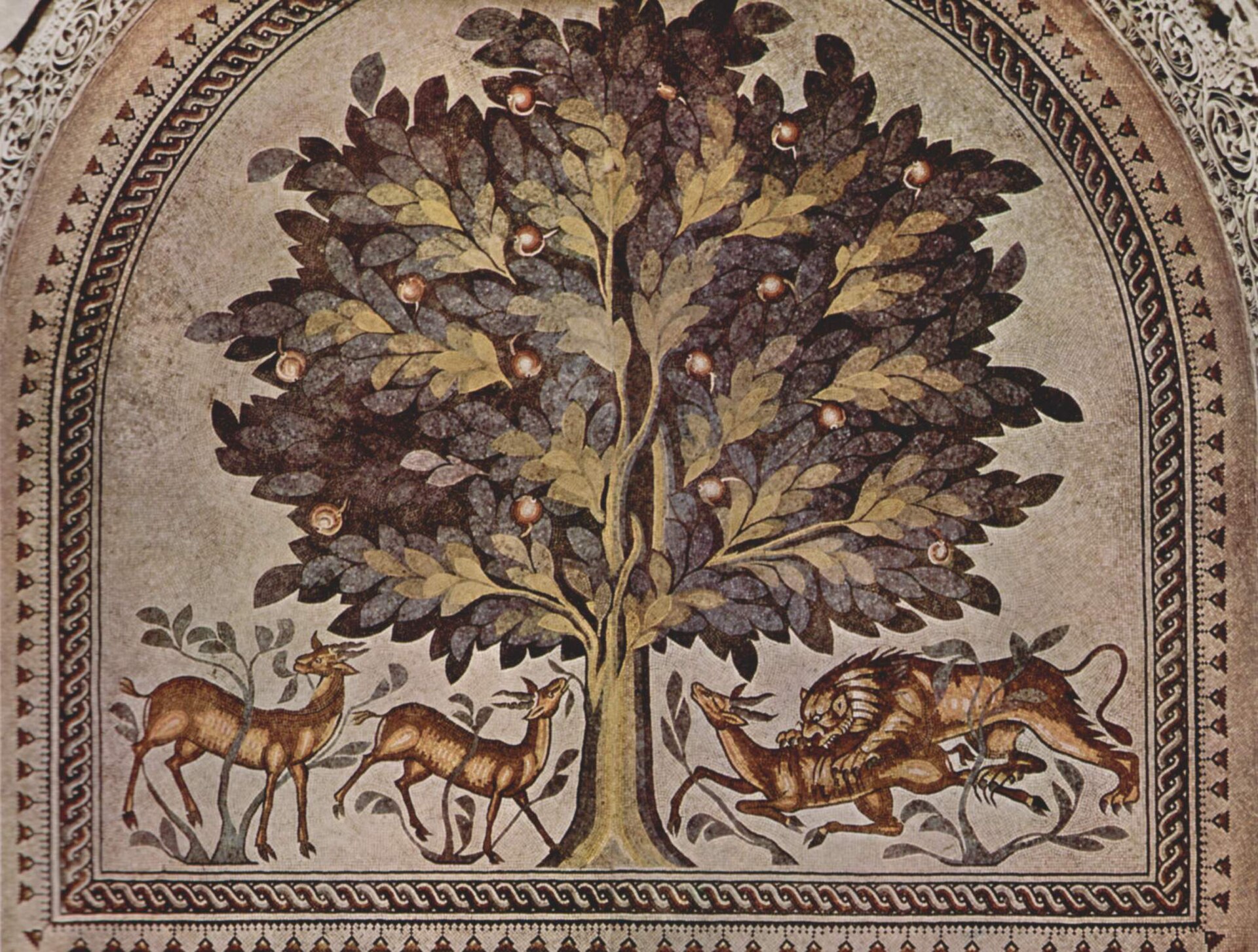
What remains today are fragments—crumbling walls, scattered columns, and the remnants of intricate mosaics—but even these are enough to leave an impression. The most striking feature is the famous mosaic floor in what was once the bathhouse. At its center is a vast Tree of Life, surrounded by scenes of hunting and feasting. The craftsmanship is astonishing; each tiny stone is placed with precision, capturing the play of light and shadow so vividly that the figures of animals and people seem almost alive. This mosaic is considered one of the finest examples of Umayyad art, blending Byzantine and Persian influences into something uniquely its own.
The architecture of the palace reflects a similar fusion of styles. Built on the model of Roman and Byzantine villas, it incorporated elements of early Islamic design. The layout was rectangular, with a central courtyard flanked by living quarters and service rooms. The baths were a focal point, complete with remnants of a hypocaust system—an underfloor heating method borrowed from Roman engineering. Water was drawn from nearby springs, and heat came from wood-fired furnaces, a luxury that spoke to the palace’s intended role as a retreat for the elite.
For a long time, Hisham’s Palace was lost to history. Its ruins were only rediscovered in the early 20th century, when archaeologists began systematic excavations in the area. Since then, restoration work has uncovered parts of the complex, but much of it still lies buried beneath layers of sand and earth. This gives the site an air of mystery, as if the past hasn’t quite faded but is merely waiting to be revealed.
Visiting the palace is more than just a lesson in history; it’s a chance to step into the world of ancient Jericho. The city is one of the oldest continuously inhabited places on earth, a crossroads where trade routes, empires, and cultures intersected. Caravans passed through, conquerors left their mark, and the people of Jericho absorbed traditions from every direction. Hisham’s Palace is just one layer of this rich tapestry, but it’s one of the most vivid—a glimpse into a time when this land was a hub of power and creativity.
Today, the ruins are quiet, broken only by the rustle of the wind and the occasional murmur of visitors. Around them stretch palm groves and fields where Jericho’s famous dates are grown. The locals speak with pride about their city’s heritage, though sometimes it feels as if they’re still coming to terms with the treasure in their midst. That sense of discovery lingers in the air, as if the palace’s story isn’t quite finished.
If you find yourself in Jericho, take a moment to wander through these ruins before rushing off to the Dead Sea or the biblical hills. Stand among the stones and imagine the sounds that once filled this place—the music, the laughter, the murmur of voices in a language now lost to time. The palace may be in ruins, but in a way, that’s what makes it so compelling. It has survived not as a polished monument, but as a raw, unfiltered piece of the past, preserved just as it was over a thousand years ago. That’s its real value—not in what it was, but in what it still is.