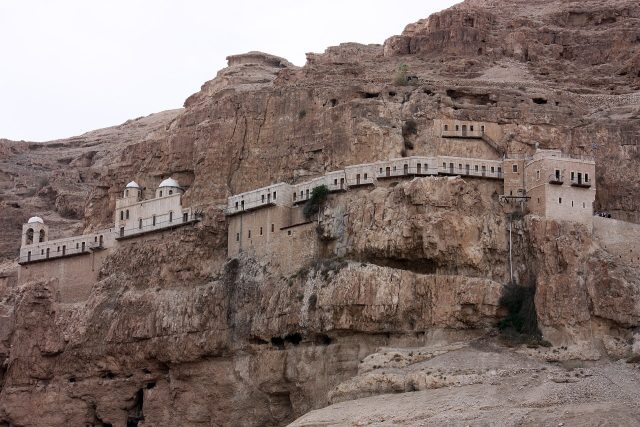
Perched on the edge of the Judean Desert, where the arid, rocky earth drops sharply toward the Dead Sea, the Monastery of the Temptation is easy to overlook at first glance. Its yellowish stone walls blend almost seamlessly with the surrounding cliffs, giving it the appearance of a small, unassuming fortress. Yet this is the place where, according to tradition, Jesus spent forty days in fasting and prayer, resisting the temptations of the devil. The mountain on which the monastery stands has been known ever since as the Mount of Temptation, or *Qarantal* in Arabic—a name derived from the Greek word for forty.
The history of the monastery stretches back to the earliest days of Christianity in the region. As far back as the fourth century, hermits began settling in the caves carved into the mountainside, drawn by the solitude and the sacred significance of the place. These ascetics lived in harsh conditions, following the example of the desert fathers who sought spiritual discipline far from the distractions of the world. Over time, a small monastic community took shape around these caves, though it wasn’t until the nineteenth century that Greek Orthodox monks from Jerusalem undertook the restoration of the site, transforming it into the monastery that stands today.
The architecture of the Monastery of the Temptation is simple and unadorned, reflecting the values of a place where outward grandeur has never been the priority. The main building resembles a modest fortress, its thick walls and narrow windows designed to shield against the desert’s relentless sun and winds. Inside, the monks’ cells, chapels, and refectory are arranged with practicality in mind, along with a library that houses ancient manuscripts. The most striking feature is the cave chapel, hewn directly into the rock, where tradition holds that Jesus himself prayed. Its walls are adorned with faded frescoes depicting scenes from the Gospels, and the air is thick with the scent of incense and candle wax.
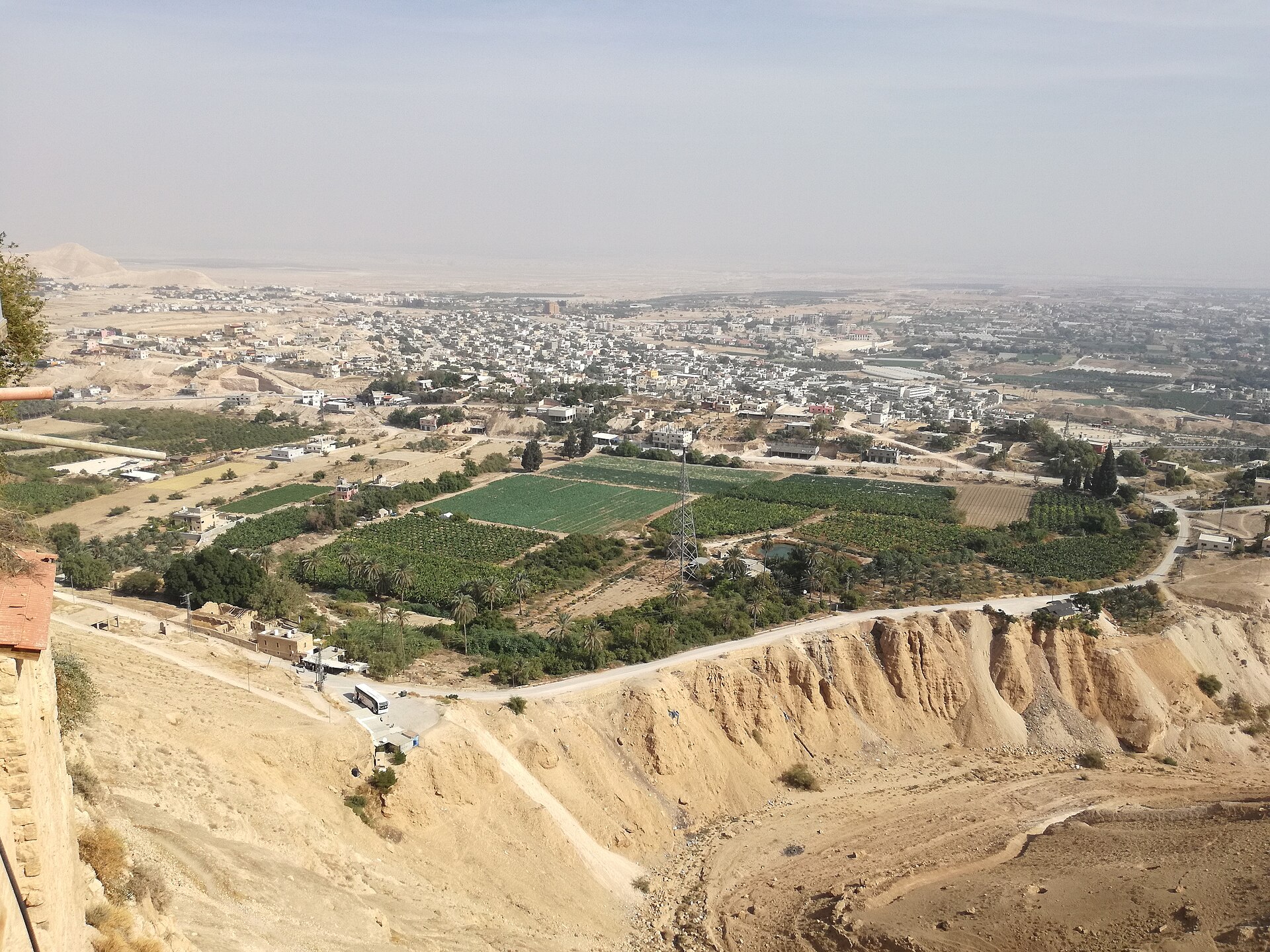
Reaching the monastery requires a steep climb along a winding path that cuts through the rugged terrain. The journey is not an easy one, but each step brings a deeper understanding of why this place has drawn people for centuries. From the monastery’s vantage point, nearly 350 meters above sea level, the view is breathtaking—the vast expanse of the Dead Sea stretches out below, while the Jordan Valley unfolds in the distance. On clear days, the mountains of Moab on the opposite shore are visible, shimmering in the haze. Yet beyond the scenery, it is the silence that lingers most, broken only by the occasional cry of a bird or the whisper of wind through the rocks.
More than just a historical site, the Monastery of the Temptation remains a living testament to a centuries-old spiritual tradition. A small community of monks still resides here, following a daily rhythm of prayer, work, and hospitality. Their lives are governed by a strict rule, yet they welcome visitors with quiet warmth, sharing stories of the monastery’s past and the significance of the place. There is no luxury here, only a sense of peace that invites reflection, a reminder of the enduring power of faith in a landscape that has seen so much change.
For many pilgrims, a visit to the Mount of Temptation is a deeply personal experience. Some come to spend a few hours in quiet contemplation, praying in the cave chapel or sitting on the rocks, gazing out at the desert below. Others stay for days, joining the monks in their daily routines, seeking to connect with the ancient traditions that have shaped this place. Even those who arrive as casual visitors often leave with a sense of having touched something timeless. The monastery’s isolation and the stark beauty of its surroundings make it impossible to remain indifferent.
The Monastery of the Temptation is not only a cornerstone of Christian heritage but also a symbol of the region’s layered history. Jericho, one of the oldest continuously inhabited cities in the world, has been a crossroads of civilizations for millennia—Canaanite, Roman, Byzantine, and Arab influences all leave their mark here. The monastery stands as another thread in this rich tapestry, a place where the spiritual quests of countless generations have intersected. It is a reminder that the land itself is steeped in stories, many of which remain untold.
Today, the monastery endures as a quiet refuge in a region often marked by turmoil. Despite the political and social upheavals that have shaped the surrounding area, life within its walls continues much as it has for centuries. The monks maintain their routines, pilgrims arrive from across the globe, and the desert stretches out in silent witness. Perhaps the greatest gift of this place is its ability to make the passage of time feel almost irrelevant. In a world that moves too quickly, the Monastery of the Temptation offers a rare stillness, a chance to pause and remember what endures.