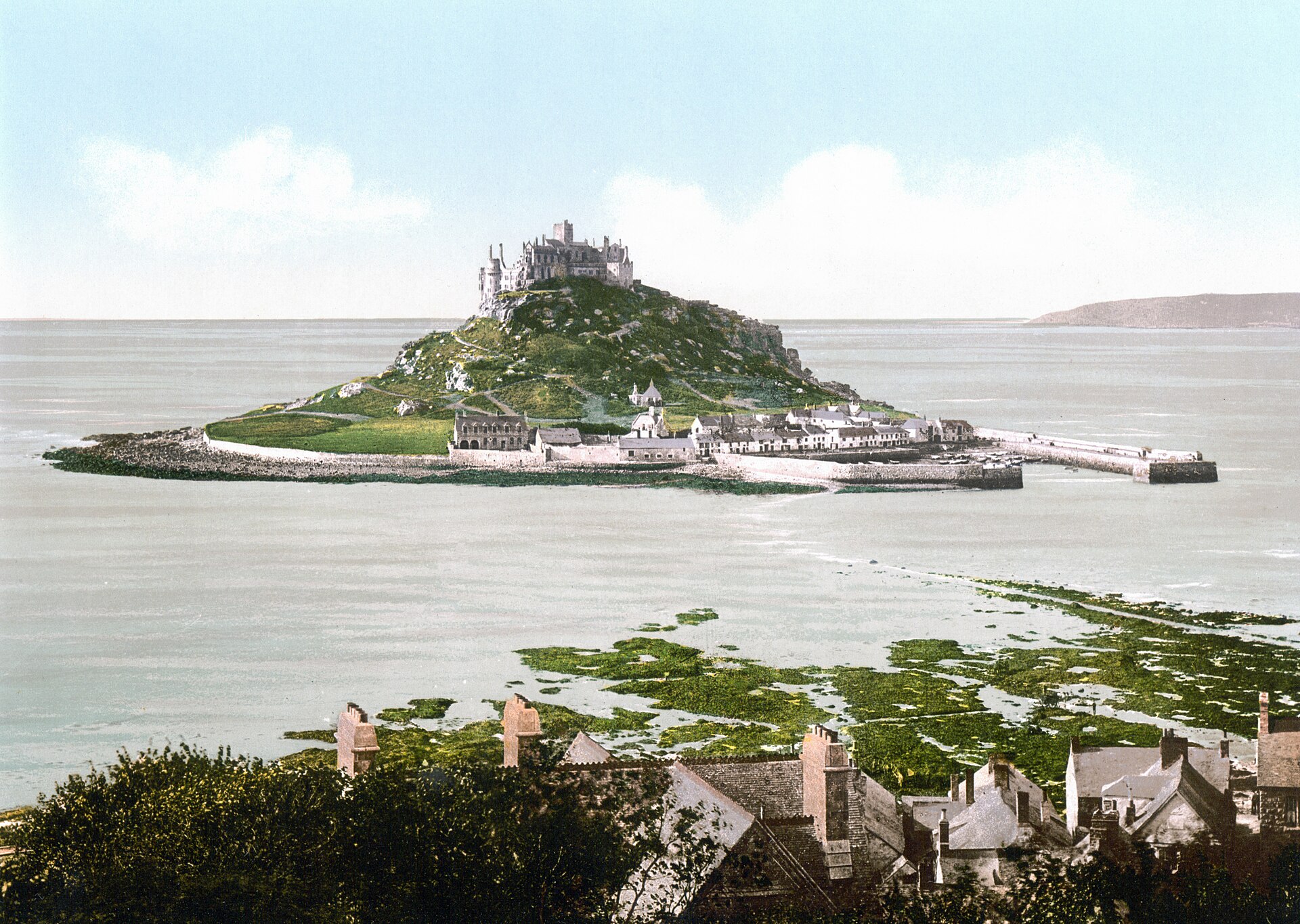
St Michael’s Mount rises from the waters of Mount’s Bay like a dream of the past, a tidal island where history feels as tangible as the salt spray on your skin. At low tide, a granite causeway emerges from the sea, inviting you to walk across the wet sand and slippery stones to reach its shores. When the tide returns, the island becomes a fortress once more, cut off from the mainland by the Atlantic’s restless waves. It’s a place where time moves differently, where the weight of centuries lingers in the stone beneath your feet.
The island’s story begins in the mists of early medieval legend. According to local tradition, the Archangel Michael appeared here in the 5th century to a fisherman, an event that would shape the mount’s destiny. By the Middle Ages, it had become a place of pilgrimage, home to a Benedictine monastery founded in the 11th century. The Normans later built a castle atop the rocky outcrop, and over the centuries, the mount passed through the hands of the St Aubyn family, who still reside here today. Their presence is woven into the very fabric of the place—each generation leaving its mark on the architecture, from the Gothic arches of the monastery to the Tudor battlements that crown the summit.
Walking through the island’s narrow, cobbled streets feels like stepping into a living museum. The houses, once home to fishermen and servants, cling to the slope leading up to the castle, their stone walls weathered by centuries of wind and rain. The castle itself is a patchwork of styles, its oldest parts dating back to the 12th century, while later additions reflect the tastes of the Renaissance and Victorian eras. Inside, the great hall is lined with dark oak panelling, its walls hung with portraits of long-dead St Aubyns and the occasional monarch who passed through. A collection of arms and armour hints at the mount’s turbulent past, when it served as both a religious sanctuary and a military stronghold.
The island has seen its share of conflict. During the English Civil War, it was besieged by Royalist forces, its defenders holding out against overwhelming odds. In earlier centuries, it stood as a bulwark against pirates and raiders, its position making it a natural fortress. By the 18th and 19th centuries, however, its role had shifted. The rise of the Grand Tour and the Romantic movement turned St Michael’s Mount into a destination for travellers seeking the picturesque, drawn by its dramatic silhouette and the stories of saints and knights that clung to its walls. Even today, the island retains an air of quiet exclusivity, a place where the past is not just remembered but lived.
Beyond its history, the island is a place of raw natural beauty. The rocky shoreline is a haven for seabirds, their cries carried on the wind as they wheel above the waves. At low tide, the causeway becomes a temporary world of its own, with shallow pools teeming with crabs and small fish. The climb to the summit is rewarded with sweeping views across Mount’s Bay, where the coastline stretches away in a series of jagged headlands. On a clear day, the distant outline of Land’s End is visible, a reminder of Cornwall’s wild and untamed edge.
There’s a rhythm to life on St Michael’s Mount, dictated by the tides. The island is only accessible for a few hours each day, and those who visit must time their arrival carefully or risk being stranded until the waters recede. The small harbour at the base of the castle is a hive of activity when the tide is out, with fishing boats bobbing in the shallows and the occasional ferry bringing visitors from the mainland. A café near the water serves simple meals—freshly caught seafood, perhaps, or a slice of cake to fuel the climb up the steep path to the castle. But the real pleasure lies in wandering without a plan, letting the island reveal itself in its own time.
The mount is now cared for by the National Trust, which has worked to preserve its fragile balance of nature and history. Guided tours offer insights into its past, but there’s no need to follow a set route. You can lose yourself in the quiet corners of the island, where the only sounds are the cry of gulls and the distant crash of waves. Some parts of the castle remain private, the family’s living quarters tucked away behind unassuming doors, a reminder that this is still a home as well as a monument.
St Michael’s Mount is not a place for those in search of noise or distraction. It’s a place for slowing down, for listening to the wind in the grass and the echoes of footsteps on ancient stone. The island has survived wars and storms, changing hands and purposes, yet it remains stubbornly itself—a tiny kingdom where the sea and the sky meet, and where the past is never quite out of reach. To visit is to step into a story that began long before you arrived and will continue long after you’ve gone.