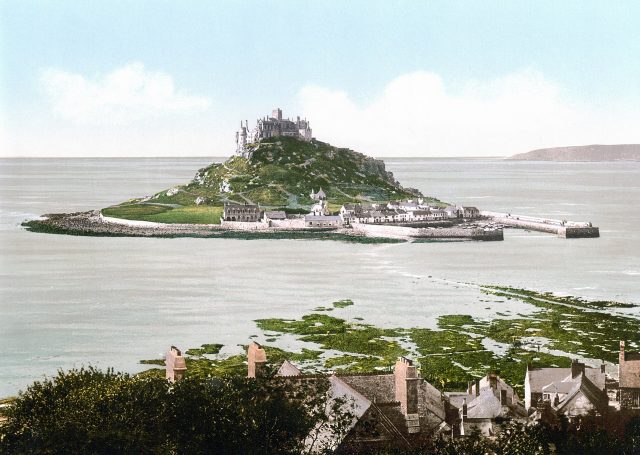
Tate St Ives in Marazion isn’t the kind of gallery you visit just for the art—though the art is reason enough. It’s the kind of place where the building itself, the light, the wind off the Atlantic, and the way the sea changes colour by the hour all become part of the experience. Perched on the Cornish coast, where the land drops sharply into the water, the gallery feels less like an institution and more like a natural extension of the landscape. Its white walls and wide windows frame the ocean as if it were another exhibit, one that shifts with the tides and the weather.
The story of this place begins long before the gallery existed. In the 19th century, Marazion was a mining town, its hills hollowed out for tin and copper. The industry is gone now, leaving behind a quiet that’s broken only by gulls and the crash of waves against the rocks. By the mid-20th century, artists had begun to settle in nearby St Ives, drawn by the light, the cheap studios, and the sense of being at the edge of something—both geographically and creatively. Barbara Hepworth, Ben Nicholson, and Patrick Heron were among those who made the journey, and their work, shaped by this coastline, became the foundation of what Tate St Ives would later collect.
The building itself is a quiet marvel. Designed by Jamie Fobert, it doesn’t impose itself on the land but seems to grow from it, low and stretched along the shore. Inside, the space is open and airy, with high ceilings and windows that pull the outside in. There’s no hushed museum formality here—just a sense of art existing in conversation with the world around it. The floors are made of local slate, the beams are wood, and even the way the light falls feels distinctly Cornish. It’s a gallery that doesn’t just display art; it lets you feel the place where that art was made.
The collection here is smaller than Tate’s London holdings, but that’s part of its strength. This isn’t a place to see every major movement of the 20th century—it’s a place to see the work that emerged from this particular stretch of coast. Hepworth’s sculptures, carved from wood and stone, look like they’ve been shaped by the same forces that formed the cliffs outside. Nicholson’s abstract paintings hint at the curves of the Cornish hills, while Heron’s vibrant canvases capture the way light dances on water. The gallery doesn’t try to be comprehensive; it focuses on the art that belongs here.
But Tate St Ives isn’t stuck in the past. Contemporary exhibitions often respond to the local environment—installations about water, migration, or the changing coastline, performances on the beach, workshops held outdoors. In summer, the gallery hums with visitors who’ve come for the beaches but duck inside to escape the sun. Families wander through, children drag their parents to the interactive spaces, and locals drop in for a quiet moment. In winter, when the crowds thin and the storms roll in, the gallery feels like a sanctuary, a place to sit and watch the sea rage beyond the windows.
Marazion itself is unassuming but deeply atmospheric. There are no crowded resorts here, just empty beaches, winding coastal paths, and old fishermen’s cottages now occupied by artists and writers. The gallery fits into this rhythm seamlessly. After visiting, you might walk down to the shore, follow the path along the cliffs, or stop in a pub where the ale is still brewed the old way. The art doesn’t feel separate from the place—it’s as much a part of it as the salt in the air or the sound of waves at night.
What lingers after a visit isn’t just the memory of a particular painting or sculpture, but the way the whole experience feels. The light in Cornwall is different—softer, more diffused—and the horizon seems to stretch forever. The gallery doesn’t compete with that; it simply gives it a voice. You don’t need to be an expert to understand why artists have been drawn here for decades. The place does the explaining for them.