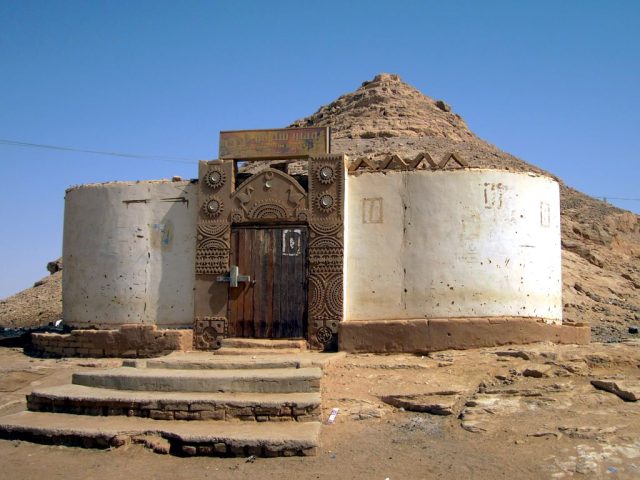
Sedeinga is one of those places that slips through the cracks of most travel itineraries, a quiet archaeological site tucked away in Sudan’s northern desert. For those who venture beyond the usual tourist trails, it offers a rare glimpse into the world of ancient Nubia—a civilization that flourished alongside Egypt yet carved out its own distinct identity. The ruins here, scattered across a stark landscape of sand and rock, whisper of a time when this region was a thriving center of religion and power, long before the modern world took shape.
At the heart of Sedeinga lies the remains of a temple dedicated to Isis, the Egyptian goddess whose cult spread far beyond the Nile Valley. Built during the Meroitic period around the 3rd century BCE, the temple was once a grand structure, though today only fragments remain. The surviving columns, adorned with intricate carvings, and the weathered walls bearing hieroglyphic inscriptions hint at the skill of its builders and the depth of their devotion. What makes this site particularly fascinating is how it reflects the blending of Egyptian and Nubian traditions—here, foreign deities were not just adopted but woven into the fabric of local belief.
The nearby necropolis is just as revealing. Hundreds of tombs, some carved directly into the rock and others constructed from stone, stretch across the desert floor. Many date back to the Meroitic era, their stelae decorated with images of the deceased and inscriptions in the Meroitic script—a writing system that remains one of history’s unsolved puzzles. Archaeologists have uncovered not only human remains but also everyday objects, jewelry, and ritual vessels, each piece adding another layer to our understanding of life in the Kingdom of Kush. The way these artifacts mix Egyptian motifs with Nubian craftsmanship speaks to a culture that was both confident in its own identity and open to outside influences.
Sedeinga’s location made it a crossroads of civilizations. Over the centuries, Egyptian, Nubian, and even Greco-Roman traditions intersected here, leaving behind a legacy that’s visible in the architecture, art, and religious practices. Some tombs contain amulets of Egyptian gods rendered in a distinctly Nubian style, a testament to how local artisans reinterpreted foreign symbols. The site doesn’t just preserve history—it tells a story of adaptation, of a people who absorbed new ideas without losing sight of their own heritage.
Today, Sedeinga feels suspended in time. The vast desert that surrounds it amplifies the sense of isolation, and the absence of crowds allows visitors to experience the past in a way that’s increasingly rare. There are no souvenir stands, no guided tours with loudspeakers—just the wind sweeping over the dunes and the silent stones bearing witness to centuries gone by. For those who make the journey, it’s an opportunity to step into history unfiltered, to walk among ruins that have remained largely untouched by modern interference.
Reaching Sedeinga isn’t easy. The drive from Wadi Halfa takes hours, winding through empty desert where signs of civilization are few and far between. There are no hotels or restaurants nearby, just the open road and the promise of discovery. But for travelers drawn to archaeology and history, the challenges are part of the appeal. Local guides, many of whom have spent years working with international excavation teams, can share stories of the site’s long history of exploration—from the early digs of the 19th century to the latest discoveries that continue to reshape our understanding of Nubia.
Despite its remoteness, Sedeinga remains a vital site for modern archaeology. Ongoing excavations by teams from around the world keep uncovering new clues about the Kingdom of Kush. Recent finds, like bilingual stelae inscribed in both Meroitic and Egyptian, offer fresh hope for deciphering the Meroitic script—a breakthrough that could unlock entirely new chapters of Nubian history. Each season of digging peels back another layer, revealing more about how this civilization lived, worshipped, and interacted with its neighbors.
For those planning a trip to Sudan, Sedeinga might not be as immediately striking as the pyramids of Meroë or the temples of Jebel Barkal, but it offers something just as valuable: a chance to connect with the past in a way that feels intimate and unscripted. The desert here stretches endlessly, its emptiness making the ruins feel even more profound. It’s a place where history isn’t just observed—it’s felt, in the quiet between the stones and the wind. And in that silence, the voices of the past seem just a little bit closer.