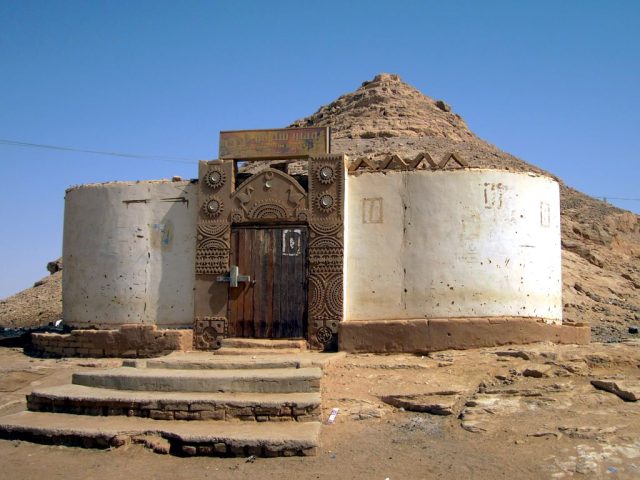
Perched on the banks of the Nile where the river bends sharply, cutting through the desert like a lifeline, the ruins of Wadi Halfa Fort stand as a quiet witness to Sudan’s layered past. This isn’t a place of grand monuments or polished tourist attractions. Instead, it’s a raw, unfiltered fragment of history, where the weight of time feels almost tangible in the crumbling stone and the endless stretch of sand beyond.
Built in the 19th century, the fort was a strategic stronghold during an era when control over this stretch of the Nile meant control over trade, movement, and power. Egyptian and British forces used it as a base during their campaigns in the region, and its walls bore witness to the turbulent shifts of colonial rule. The architecture is unadorned but effective—thick stone blocks, narrow slits for rifles, and a central courtyard where soldiers once drilled and supplies were stored. Little remains of its original structure today, yet the ruins still carry the imprint of their purpose: a fortress designed to endure, not to impress.
Wadi Halfa itself has always been a crossroads. Sitting at the northern edge of Sudan, just before the border with Egypt, the town has long served as a gateway between the two countries. Caravans, armies, and travelers passed through here, and the fort played a crucial role in securing the area, especially during the Mahdist uprising in the late 1800s, when Sudanese forces fought to break free from foreign domination. The echoes of that struggle linger in the silence of the fort’s empty chambers, though the battles themselves have faded into memory.
What makes the fort compelling isn’t its state of preservation—it’s the absence of modern interference. There are no signs explaining its history, no neatly marked paths for visitors. The wind sweeps through the gaps in the walls, and the only sounds are the occasional rustle of dry grass or the distant call of a bird. Walking through the ruins, it’s easy to imagine the fort as it once was: a bustling military outpost, its gates crowded with merchants, its ramparts manned by soldiers scanning the horizon for threats. Beyond the walls, the desert stretches endlessly, a reminder of how fragile human settlements have always been in this harsh landscape.
The Nile, just steps away, is the reason the fort—and the town—exists at all. For centuries, the river has been the sole source of life in this arid region, and its presence is felt everywhere in Wadi Halfa. The town is small, its pace slow, its rhythm dictated by the water’s flow. Markets still sell dates, spices, and handmade goods, a faint echo of the time when Wadi Halfa was a thriving trade hub. Today, it’s a place of transit, a stop for travelers moving between Sudan and Egypt, but it retains a quiet dignity, untouched by the rush of modern tourism.
Visiting the fort isn’t about ticking off a sightseeing box. It’s about stepping into a different time, where history isn’t confined to plaques or guidebooks but lingers in the very air. The lack of crowds or commercialization only adds to the experience. You can wander through the ruins, peer into the empty storerooms where ammunition was once kept, or simply sit by the riverbank, watching the water flow as it has for millennia. There’s a sense of solitude here, but not loneliness—just the quiet company of the past.
For those who make the journey, the fort offers something rare: a chance to engage with history on its own terms. It’s not a place that demands admiration for its beauty or scale. Instead, it invites reflection on the forces that shaped this region—colonial ambitions, local resistance, the relentless push of the desert, and the Nile’s stubborn persistence as a lifeline. The fort’s very existence is a testament to the layers of human endeavor that have unfolded here, often overlooked in broader narratives of history.
Traveling to Wadi Halfa requires some planning. The climate is unforgiving, with summer temperatures that can be extreme. The best time to visit is during the cooler months, when the heat is less oppressive and the desert’s stark beauty becomes more bearable. Even then, the journey isn’t for everyone. There are no luxury accommodations or tourist amenities, just the basic necessities of a small border town. But for those willing to venture off the well-trodden path, the fort offers a glimpse into a side of Sudan that few outsiders see—a place where history isn’t just remembered, but felt.