Suzhou is often called the Venice of the East, though its fame rests on more than just its canals. The city’s narrow lanes and whitewashed walls topped with gray tiles shelter something far quieter: gardens that have, for centuries, offered refuge to poets, artists, and officials weary of imperial court life. Among them, the Humble Administrator’s Garden stands out—not just as the most celebrated, but as the one that best captures the spirit of its time. It is less a place to stroll through than a philosophy given form, where every rock, pond, and winding path carries meaning.
The garden dates back to the early 1500s, during the Ming Dynasty, and its origins are tied to a man named Wang Xianchen. A mid-level official, Wang grew disillusioned with his career and turned instead to gardening—a decision that was both personal and, in its way, defiant. The name he chose, the Humble Administrator’s Garden, was laced with irony. In Chinese culture, humility was a virtue, but here it carried a wry edge. Wang was not poor; he poured considerable wealth into the garden, hiring the finest craftsmen of the era. Yet his vision was never about extravagance. What he sought was harmony, a place where human and natural worlds could exist as one.
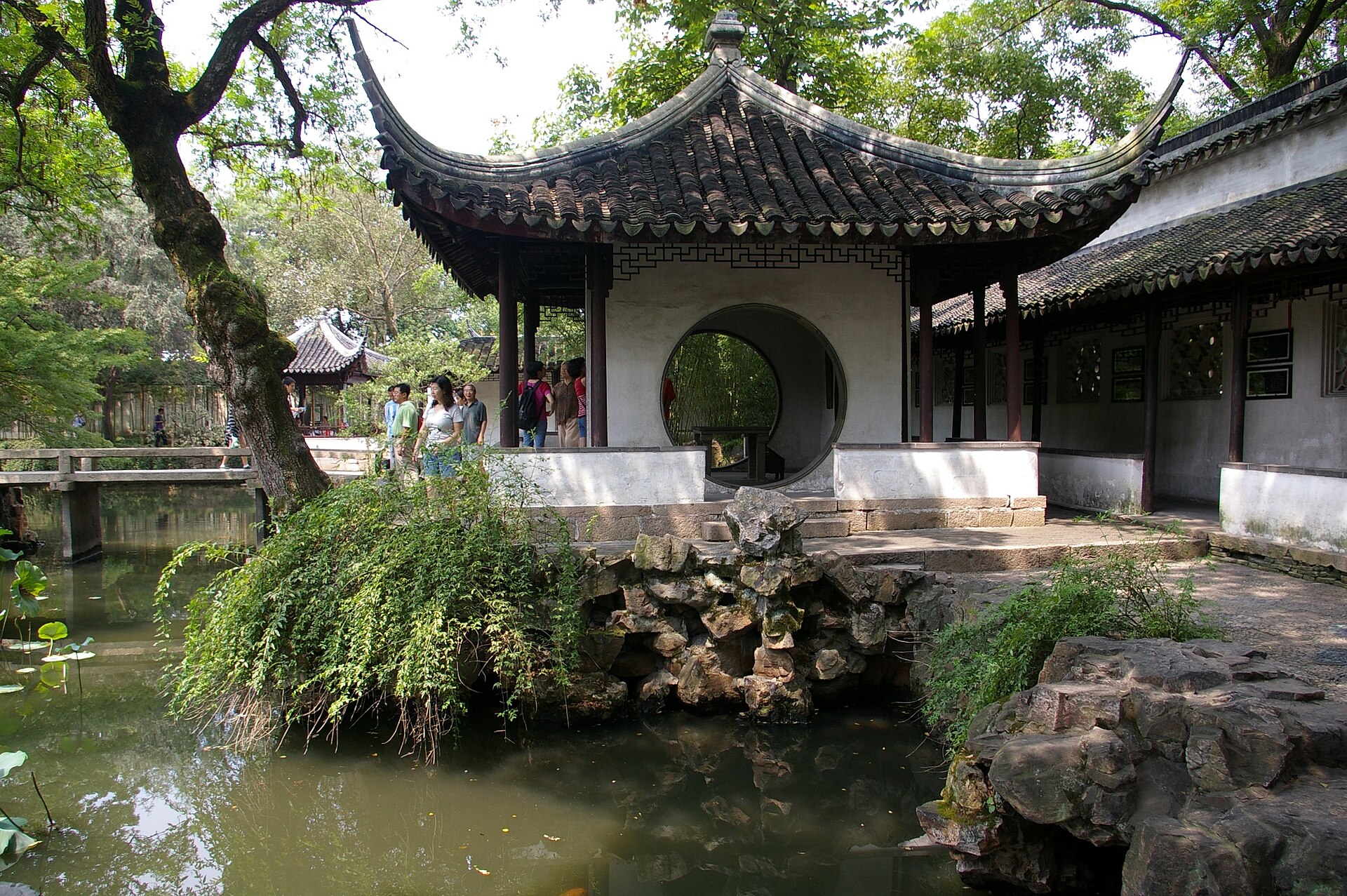
There is no symmetry here, no grand axes or straight lines. Instead, the garden unfolds like a series of carefully composed scenes, each revealing itself only as you move through it. Pavilions, bridges, covered walkways, and artificial hills create a labyrinth of shifting perspectives. At the heart of it all is the main pond, which occupies nearly a third of the garden’s space. Its irregular shoreline curves in ways that make it seem endless, while the reflections of trees and buildings in the water add depth, as if the garden extends far beyond its walls. Water here is more than decoration; it is a symbol of life’s constant motion, of impermanence and renewal.
The stones in the garden are not mere ornaments but deliberate choices, each selected for its shape and character. Some resemble miniature mountains, others mythical creatures, their jagged forms contrasting with the smooth surface of the pond. In Chinese tradition, such stones were believed to embody the spirit of nature, and their placement was as important as the planting of trees. Some stand on pedestals, others lie half-submerged at the water’s edge, as if they had just emerged from the depths. They give the garden its rhythm, introducing an element of wildness into the carefully cultivated landscape.
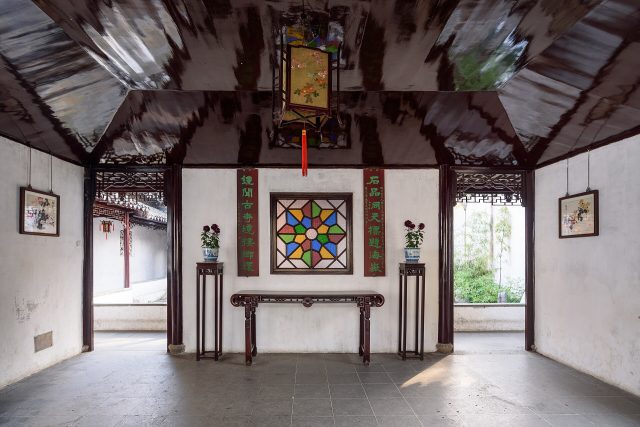
The pavilions and gazebos scattered throughout the garden serve a purpose beyond shelter. They are vantage points, designed to frame the most striking views. Each has a name that hints at its mood: the Pavilion of Distant Mountains, the Autumn Moon Arbor, the Hall of Waves and Clouds. Their architecture is simple yet refined—carved wooden screens, slender columns, tiled roofs with upturned eaves. Inside, there is little furniture, just mats and low tables, because the real focus is outside: the play of light on water, the rustle of bamboo in the wind, the quiet beauty of a single flowering branch.
The garden was never an isolated retreat. It breathed with the life of the city, reflecting its culture and changes over time. Scholars gathered here to recite poetry, artists sketched the shifting patterns of light and shadow, and even emperors, traveling incognito, sought respite from court intrigues. By the 19th century, like much of Suzhou, the garden had fallen into disrepair, but in the mid-20th century, it was restored to its former glory. Today, it looks much as it did in Wang Xianchen’s time, though centuries of history have left their mark in subtle ways.
Visiting the Humble Administrator’s Garden is less about ticking off a sight and more about stepping into a different rhythm. Even in peak season, it rarely feels crowded, because the space is designed to offer solitude. You can wander for hours along the covered walkways, moving from one pavilion to the next, or simply sit by the pond, watching fish dart beneath the surface and turtles bask on the rocks. Time here moves differently—slower, more deliberately, as if in tune with the natural world. That might be why the garden still holds such appeal. In a world that demands constant motion, it offers something rare: the chance to pause, to simply be.
The garden is not a static monument but a living thing, changing with the seasons. In spring, magnolias and cherry blossoms bloom along the paths. Summer brings lotuses to the pond, their pink and white petals floating on the water. Autumn turns the maple leaves crimson, while winter strips the trees bare, their reflections shimmering in the ice. Each season brings something new, even for those who return often. Perhaps that is the garden’s true secret: it does not try to impress with grandeur. Instead, it invites you to become part of something larger—the endless cycle of nature and culture, of growth and decay, of stillness and change.