The Garden of Pleasance in Suzhou is one of those rare places where time seems to soften, where the rush of the world fades into something quieter. It isn’t the largest of Suzhou’s classical gardens, and that’s part of its charm. Every turn feels deliberate, every corner revealing itself slowly, as if inviting you to pause and notice the details. Built in the 16th century during the Ming Dynasty, at a time when Suzhou’s garden craftsmanship was at its peak, it was conceived by a scholar-official named Wang Xianjin as a retreat from the pressures of public life—a place to find solace in nature, poetry, and stillness.
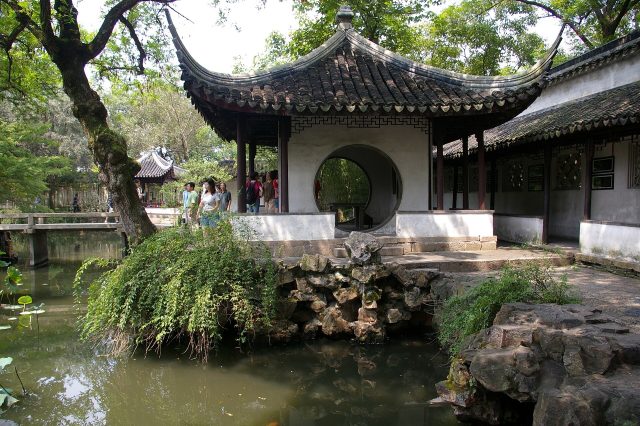
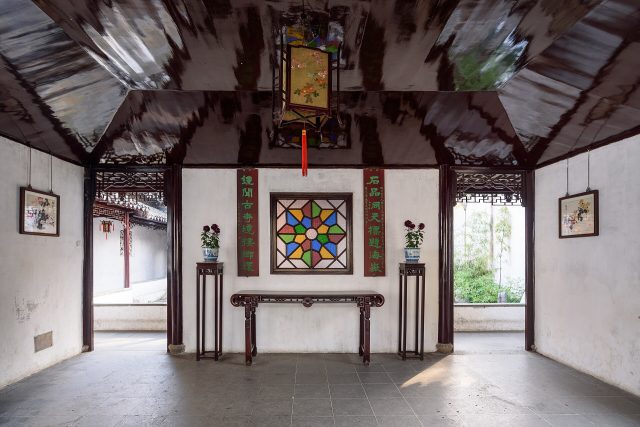
The garden’s design thrives on contrast. Winding paths lead unexpectedly into open spaces where ponds mirror the sky, and strangely shaped rocks hint at ancient legends. The pavilion that gives the garden its name sits by the water’s edge, its wooden structure so light it seems to hover just above the surface. The roof curves upward, as if caught in mid-flight, while inside, scholars and poets once gathered to sip tea and discuss ideas, their conversations lingering in the air like the calligraphy that once adorned the walls.
Rocks hold a special place in this garden. In Chinese culture, they’re more than just decoration; they embody the harmony between nature and the human spirit. The Garden of Pleasance is home to several famous stone arrangements, including the so-called Mountain of Fortune—a cluster of boulders that mimics a miniature mountain range. These rocks aren’t just scenery; they’re part of the garden’s philosophy, creating a sense of endless depth as your gaze moves between their crevices and curves.
Water is just as essential here as stone. The ponds are shallow, their clear surfaces dotted with carp, while willows and bamboo sway along the banks. Water in the garden isn’t merely a landscape feature; it’s a symbol of life’s constant flow, its unpredictability. On hot days, it offers cool relief, and on overcast afternoons, it reflects the gray sky, deepening the garden’s sense of mystery. A small pavilion on one of the islets provides a vantage point over the entire garden, a place where time seems to slow even further as light and shadow shift across the scene.
This garden is deeply tied to Suzhou’s identity. The city has long been celebrated for its gardens, but the Garden of Pleasance captures something unique—the refined atmosphere that scholars and artists once cherished. Unlike the grand, orderly imperial parks of Beijing, Suzhou’s gardens are spaces of freedom and spontaneity. They don’t assert power; they invite contemplation, a quiet conversation with nature.
A walk through the garden is like stepping into another era. Every element carries the weight of tradition. The bridges over the ponds aren’t just crossings; they symbolize transitions, while the stone paths, laid out in wavelike patterns, echo the rhythm of life. Even the plants are chosen with intention: pines represent resilience, bamboo flexibility, and flowering plum trees the promise of renewal.
The garden doesn’t try to impress with size or opulence. It’s modest, and that modesty is what makes it special. There are no crowds here, no jostling for the best view—just the rustle of leaves, the murmur of water, and the occasional splash of a fish breaking the surface. At some point, you begin to understand why its creators valued it so deeply. It asks for nothing but your attention, and in return, it offers a rare sense of peace.
Today, the Garden of Pleasance remains more than just a historical monument. It’s a living space, carefully preserved yet still vibrant. Trees grow, flowers bloom, and the water stays clear. Perhaps that’s why it never feels like a relic of the past. Instead of telling stories about history, it lets you experience them firsthand.